


Innocence buried in a garbage heap or the beginning of a new revenge?
Is a person’s fate decided by the dustbin in which he was thrown, unclaimed, as soon as he was born? After crossing all limits of oppression, is only the fire of revenge left in the heart of an innocent child, or can any spark of humanity burn even in that darkness? When a helpless child, soaked in blood, clutches a piece of glass in his hand, is he just writing the message of the death of his attackers, or is he raising a bloody question before this system?
The comic ‘Kachra Petty’ (Raktakatha: Part-1), published under the banner of Raj Comics by Sanjay Gupta, revolves around these burning questions. This comic is not just a superhero action story, but a mirror of the cruel truth where the bloody journey from ‘Suraj’ to ‘Doga‘ was completed. This review offers a detailed and unbiased analysis of the story, emotional depth, artwork, and the full impact of this comic.
The scream echoing in the silence of the night: The secrets of the mansion and the return of Doga
The comic begins with a very brutal and tense scene. In ‘Ajmera Gharana Ki Haveli’, due to greed for power and wealth, an innocent child is fatally attacked by his own uncle. The child is left half-dead and thrown into a garbage can by an executioner with a cybernetic hand called Vikaral.
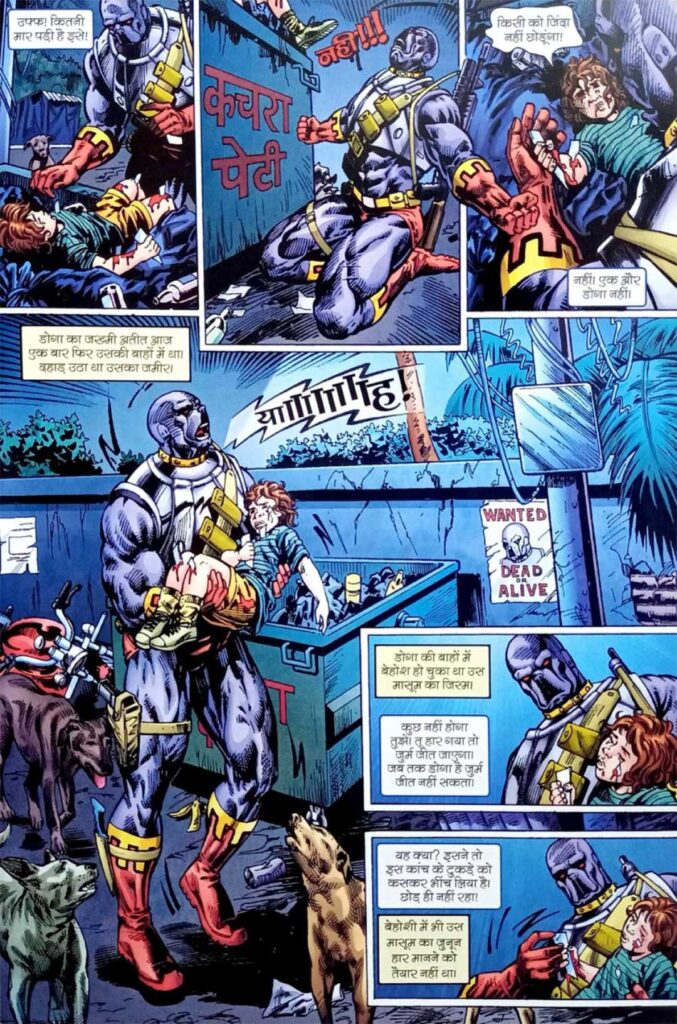
The story takes a present-day turn when, while patrolling through the silence of the night, Doga reaches the garbage can after his loyal dog Jackie barks. Seeing that child lying there, soaked in blood, the past buried inside Doga awakens again. Even in unconsciousness, the child is tightly holding a piece of glass in his fist—a scene that draws Doga straight back to his own childhood.
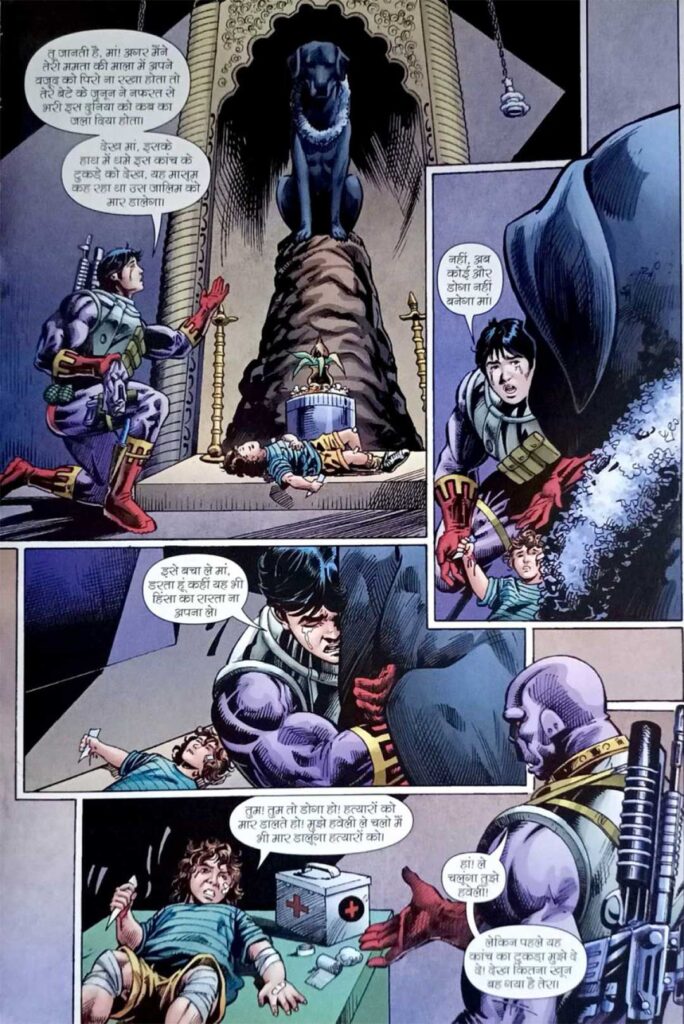
Doga reaches his secret hideout (Maa Kali’s temple located under Lion’s Gym) with that child, and from there Doga’s own story, i.e. ‘Raktakatha’, begins.
Helplessness, ruggedness and the love of ‘Kali’: The story of ‘Suraj’ rising from darkness
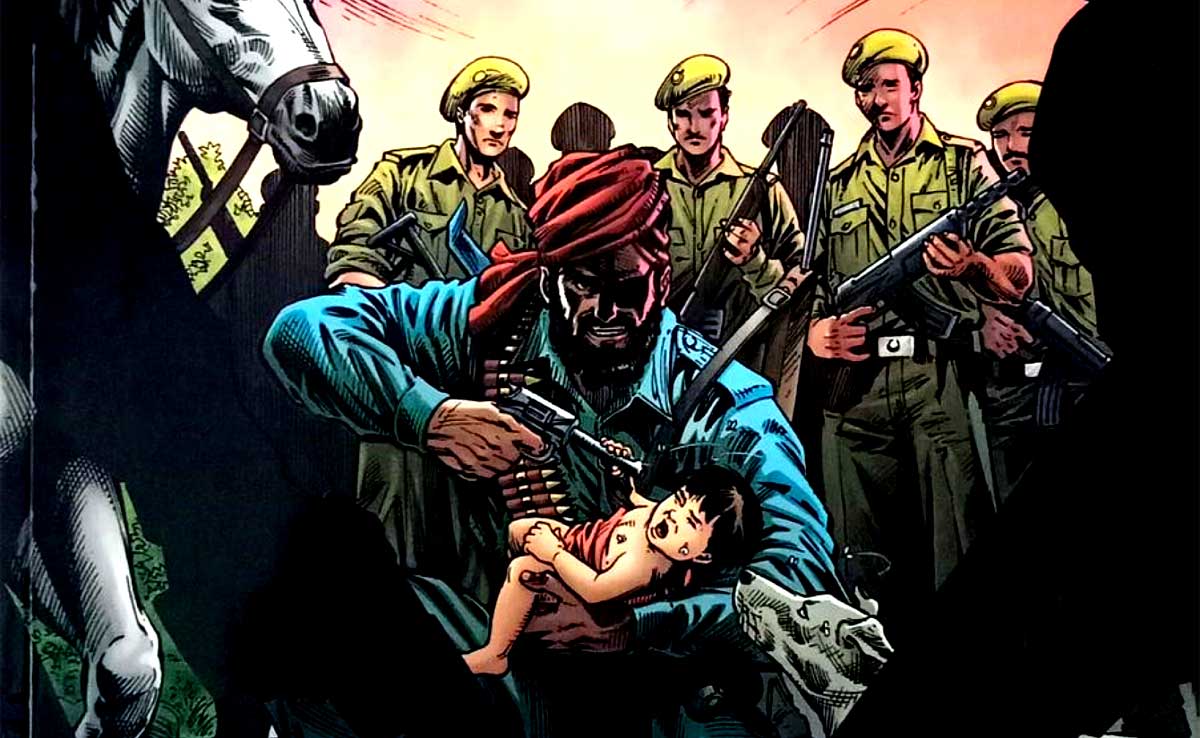
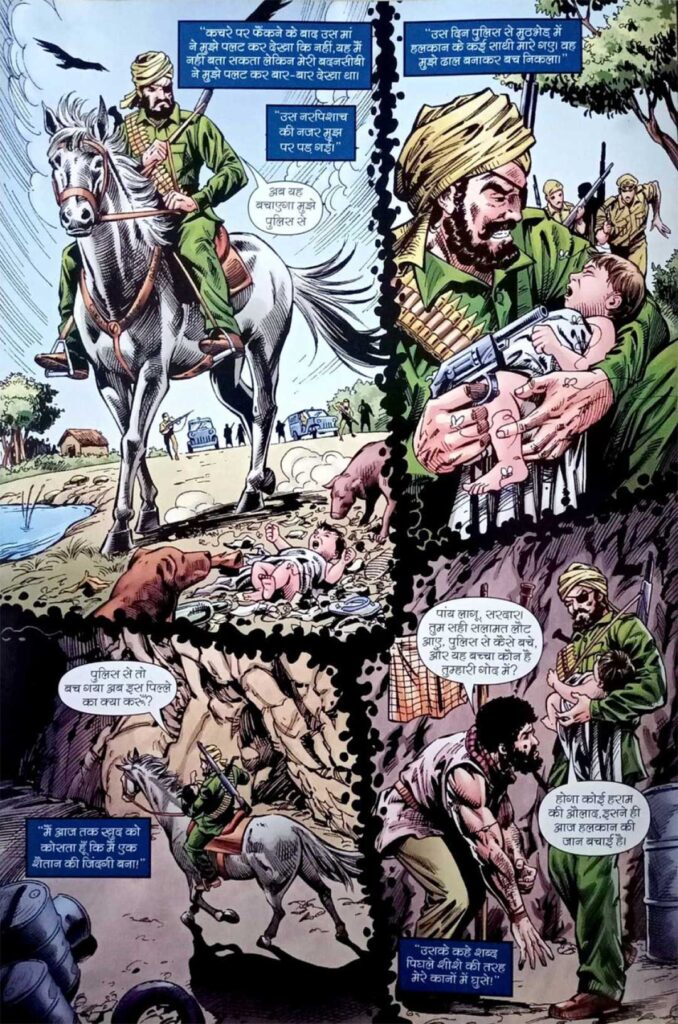
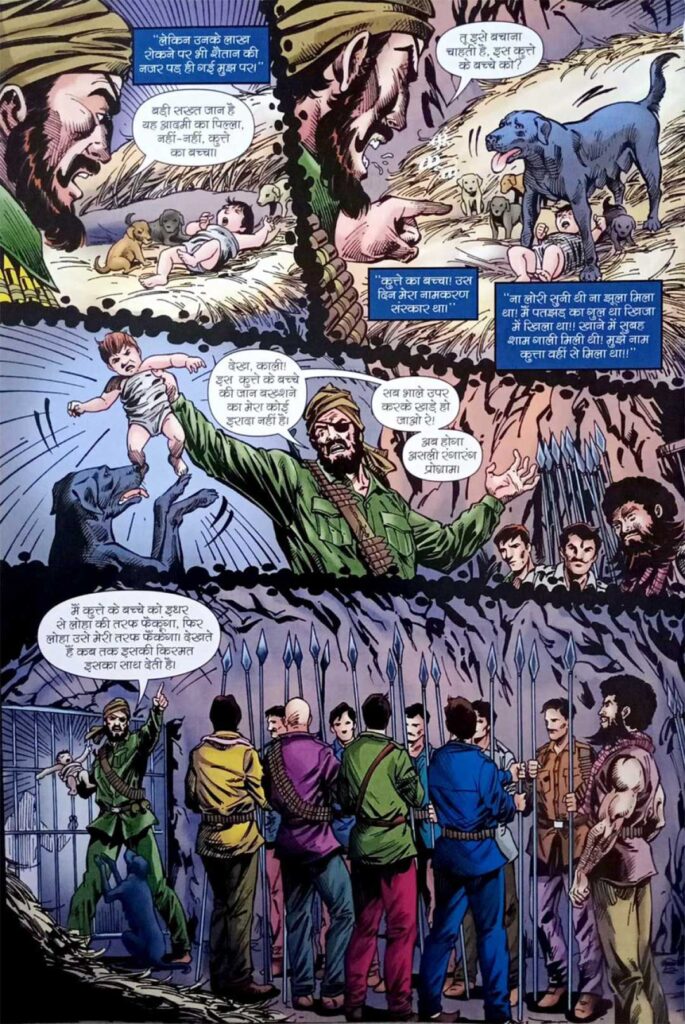
In the old story, readers see how the newborn Suraj was forced to be thrown into a garbage box by his helpless mother. From there, during a police encounter, the dreaded dacoit ‘Halkan Singh’ takes him away as his shield. Halkan, not thinking of him as a human child, throws him in front of his dreaded hounds to become their morsel.
Here, the story suddenly takes a very emotional turn. ‘Kali’, the dreaded bitch from Halkan’s pack who gave birth to four puppies on the same day, embraces the newborn instead of attacking him. She licks him through his fever and raises him with her puppies.
The life of Suraj in the dacoit’s camp swings between two different worlds:
- Halkan Singh and his cruel world: where bloodshed, plunder and the ripping apart of humans are taught. Halkan calls him ‘dog child’ and ‘Yamdoot’.
- The affection of Thakur Baba and Maa Kali: ‘Thakur Baba’, held hostage by Halkan, gives Suraj the initial lessons of language, letters (A, Aa, E, E and A, B, C, D), and humanity. At the same time, ‘Kali’ teaches him to love unconditionally.
Words That Strike Straight to the Heart: Writing and Character Analysis
The pair of Sanjay Gupta and Vivek Mohan has once again presented the original history of Doga (Origin Story) from a new and serious perspective. The story of the comic is very tight and emotionally shocking.
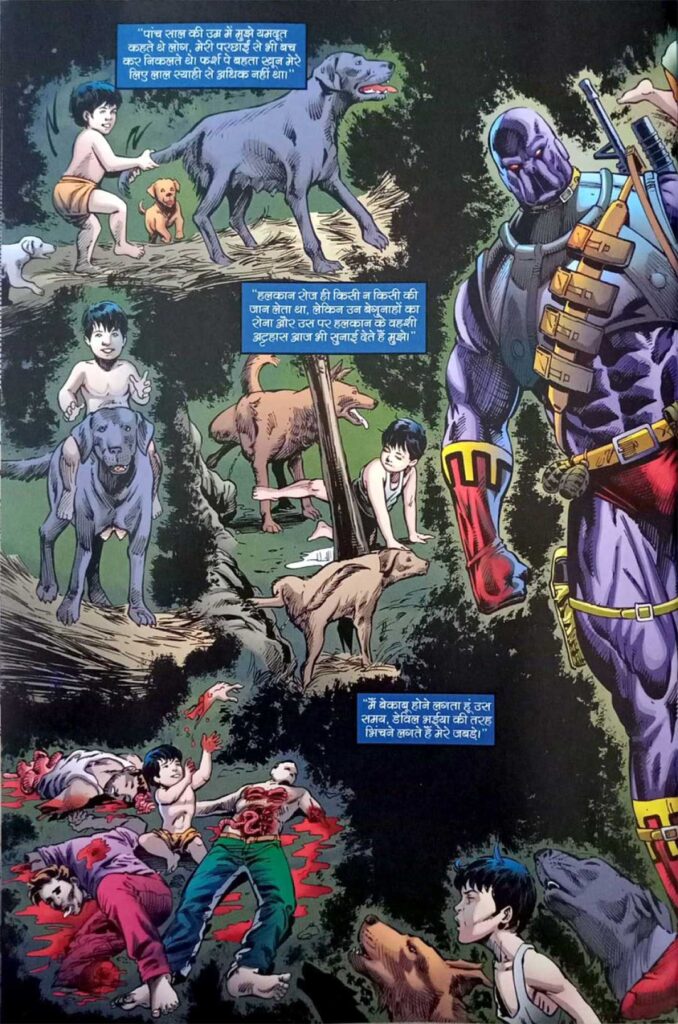
Both authors have beautifully shown where the roots of the two different forms present in Doga’s personality lie—on the one hand, his cruel form, which was born in Halkan’s camp and among a pack of dogs, and on the other hand, his sense of justice, which was born from the teachings of Thakur Baba and the love of Mother Kali.
The dialogues are short, sharp, and directly touch the heart. Thoughts such as “When pain crosses the limit, it becomes passion” connect the reader to the state of mind of the child, whom society’s oppression gradually turned into a predator.
Cruelty Descending onto the Canvas: The Bloody Juxtaposition of Lines, Ink and Colors
The biggest strength of ‘Garbage Box’ is its visual treatment:
• Pencils and Drawings (Dildeep Singh): Dildeep Singh’s artwork is very lively and effective. He has depicted the facial expressions of the characters—be it the helplessness of the child suffering in the garbage box, the cruelty in Halkan Singh’s eyes, or the anger and pain on Doga’s face—with great attention to detail. The feeling of a wild atmosphere is clearly visible in the scenes involving the dacoits’ ravines and packs of dogs.
• Inking (Jagdish Kumar): Jagdish Kumar’s inking has made the sketches deeper and more effective, making the dark and gritty atmosphere even more prominent.
• Coloring (Shadab Siddiqui and Basant Panda): The choice of colors is perfect for the comic’s environment. The darkness of the night, the heaps of garbage, the splashes of blood, and the mysterious light of Maa Kali’s temple have been depicted very beautifully through colors.
Cruelty in Humans, Affection in Animals: A Heart-Touching Contrast
This comic is not just a story of bullets and guns, but it also shows a unique form of motherly love. When a beast-like human orders a newborn to be torn apart, an animal (Kali) showers affection on him.
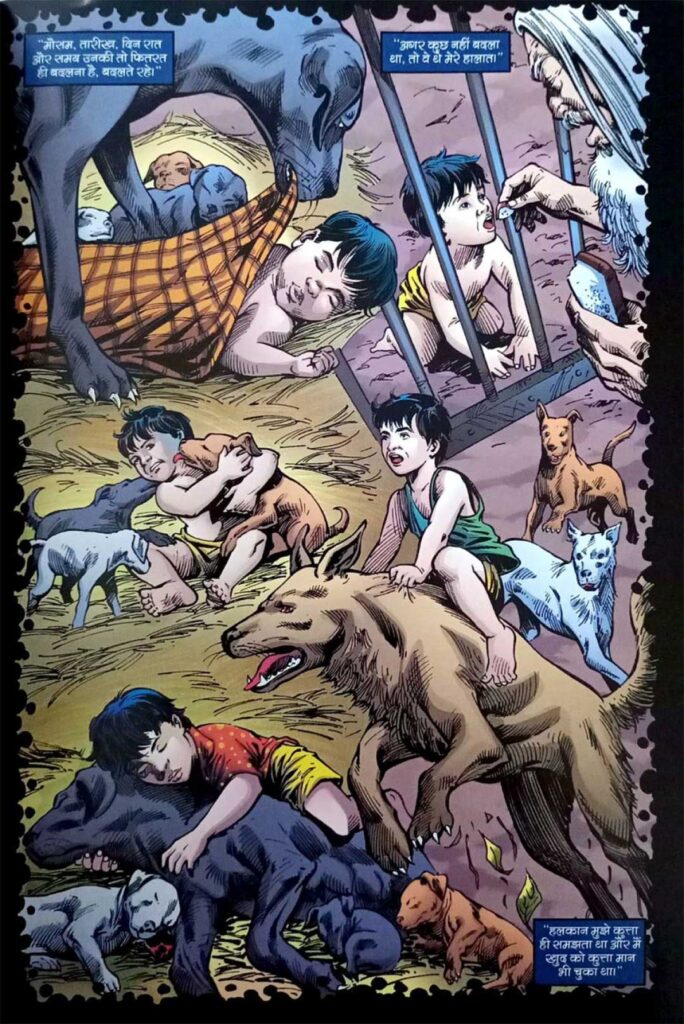
This contrast touches the reader’s heart, showing how humanity was alive in animals while brutality existed in humans. This is the reason why, even today, Doga loves dogs more than his own life and is unable to tolerate any kind of cruelty towards them.
Features and Drawbacks: Does ‘Garbage Box’ Live Up to Expectations?
Looking at ‘Garbage Box’ as a whole, it becomes clear that the comic is very powerful in its story and impact, yet it has some shortcomings that leave the reader hoping to know a little more.
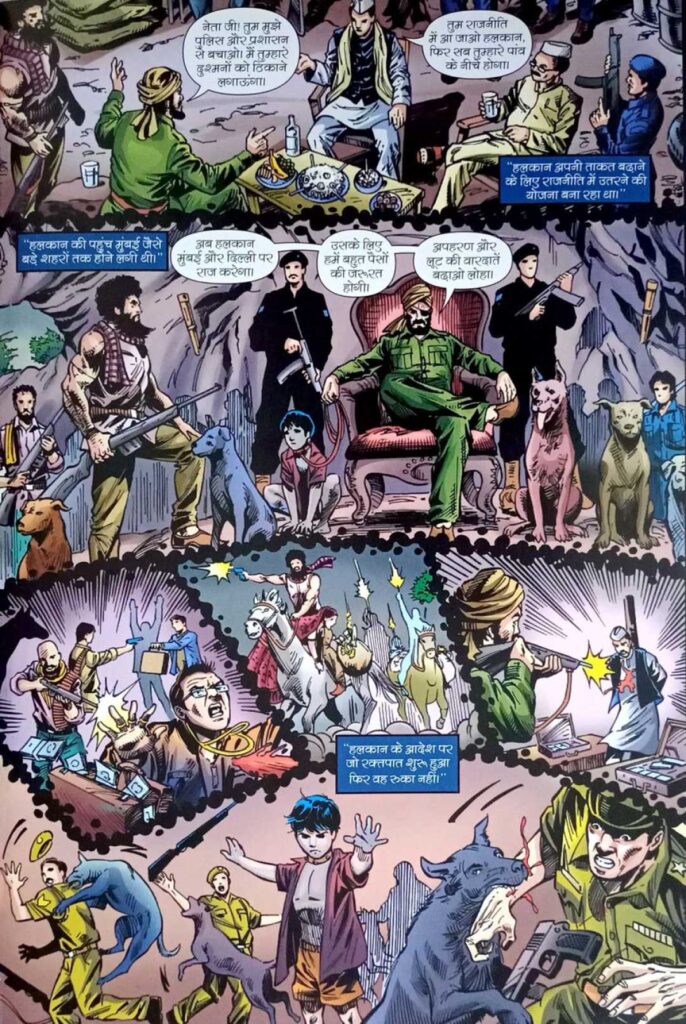
First of all, if we talk about its strengths, this comic is a serious and outspoken story prepared with ‘Mature Readers’ in mind. Both authors have explored very well the hidden layers of Doga’s original history (Origin Story) that were only briefly mentioned in the old comics. Dildeep Singh’s powerful artwork, Jagdish Kumar’s excellent inking, and brilliant coloring combine to bring its dark and gritty (Dark & Gritty) atmosphere to life. The beauty with which the contrast between cruelty and affection is shown in the story directly touches the reader’s heart.
On the other hand, if we look at its shortcomings, the story ends very quickly due to its limited number of pages. By the time the reader is completely immersed in that rugged, raw, and cruel atmosphere of the flashbacks, the story stops at a sharp cliffhanger with a teaser for the next part (‘Meri Sonu’). Moreover, by completely putting the present-day story (the conspiracy of Ajmera Haveli and the rescue of the injured child) on hold, the focus shifts entirely to the past, which slows down the pace of the main present-day storyline.
Despite these shortcomings, the emotional impact and artistic side of the comic are so strong that it perfectly manages to keep readers engaged and generate deep curiosity about the next part.
An Important and Memorable Chapter in the History of Doga
‘Garbage Box’ is a successful attempt in the history of Raj Comics to present the character of Doga powerfully to readers of the new era. This story not only shows the birth of an action hero but also tells how a broken child becomes ‘Doga’ to clean up the garbage of society by turning the pain inside him into a weapon.
If you’re an old Doga fan, this comic will give you a new emotional perspective on the story while allowing you to relive your nostalgia. And if you’re a new reader, this is a great starting point for understanding Doga’s bloody yet justice-driven world.
