


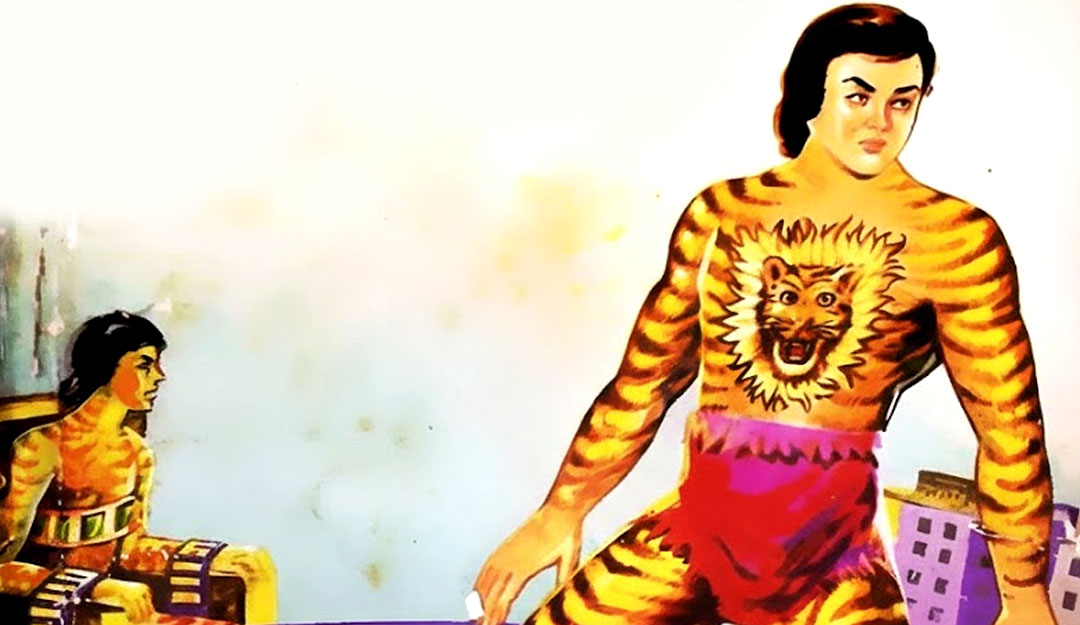
The history of the world of Indian comics has always been quite fun and colorful. While Raj Comics and Diamond Comics dominated in the 80s and 90s, Durga Comics (Durga Pocket Books), originating from Meerut, had also carved its own identity. Durga Comics stories had a different desi feel—full of pulp-fiction tadka, more action, more drama, and more “whistle-maar” scenes. In this line, a powerful and memorable character appeared—‘Fighter Man’. In this article, we will review the first issue of Fighter Man in full detail, giving a glimpse of his birth, story, art, and the comics culture of that period.
Introduction and development of the plot
The first issue of Fighter Man begins with a classic villain, Sey—Vikral. He has been described as the uncrowned king of the black world, who dreams of ruling India along with foreign powers. Within the first few pages, it becomes clear that this story is going to be a completely “super-villain vs superhero” type.
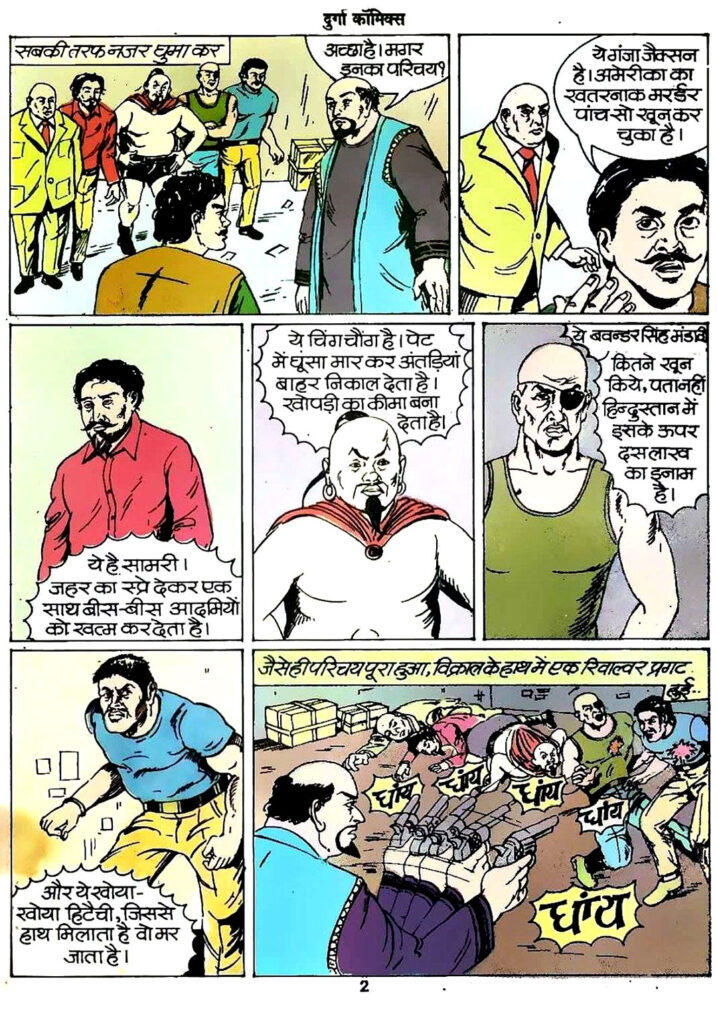
The story takes a real turn when Kalua, Vikral’s trusted man, brings some petty criminals before him. Here, a scene has been included to show the cruelty of Vikral, where he kills minor criminals with his own revolver and says that he wants big criminals for big work. It is on this occasion that Doctor Deng (Dr. Deng) makes his entry, a character who is a completely mad scientist, i.e., a “mad scientist.”
Doctor Deng tells Vikral a dangerous plan. He says that if scientific experiments are conducted on a wild human being or a child brought up by animals, he can be made into a superhuman who is not affected by bullets and who has the strength of a lion.
Fighter Man Born: From the Jungle to the Lab
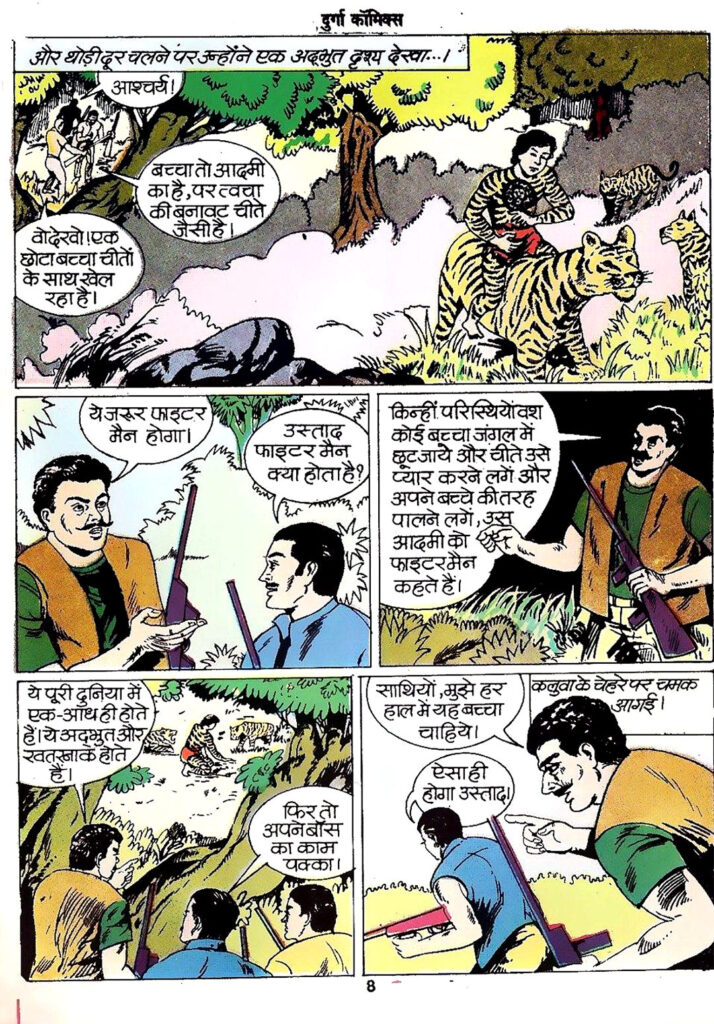
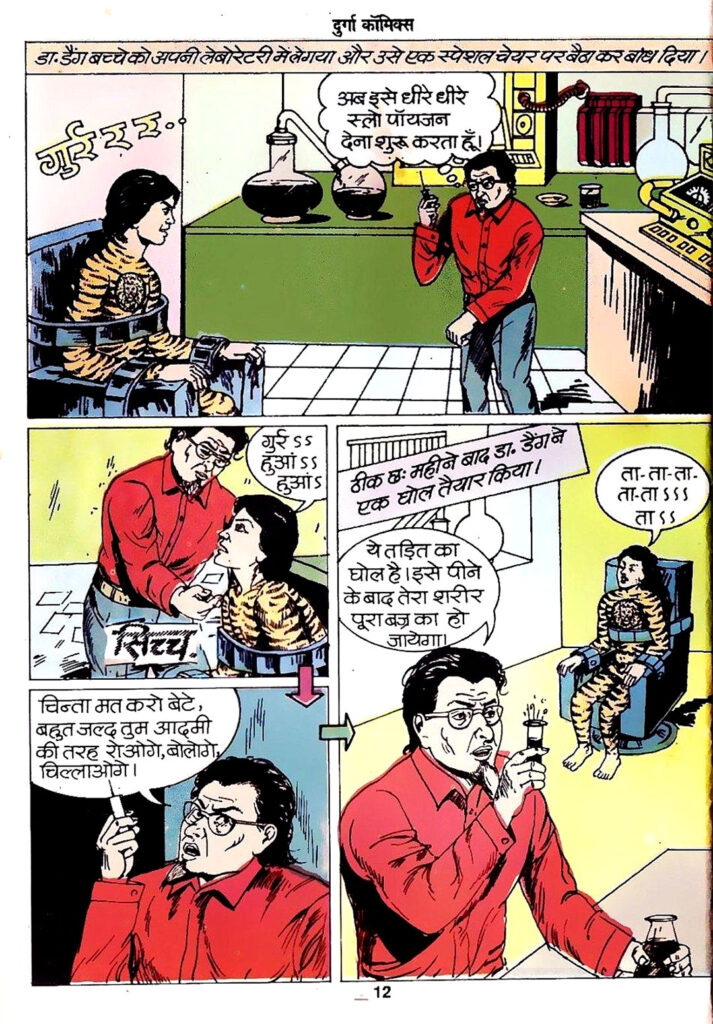
The next part of the story takes us straight into the forests. Kalua goes out with his companions in search of a child whom Doctor Deng can use in his lab. This is where we get to know the entire story of Fighter Man’s origin. Kalua sees a small child playing with cheetahs in the forest. It is told in the comics that the child was left in the forest for some reason, and the leopards raised him like their own child. For this reason, leopard-like stripes had automatically formed on his body.
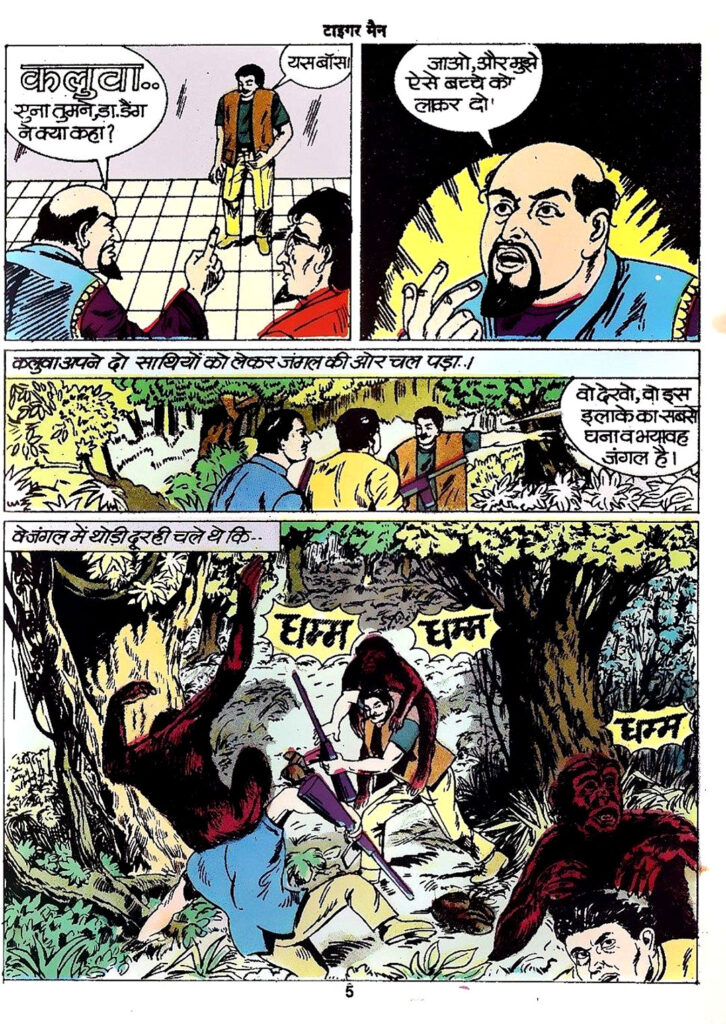
Kalua brutally kills the leopards to capture the child. While reading this scene, the reader develops pity for the child and anger toward Kalua. The child is forcibly brought to the city and handed over to Doctor Deng.
Conversions and powers
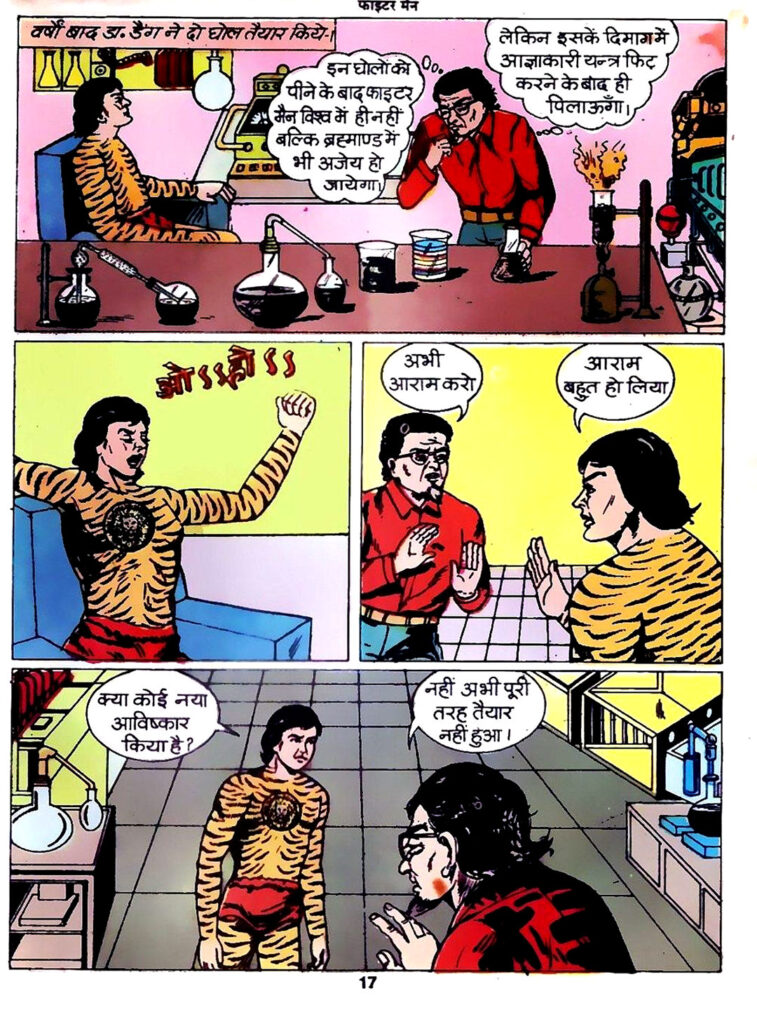
The next several years are spent in Doctor Deng’s lab. A strange combination of science and imagination can be seen here. Doctor Deng gives the child slow poison and different chemicals. After these dangerous experiments, which last for about ten to twelve years, the child turns into a giant and extremely powerful young man—that is, Fighter Man.
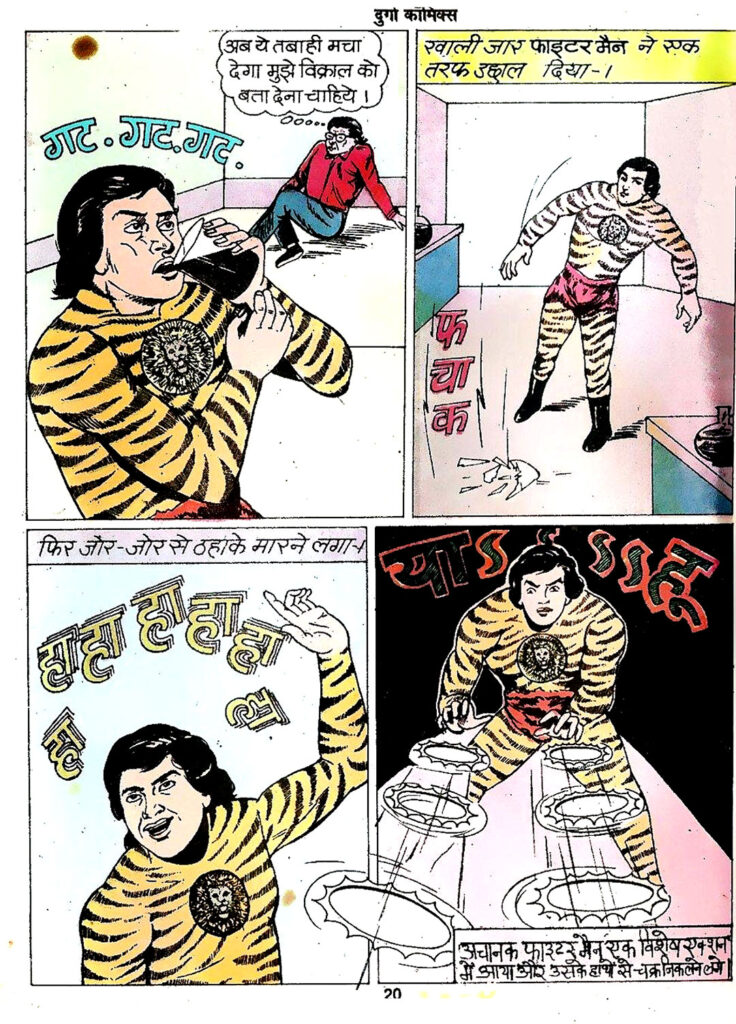
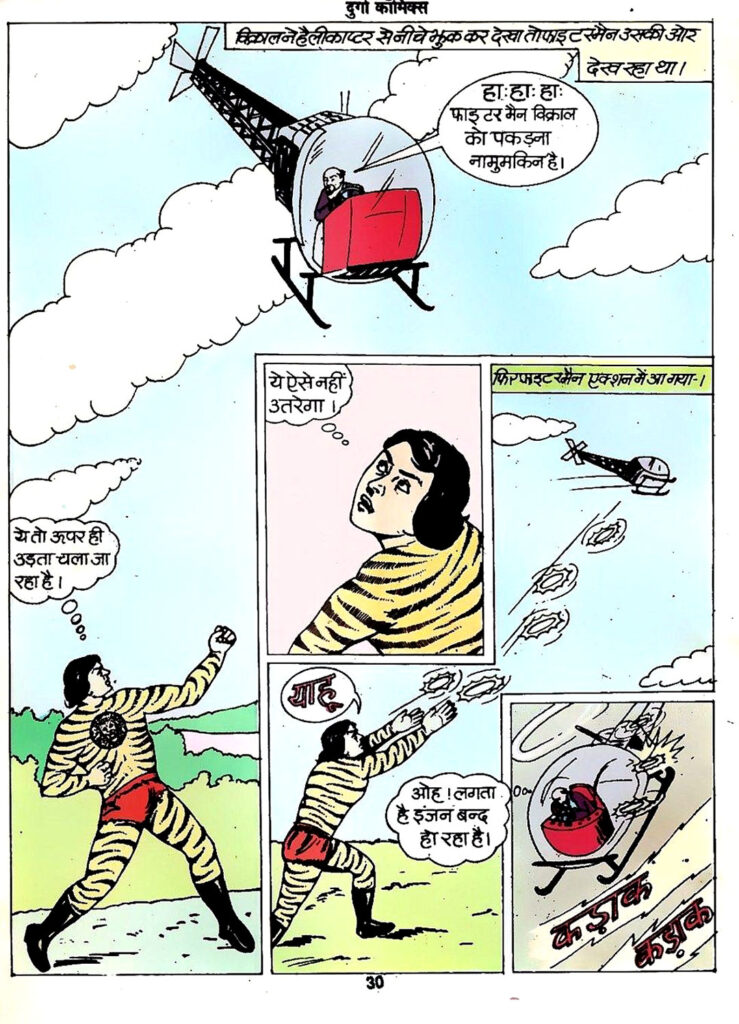
The powers of Fighter Man are not like those of a common man. Bullets and bombs have no effect on him. Dangerous laser rays come out of his eyes. He can release lightning-bright chakras from his hands, which cut down enemies. Not only this, he can kick helicopters and jump from tall buildings.
Doctor Deng’s biggest mistake is that he gives Fighter Man the last powerful solution before placing an obedience device in his mind. As a result, Fighter Man rebels, and his memories begin to return. He remembers that these same people had killed his wild parents, i.e., the leopards.
Action and Climax
The last part of the comic is full of action. Fighter Man wreaks havoc in the lab. He blinds Doctor Deng and ends Kalua in an extremely cruel way. During this time, his dialogue—“belly that balloon”—perfectly reflects the comics style of that period.
When Vikral attacks Fighter Man with his commandos, his invincibility is fully revealed. The bullets hit his body and fall to the ground. He runs his cycles and destroys the entire army. Finally, when Vikral tries to escape in a helicopter, Fighter Man jumps high into the air and kicks it, causing it to crash into the hills and get completely destroyed.
Character illustration
Fighter Man is a superhero with a Tarzan-type background, made even more dangerous by modern science. He does not speak much, but when he gets angry, he destroys everything. His tiger-print costume and red shorts distinguish him from other heroes.
Vikral is a completely 90s Bollywood-style villain—with a private army, high-tech weapons, and hunger for power. He has only one purpose: to rule.
Dr. Deng symbolizes the misuse of science. His greed ultimately becomes the reason for his destruction.
Art and portraiture
The artwork done by Dharmesh Studio is quite effective for its time. Even though it may not have the intricate detailing of Raj Comics, the use of colors and the structure of the action scenes keep the reader engaged. Especially the rays coming out of Fighter Man’s eyes and the explosion scenes look lively, enhanced by sound effects like ‘dhadam’, ‘badam’, and ‘kinii’. The comic does not hesitate to show violence either, making its tone slightly gritty.
Language and Dialogue
The language of the comic is in simple Hindi, with Urdu words like ‘sultanate’, ‘hukumat’, and ‘khunkhar’ mixed in well. The dialogues are short but effective. Fighter Man’s laughter and the villain’s fear are well conveyed through dialogues.
Critical analysis: merits and shortcomings
The story never loses grip and holds the reader from beginning to end. Turning a forest-raised child into a laboratory-made superhero was a fun and fresh idea for that period. Children and young readers can instantly like Fighter Man’s look.
Talking about weaknesses, the science shown is completely imaginary and does not seem very logical. The story focuses more on action and less on the psychology of the characters. The emotional conflict running inside the protagonist is almost non-existent.
Cultural influences and nostalgia
In today’s Marvel and DC era, characters like Fighter Man remind us of those innocent times when there was a comic shop at every street corner. Durga Comics not only provided entertainment through this issue but also delivered a message of patriotism, where Fighter Man vows to eliminate traitors.
This issue was just the beginning. In the end, the next issue, ‘Fighter Man Ka Tehelka’, is advertised, making it clear that the publisher was very serious about this character. Ads for characters like ‘Torah-Torah’ and ‘Mahabali Langura’ also give a sense of the shared universe of that time.
Conclusion
Overall, Fighter Man Issue-1 is a strong example of Indian pulp comics. It is a story full of power, revenge, and superpowers that still manages to pull readers along with it. If you are fond of old Indian comics and the raw, unrestrained stories of that era, then this debut of Fighter Man is definitely worth reading.
This comic teaches us that no matter how powerful evil becomes, the force of nature and justice ultimately defeats it. Fighter Man is not just a superhero, but the hero of the dreams of all those children who once imagined themselves flying in the sky and eliminating evil.
