


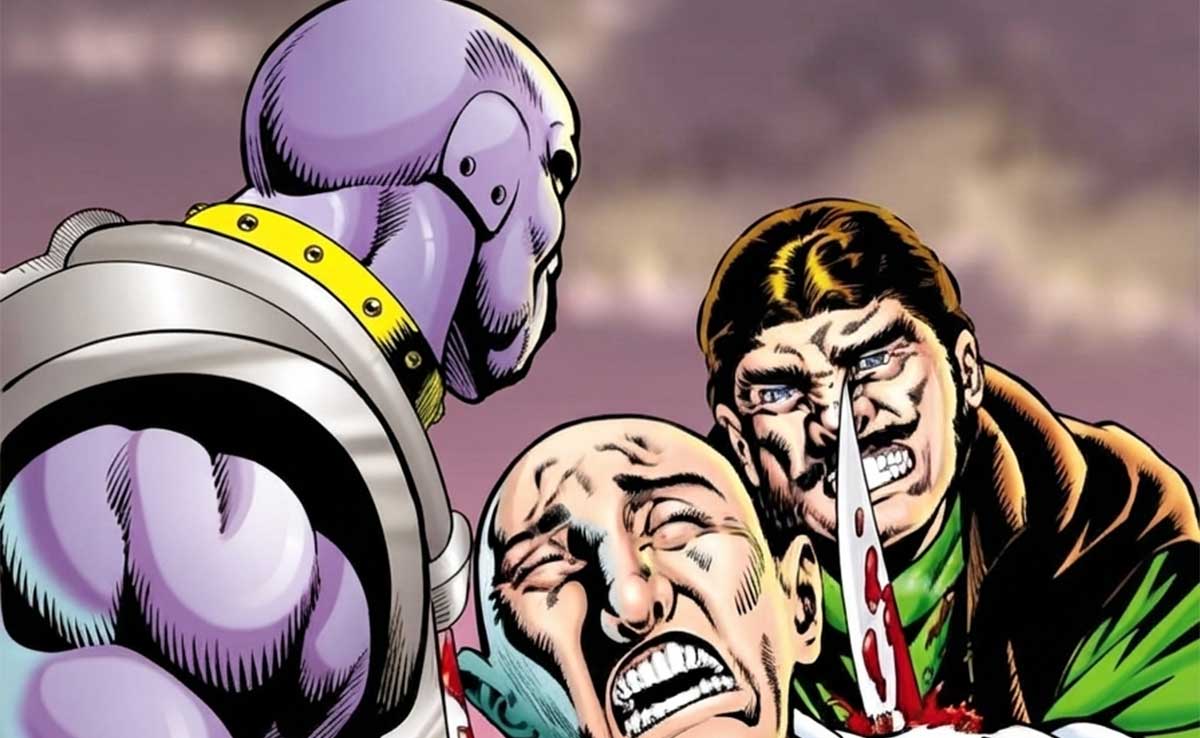
The background of the story and its connection to previous parts
The three-part story comprising ‘Hey Ram’, ‘Torture’ and ‘Jallianwala’ was a major and challenging experiment in the stories of Doga, the most ruthless and close-to-real-life hero of Raj Comics. The purpose of this series, which appeared in the early 2000s, was not only to show crime and gunfire, but to bring two completely different strands of Indian thought, Gandhian non-violence and Doga’s vengeful violence, face to face.
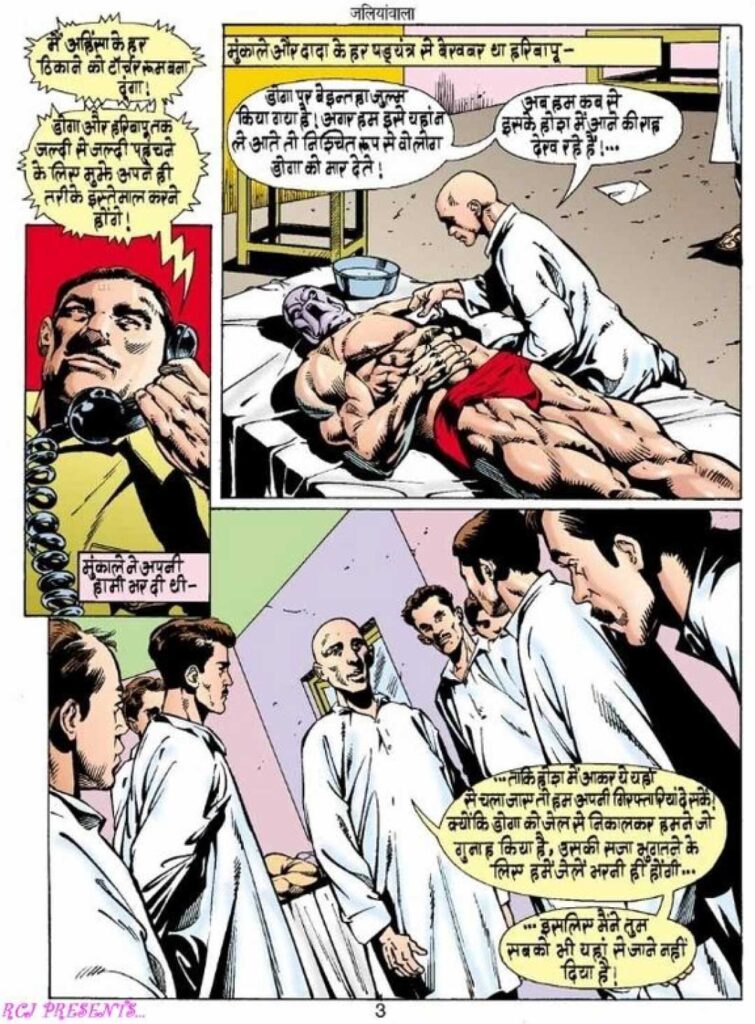
This battle of ideas started in the first part, ‘Hey Ram’. In the second part, ‘Torture’, the collusion between the system and the mafia subjected Doga to merciless physical torture, while the final part, ‘Jallianwala’, was meant to be the culmination of this entire struggle and a devastating turning point. It is important to examine, from a reviewer’s perspective, whether this final part does justice to the intense suspense and serious ideas of the previous stories, or instead becomes a hastily muddled ending because of its limited page count.
Summary of the story: The slaughter of saints and the spinning wheel of the shroud
Since the main focus of this review is on understanding the writing and art of the story rather than recounting it, a brief summary will be enough to understand the plot. In the previous part, ‘Torture’, after rescuing the half-dead Doga from the police station, Haribapu brings him to his secret ashram. Meanwhile, mafia leader Dada and corrupt S.H.O. Munkale together falsely accuse Haribapu of kidnapping Doga.
Dada attacks the centers of non-violence spread across the city and begins a series of massacres, taking unarmed saints and the women practitioners of the female branch hostage. Doga’s companion Monica saves the women by setting fire to the female branch and, after distracting Dada, reaches Haribapu’s main ashram.
Chasing Monica, Dada surrounds the main ashram and opens indiscriminate machine-gun fire on hundreds of unarmed Satyagrahis present there, creating a modern-day ‘Jallianwala Bagh’.
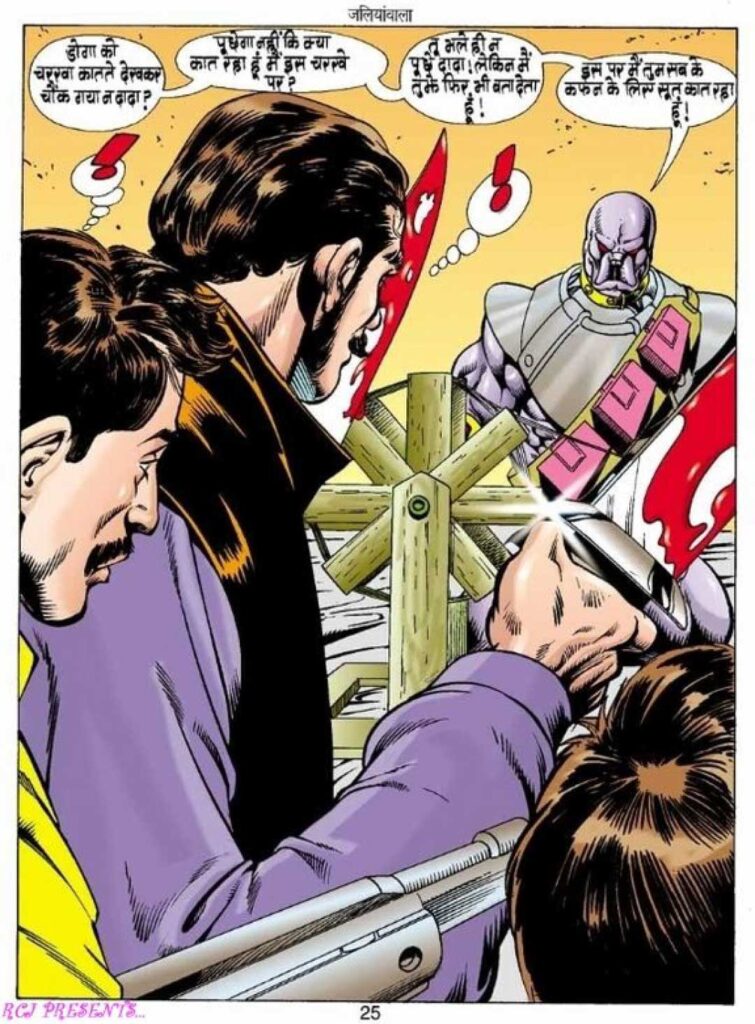
When Dada enters the ashram to kill Doga, he finds the seriously injured Doga spinning the charkha and saying that he has been spinning yarn for the shrouds of all of them.
During the fight, Haribapu sacrifices both his arms by jumping in front of the swords aimed at Doga. After Haribapu’s sacrifice, Doga flies into a fierce rage and kills Dada with bullets and a boomerang, finally speaking of giving up his weapons while bowing to the white flag of non-violence.
Writing and Screenplay: Sharp Dialogue and Depth of Ideas
The pair of Tarun Kumar Wahi and Vivek Mohan has done remarkable work in writing the dialogues of this comic. In particular, the scene in which Doga sits in front of the charkha and says, “On it, I am spinning yarn for the shrouds of all of you,” gives the reader goosebumps. Similarly, during the final confrontation, Doga’s dialogue, “The British General Dyer was lucky that Doga was not present there at that time, but your luck is bad,” powerfully conveys his fierce anger and determination to deliver justice in his own way.
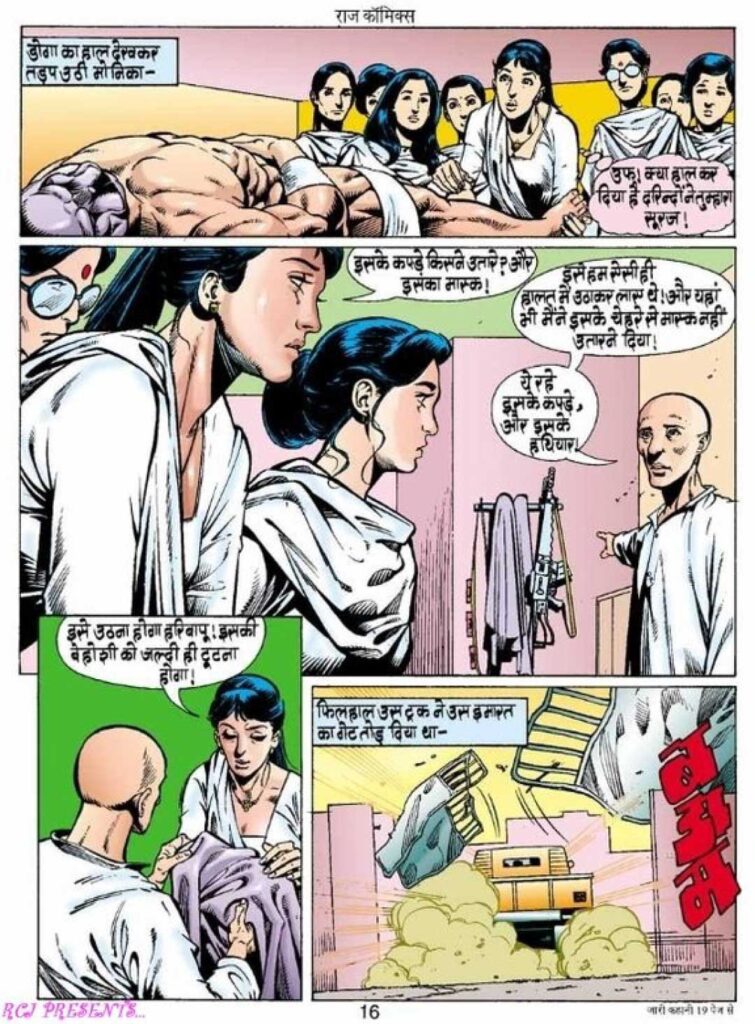
The greatest strength of the writing is that the writers did not allow Gandhian non-violence to appear weak or cowardly. Haribapu’s statement that “removing someone’s mask without his consent is also violence” explains the deep and subtle meaning of non-violence.
But a major shortcoming in the script is that the story gives priority to overly emotional and dramatic events at the expense of sound logic and balance.
Drawing and Illustration: Roughness and Bloody Reality in Manu’s Art
Artist Manu’s drawing gives this comic a completely different look from the usual Doga stories. While the art of Sanjay Ashtaputra or Dheeraj Verma presents neat and clean images, Manu’s style is very raw, rough and dark in color, matching the atmosphere of a B-grade crime thriller.
Manu has depicted violence and pain in a very striking manner. Be it the scene of girls being suspended by their hair in the women’s ashram or the flying limbs of Satyagrahis being riddled with machine-gun bullets, Manu shows no hesitation in depicting cruelty.
However, Manu’s illustrations reveal major shortcomings in maintaining consistent body proportions and facial features in many places. In many frames, Doga’s face, shoulders and muscles appear more distorted than necessary and are inconsistent with one another.
Monica’s portrayal, in particular, is very weak and flat in many places; her facial expressions change completely across different frames. Nevertheless, the depiction of movement and speed in the action scenes successfully keeps the reader engaged with the story.
Colors and Lettering: A Battle of Ideas Seen in Red and White
Sunil Pandey’s colors beautifully highlight the central idea of this comic. The entire story depicts a powerful confrontation through two colors—the white worn by the followers of non-violence and the bright red blood spilled by Dada’s bullets.
When streams of blood spill onto white clothes, that contrast of colors creates a deep sense of disgust and sadness in the reader’s mind.
However, because of the technical limitations of that period, flat colors lacking depth have been used in many of the background scenes. Because of the limited use of light and shadow, many interior scenes—such as the rooms inside the ashram—look quite flat and lifeless.
Sunil Pandey’s lettering is clean and easy to read. In particular, the sounds of gunfire (“dhayan,” “barrar”) and breaking bones are rendered effectively in very bold letters.
The biggest drawbacks of the script: haste and unanswered questions
The biggest weakness of this comic, from the perspective of an unbiased review, is its overly hasty ending. Raj Comics had built such a large and tense story across these three parts, but the final installment was confined to very few pages. This lack of space makes the story’s final fight feel rushed toward its conclusion.
A dreaded don like Dada, who has gunned down dozens of people, suddenly abandons his guns and draws swords when Doga appears. This seems completely contrary to the behavior of someone running an organized mafia gang in modern times, and no convincing reason is provided for it.
Furthermore, the story ends immediately after Dada is killed in the final fight. There is no answer as to whether society understood Haribapu’s sacrifice or whether the police department took any action against the corrupt people within its ranks. This incompleteness abruptly pulls the reader out of the story.
Underdeveloped Characters: Munkale’s Sudden Disappearance and Monica’s Unfinished Role
The imbalance in the characters’ roles in this comic is very frustrating. Most shocking is the complete disappearance of S.H.O. Munkale. In this pivotal installment, Munkale, the main villain of the previous part, ‘Torture’, who subjected Doga to brutality, is limited to just one phone call at the beginning.
The uniformed executioner whom readers were hoping to see punished at Doga’s hands is not even mentioned during the final confrontation. The legal battle between Munkale and the Commissioner is completely forgotten, which is a major omission in the script’s resolution of the story.
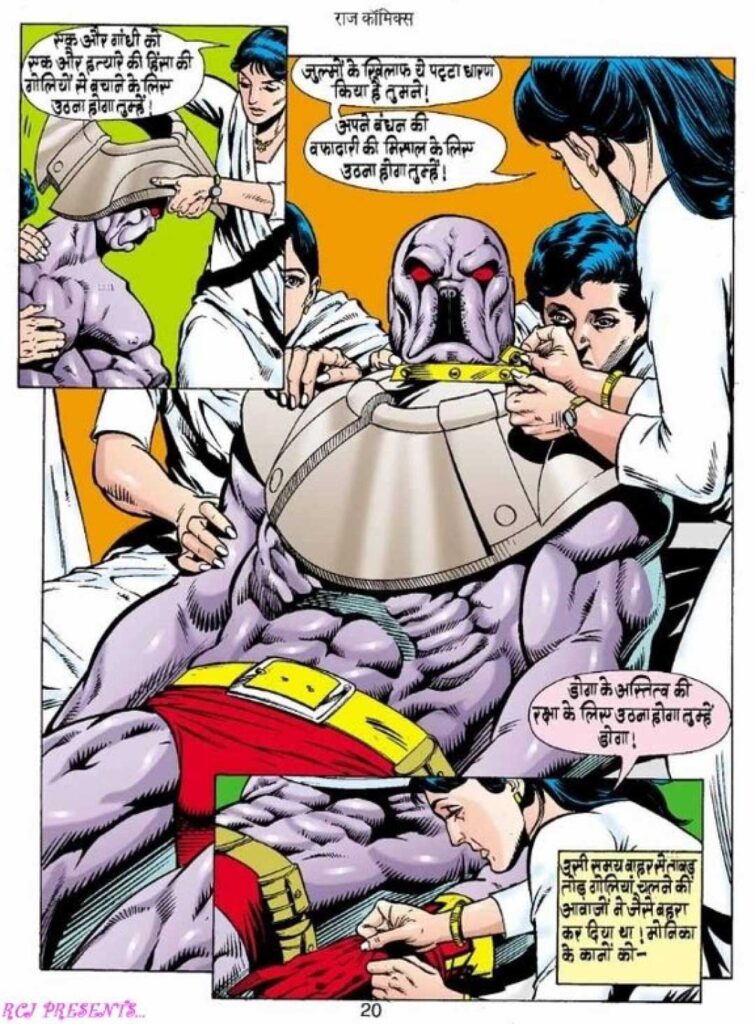
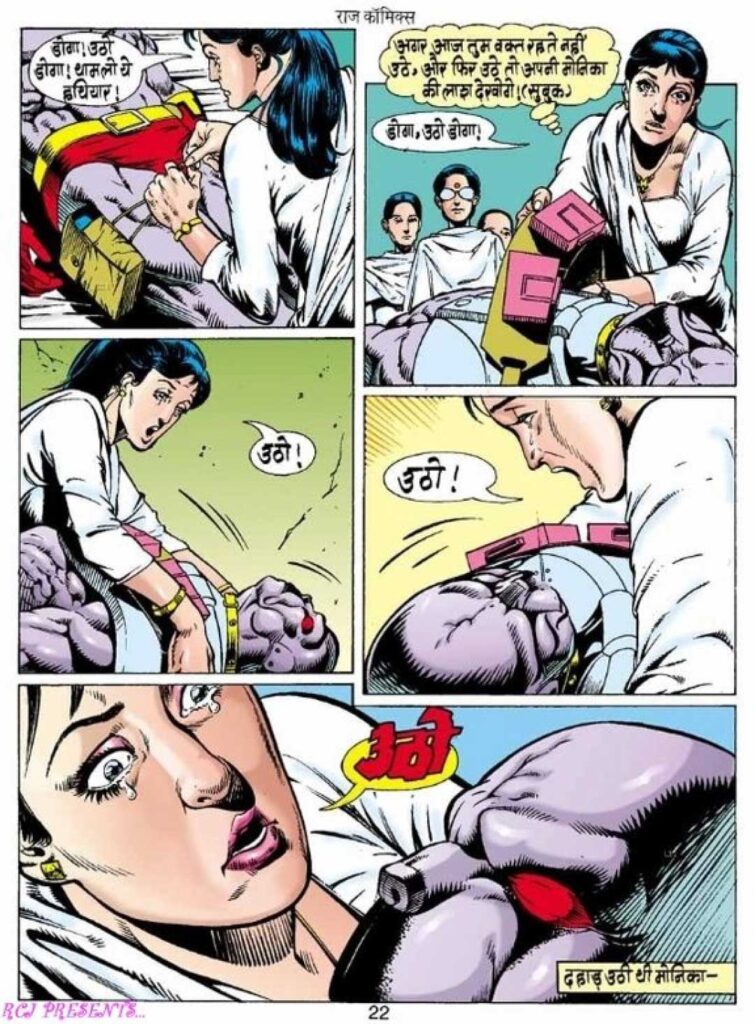
Monica, on the other hand, has also been used only to advance the story. She painstakingly rescues the women of the female branch, reaches Doga and, while crying, straps armor and weapons onto his body.
But as Doga regains consciousness, Monica disappears from the scene completely. Where she was during the final fight and what she did—there is no indication of either.
The same is true of the other non-violent members of the ashram, who were used only as a crowd that fell after being hit by bullets.
Features and deep impact of the story
Despite all these shortcomings in the writing and resolution of the story, ‘Jallianwala’ cannot be called an ordinary comic. Its courage in presenting difficult ideas is what gives it a special place.
Haribapu losing both his arms for Doga is a deeply emotional moment in Indian comics that conveys a powerful message. This incident shows that non-violence is not weak; those who practice it can sacrifice even what they hold most dear, with a smile, to protect society.
Doga sitting near the charkha and finally bowing to the white flag after casting aside his weapons shows that Doga is not a bloodthirsty killer, but a protector who dreams, from the bottom of his heart, of a society where his guns are never needed.
Final Opinion and Conclusions
‘Jallianwala’ is a comic that fell victim to its unfinished script and hasty trimming despite its thoughtful ideas, memorable dialogues and courageous battle of ideas. If Raj Comics had created a full special issue with more pages instead of fitting it into so few, showing the actual outcome of Munkale’s story and how far the police investigation progressed, it could have ranked among the greatest stories in the history of Indian comics.
Despite this, the memorable combination of Tarun Kumar Wahi’s sharp dialogues, Manu’s aggressive and bloody illustrations, and the ideas represented by Doga and Haribapu makes it a must-read for every serious comics lover. This comic is proof that, in the nineties and the 2000s, Raj Comics was not limited to children’s entertainment alone, but also had the courage to confront society’s most bitter and complicated realities.
Original details and creative team: Raj Comics special issue
Three-part story: The final and decisive installment following ‘Hey Ram’ and ‘Torture’
Writer: Tarun Kumar Wahi
Concept and collaboration: Vivek Mohan
Illustration: Manu
Lettering and colors: Sunil Pandey
Editor: Manish Gupta
Presentation: Sanjay Gupta
