


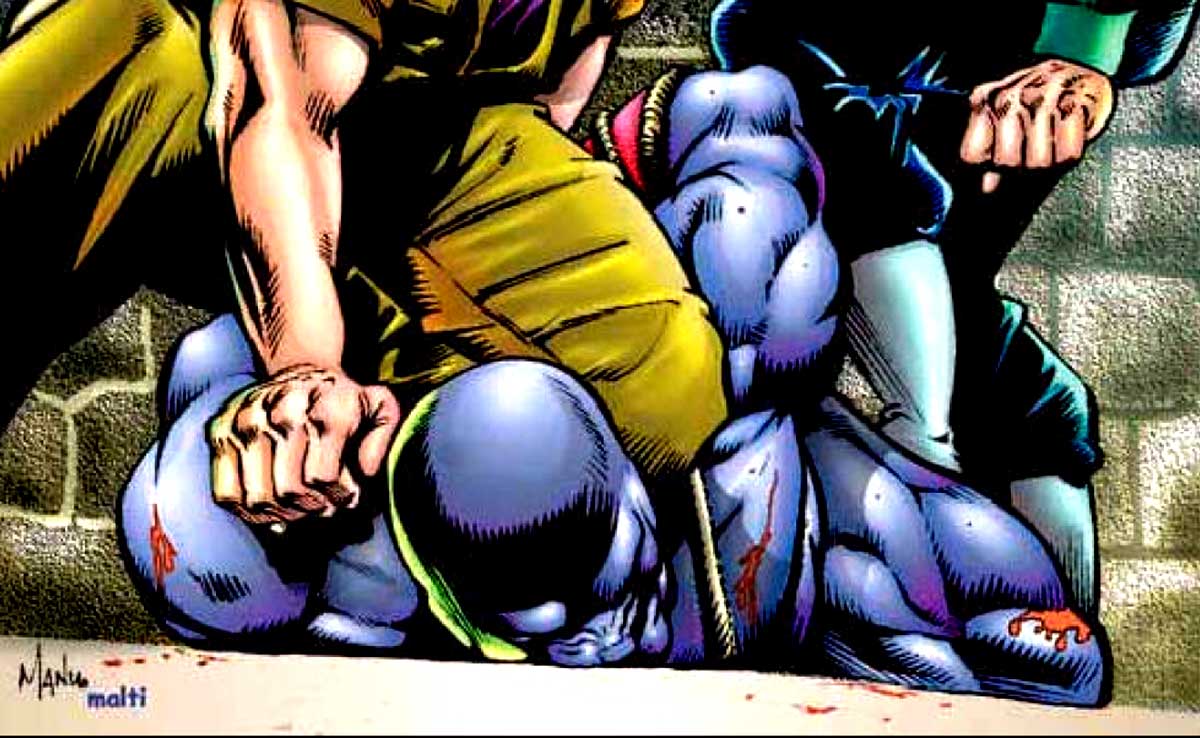
Doga’s ‘Torture’: The Nexus Between Mumbai’s Mafia and Police
The world of Raj Comics’ most dreaded, close-to-real-life and heartless anti-hero, ‘Doga’, has always revolved around dark alleys, corruption and bloody revenge. In this series, the special issue ‘Torture’ is such a shocking chapter that it moves far beyond the imaginary world of superheroes and presents an unflinching picture of the filth within the system, the cruelty of the police and the hypocrisy practised in the name of ideals. The main theme of this comic is not just the rattle of bullets; it also brings to light the merciless torture that breaks the bodies and souls of human beings, the wolves hiding in khaki uniforms and the battle of ideas between non-violence and extreme violence.
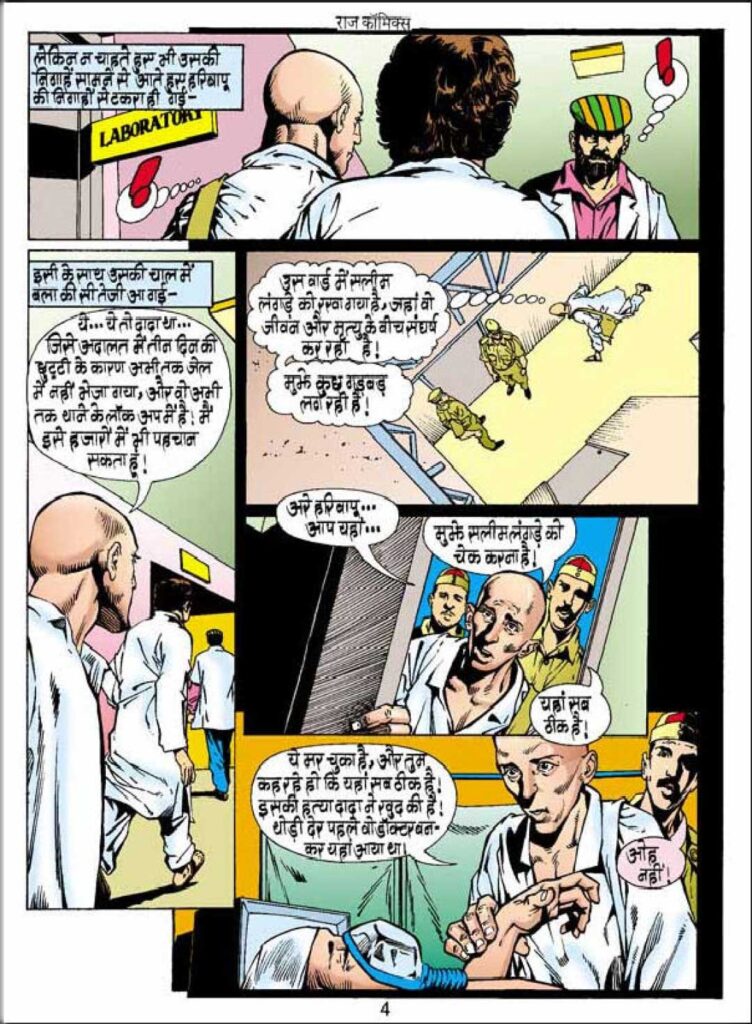
The story is based on the dark side of Mumbai, where the guardians of the law become the biggest accomplices of criminals. This comic poses a profound question to the reader: when those who protect justice become butchers, what is the meaning of justice in society? The sharp style and gripping manner in which writer Tarun Kumar Wahi and concept creator Vivek Mohan have presented this comic are enough to give the reader goosebumps.
Mafia leader ‘Dada’ opens fire on the peaceful protest led by Gandhian Haribapu, in which many people lose their lives. Doga gets Dada arrested, but Dada, with the help of corrupt cop Munkale, slips out of the lockup and kills witness Salim Langra in the hospital. Doga enters the police station to uncover the truth, but gets caught in the trap set by Munkale and Dada.
He is taken to the secret torture room of the police station, where he is brutally tortured. Munkale and Dada rain baton blows on Doga’s bare body, sprinkle salt on his wounds and pour boiling wax over them, trying to force a scream from Doga’s mouth. But Doga does not lose courage.
At the same time, outside the police station, Haribapu and his non-violent comrades surround the police officers. Instead of attacking the police with sticks, they bind them with the threads of their non-violence. Haribapu breaks down the door of the torture room. When Munkale tries to shoot at them, the wounded Doga deflects his gun with a kick, saving Haribapu’s life.
Doga’s ‘Torture’ Villains: Munkale and Mafia Leader Dada
S.H.O. Munkale: Police Brutality Behind the Uniform
S.H.O. Munkale is the most disgusting and dangerous villain in this comic. He is the face of a corrupt police system that betrays its own uniform and oath by taking bribes from criminals. Munkale is not merely corrupt; he is a sick-minded person who finds happiness in inflicting pain on others. He takes diabolical pleasure in torturing helpless prisoners, tearing their skin and hearing their screams.
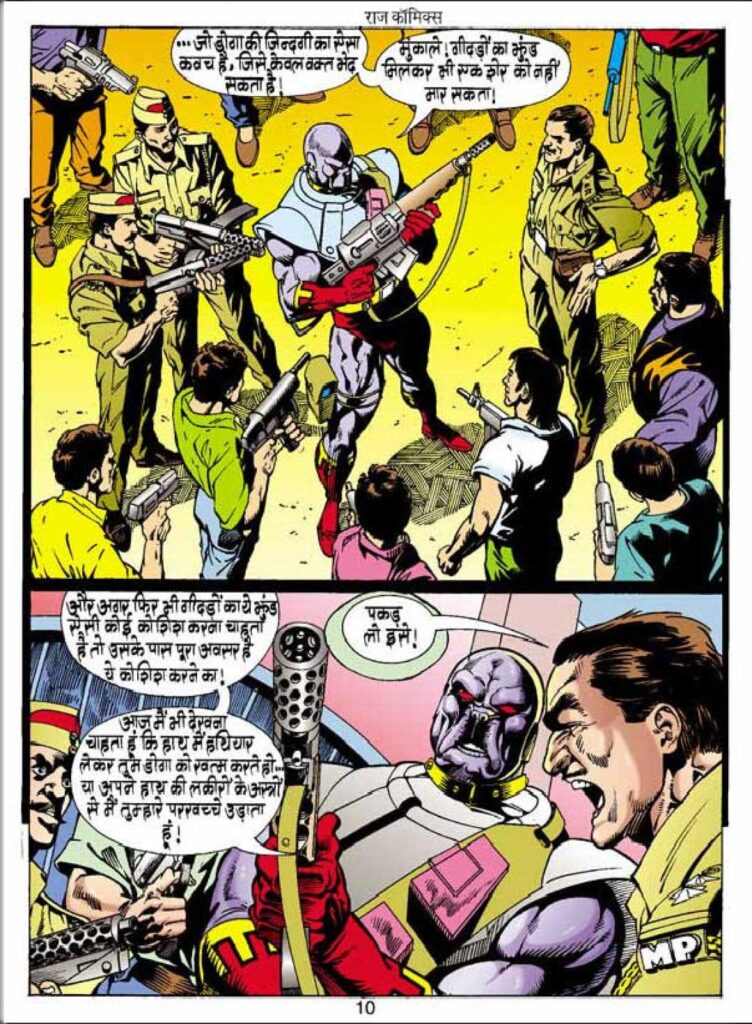
Munkale’s biggest weakness is his pride. He considers himself the god of his police station, and Doga’s silence is a slap to his pride. He wants to claim a reward worth crores by killing Doga and dreams of rising straight to the commissioner’s chair. This heartless portrayal of Munkale fills the reader with deep hatred for him and fear of third-degree police torture.
Mafia Leader Dada: Mumbai’s Underworld Protected by the Police
Dada represents the fearless underworld don of Mumbai, whose power extends far beyond the boundaries of the law. Dada is so fearless that, despite being in police custody, he can leave whenever he wants, enter the hospital’s ICU and kill the main witness.
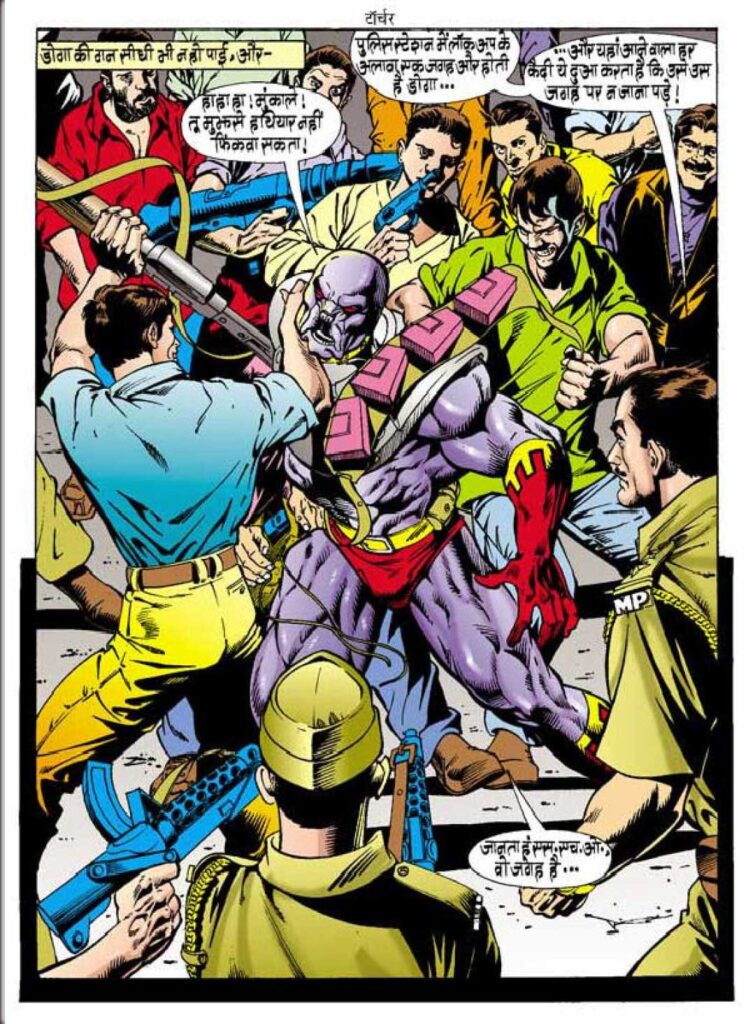
There is no distinction between right and wrong for him; he does not hesitate at all to fire indiscriminately at innocent protesters following the path of non-violence. When Doga is tied up in the torture room, Dada joins Munkale in rubbing salt into Doga’s wounds and tormenting him. Dada’s ruthlessness and his complicity with the police prove how dangerous and devastating criminal gangs become when they gain the support of those in power and law enforcement.
Haribapu’s Non-Violence vs. Doga’s Approach to Justice
‘Torture’ is not just an action comic; it also brings two completely different ways of thinking into conflict. On one side is Haribapu’s Gandhian philosophy, which holds that violence can never be the answer to violence and that sacrificing oneself is the only way to bring about change. On the other hand, there is Doga’s thinking, which holds that criminals who have spread like cancer through society can be eliminated only with bullets and gunpowder.
But the most effective moment of this comic comes when principles begin to break down in the face of real situations. When Haribapu sees that unarmed non-violence is only increasing the death toll and that demons like Munkale and Dada do not follow any rules, his own comrades have to fight with sticks to protect justice and life, and Haribapu himself has to fire a rocket launcher to blow up the wall. This incident puts forward the age-old message of the Srimad Bhagavad Gita: when unrighteousness crosses all limits, it becomes necessary to take up arms to protect righteousness and life.
Manu’s Artwork and Sunil Pandey’s Colours in ‘Torture’
Artist Manu’s illustrations capture the dark and violent atmosphere of this comic with complete ease. In the torture-room scenes, Manu has depicted the tension in Doga’s muscles, the flowing red blood and the fine lines of pain visible on his face, alongside the cunning, devilish smiles on Munkale’s and Dada’s faces, in a strikingly vivid manner.
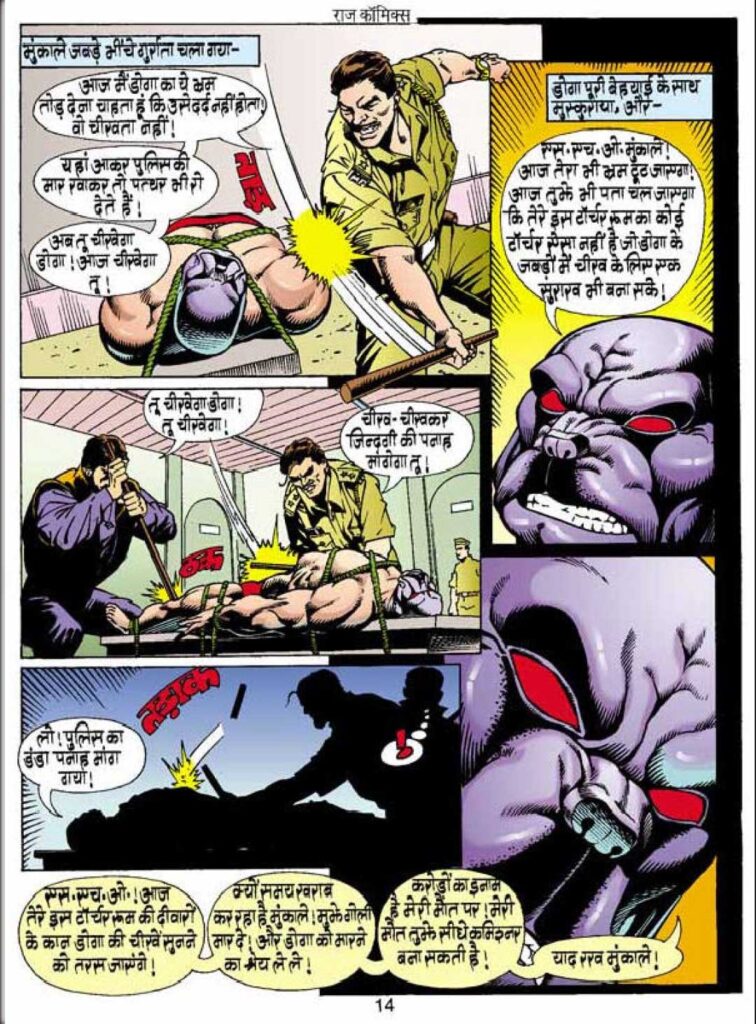
Sunil Pandey’s use of colours has deepened the atmosphere of the comic. The yellow and muddy tones of the torture-room walls reflect the suffocating atmosphere of the place, while the use of contrasting colours in scenes showing salt burning in wounds and flowing wax makes the reader almost feel that burning sensation in their own body. The illustrations have been arranged so neatly that the tension of the story does not subside even for a moment.
Final Verdict: Why Doga’s ‘Torture’ Is a Must-Read Comic
‘Torture’ is a key milestone in Doga’s entire comic-book journey. This special issue shows that Doga is not a superhero solely because of his guns; his true strength lies in his firm convictions and his extraordinary ability to silently endure unbearable pain. This story exposes the brutality of the system and forces the reader to consider why, when the guardians of the law become the ones who take lives, society needs someone like Doga, who takes a tough path to protect it.
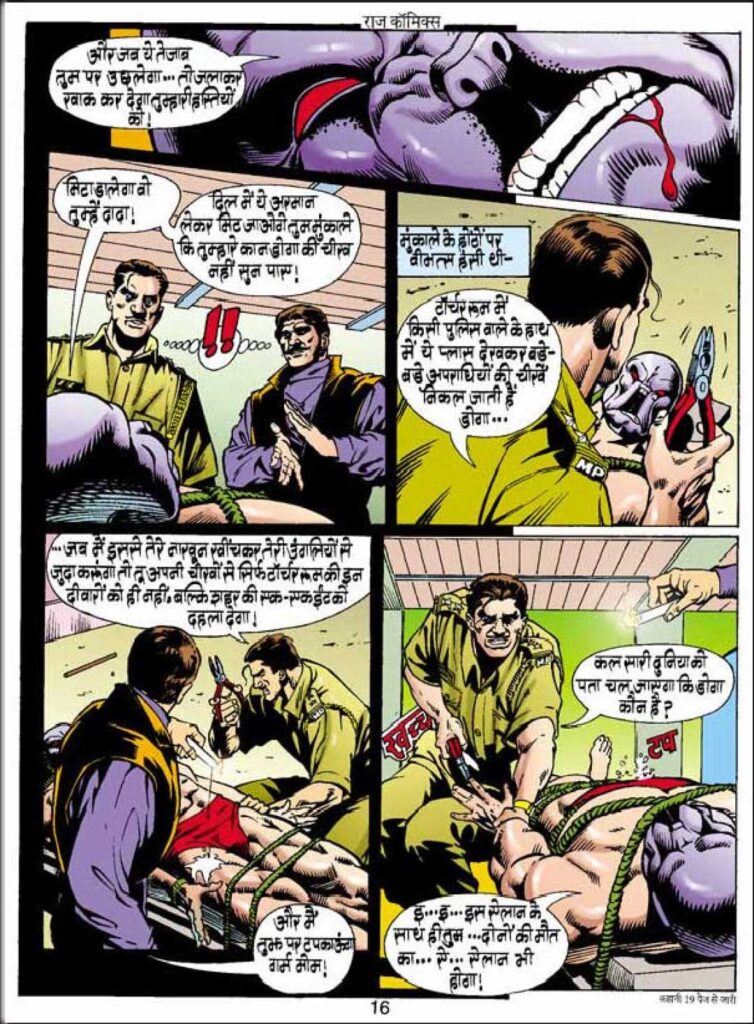
Great writing, hair-raising torture scenes, thought-provoking ideas and a mysterious ending that sets the stage for ‘Jallianwala’ make it an unmatched classic among Indian comics featuring crime and adventure for mature readers. For every reader who likes comics based on serious, close-to-real-life themes and tightly woven plots, ‘Torture’ is a must-read comic.
Original Publication: Raj Comics Special Issue
Author: Tarun Kumar Wahi
Concept: Vivek Mohan
Illustrations: Manu
Lettering and Colours: Sunil Pandey
Editor: Manish Gupta
Presentation: Sanjay Gupta
Main characters: Doga, Haribapu, S.H.O. Munkale, mafia leader Dada
