


The Chambal of Indrajal Comics and the Debut of a Desi Megastar
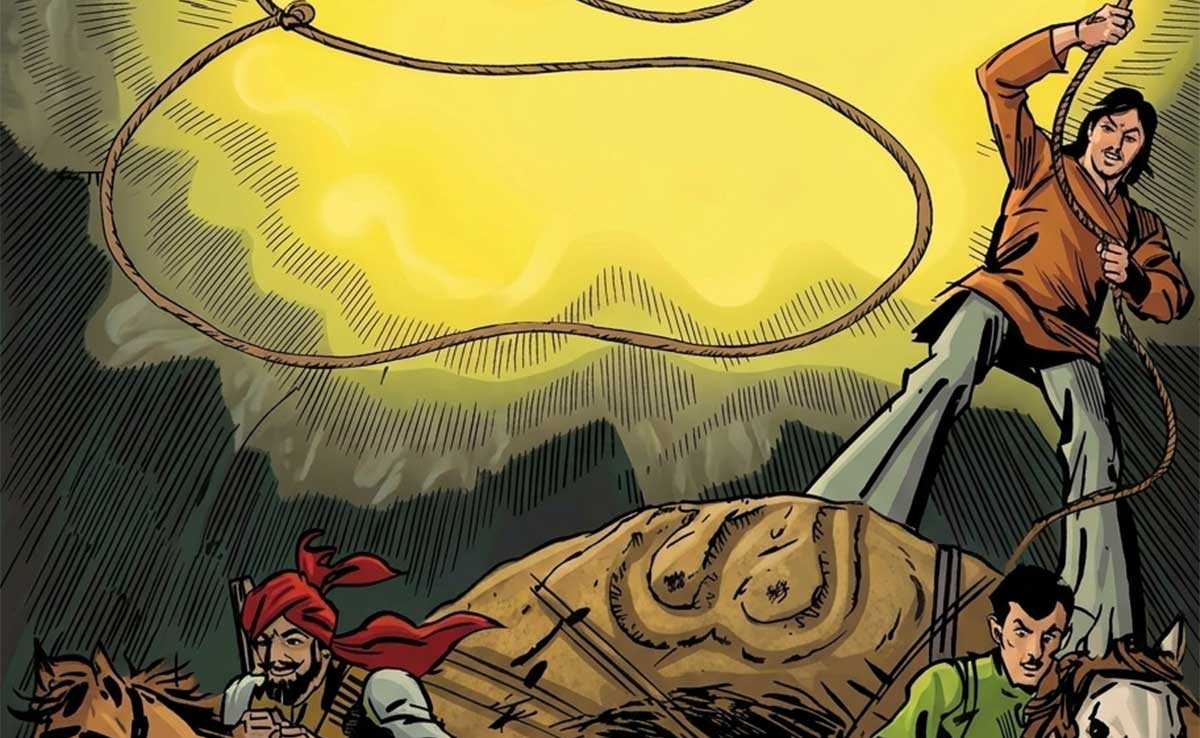
The seventies and eighties were a period of major changes in the history of Indian comics, when, amidst the dominance of foreign characters like Phantom and Mandrake, the Times of India Group’s ‘Indrajal Comics’ introduced its first completely desi hero, ‘Bahadur’, rooted in the soil of India. Bahadur, created by the famous writer and cartoonist Abid Surti, was not an imaginary protector with superpowers, but the son of the infamous Chambal dacoit Bairisingh. He rejected his father’s criminal legacy and formed ‘Nasud’ (a civil defence team). The special issue ‘Cave of Ghosts’ is one of Bahadur’s early and very important stories, as it not only shows Nasud’s fight against the organised dacoit gangs of Chambal but also introduces, for the first time, Bahadur’s strong and capable life partner and future wife, ‘Bela’. This detailed review thoroughly examines the structure of the story, the intricacies of the illustrations, the quality of the printing, and the merits and demerits of the way the story is told.
Abid Surti’s Writing and a Brief Glimpse of the Story
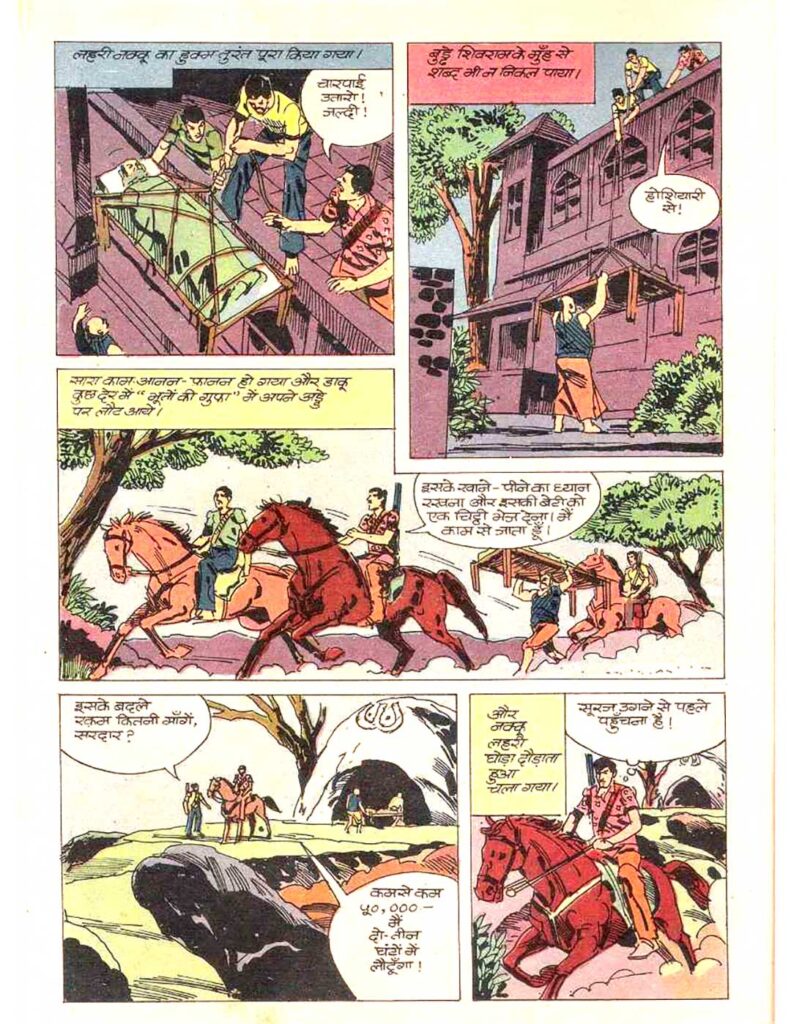
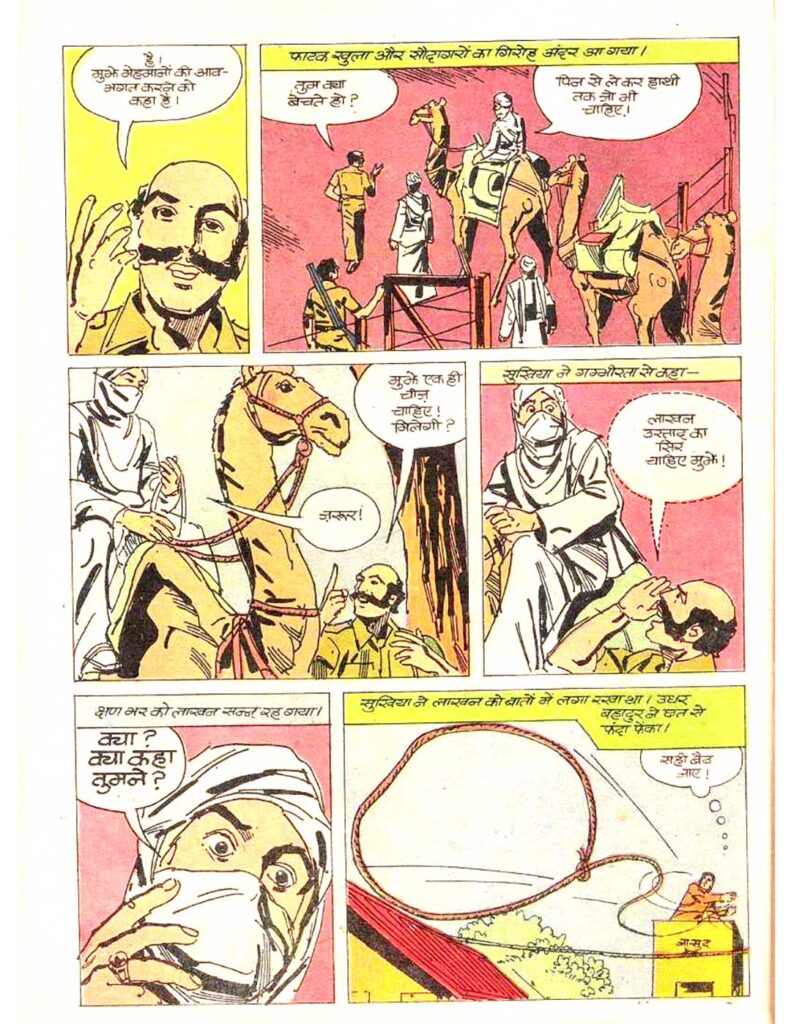
From a reviewer’s point of view, instead of recounting the story at excessive length, it is important to understand its main events briefly. On a summer night in Pipli village, the dacoit Lahari Nakku, along with his gang, attacks Seth Shivram’s mansion, kidnaps him along with his cot, imprisons him in Chambal’s difficult-to-reach ‘Cave of Ghosts’, and demands a ransom of fifty thousand rupees. Four dreaded gangs of the Chambal Valley, led by Lahari Nakku, the motorcycle-riding Kalia, Zalim Singh and the jeep-riding Lakhan Ustad, join hands to eliminate Bahadur’s growing influence. Lakhan Ustad and his men attack Nasud Kendra, arriving on camels disguised as traders, but Bahadur captures him with his quick reflexes and a noose.
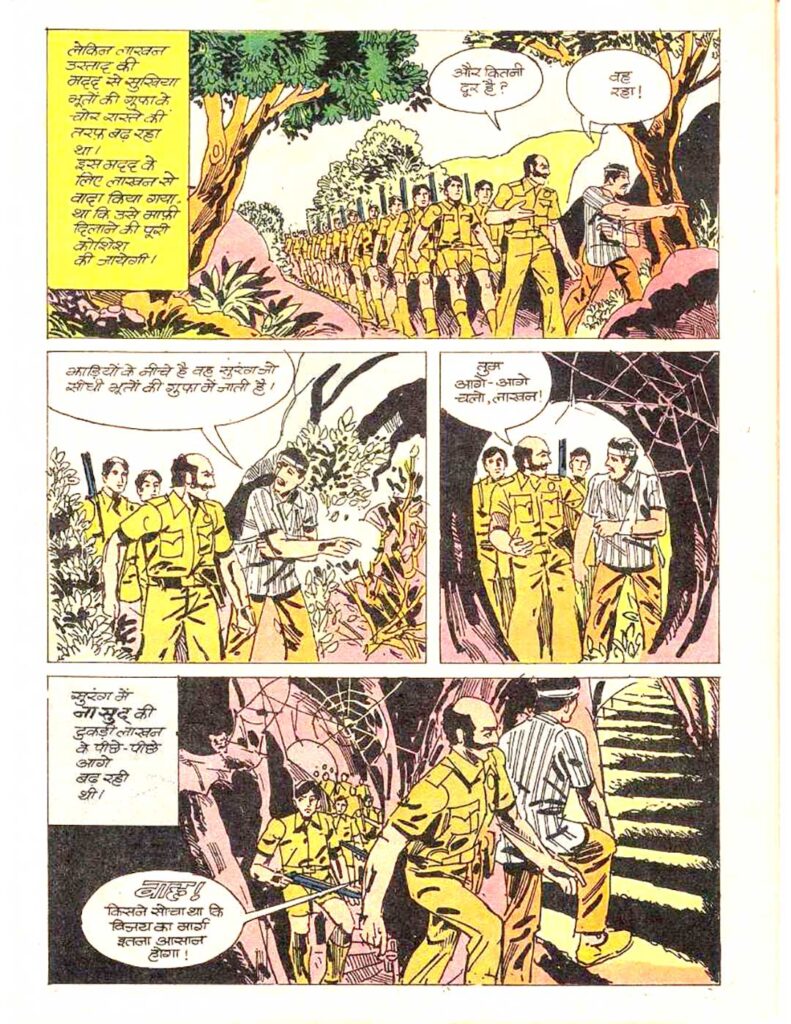
During interrogation, Lakhan Ustad reveals that the dacoits have laid a trap with the help of a girl to capture Bahadur. Lakhan evades capture and runs away, but when another dacoit chief humiliates him for his failure, the humiliated Lakhan meets Bahadur and informs the police and Nasud about a hidden route used by the dacoits to enter the cave.
Meanwhile, Seth Shivram’s forward-thinking daughter Bela, who is trained in martial arts, reaches the cave alone with a bag full of fake notes. When the outlaws pounce on her, Bahadur, clinging beneath the belly of Bela’s horse, suddenly appears and takes charge. In a joint attack by Nasud and the police, Kalia is shot, while Bahadur picks up Lahari Nakku and Zalim Singh and throws them down the hill, ending this formidable alliance of the four gangs.
Govind Brahmania’s Illustrations: An Authentic Depiction of the Old Era and the Soil of Chambal
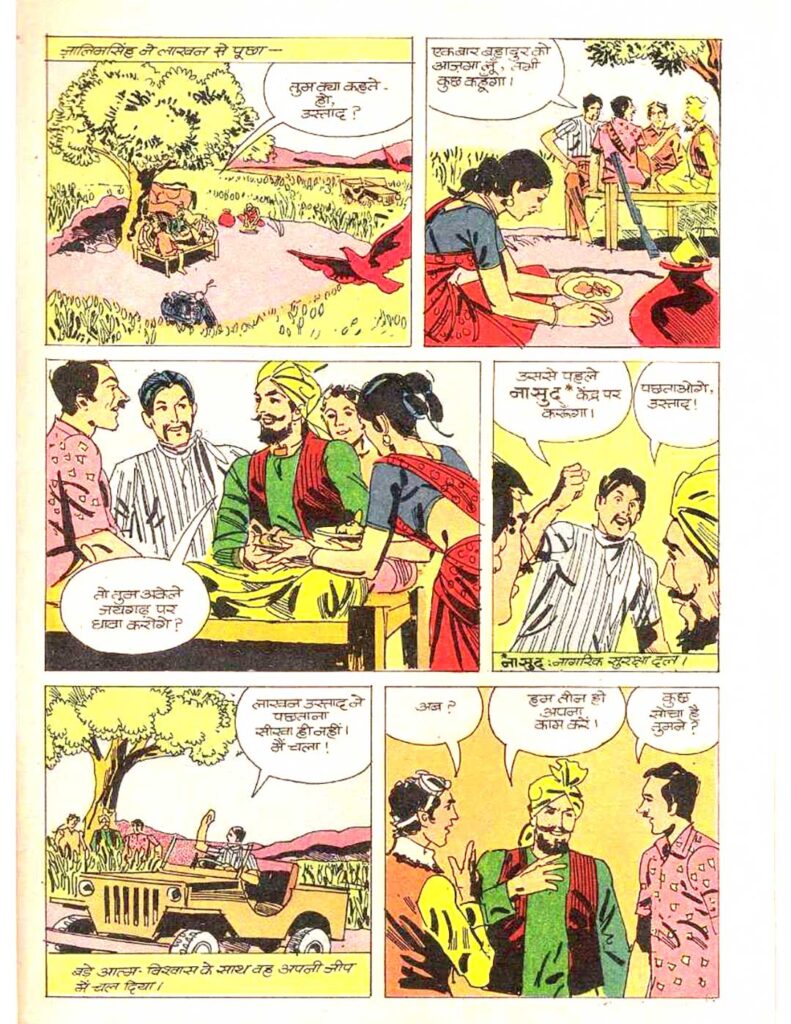
The strongest aspect of this comic is Govind Brahmania’s illustrations and linework. Brahmania ji’s art shows the deep influence of Indian cinema and the village environment of the seventies. His drawings resemble scenes from dacoit thrillers that feel close to real life rather than the fantasy world of a superhero. He has depicted the convoy of camels, the rugged hills of Chambal, the anatomy of horses and the attire of dacoits, such as dhotis, bandis, waistbands and headbands, in highly authentic illustrations that capture the nuances of local life.
His work on facial expressions is especially unmatched; the pride seen on Lakhan Ustad’s face, his hesitation after defeat and the calm seriousness of Bahadur’s face are all rendered very effectively. In Bela’s action sequences, Brahmania depicts bodily balance and the flow of movements in a very modern manner.
However, in some illustrations, the perspective and depth of the background feel a little flat. Especially in the office scenes at Jaigarh Nasud Kendra, the walls, tables and chairs in the rooms are very simple and are shown from only a few angles. Despite this, the composition of the scenes in the open ravines and the final battle at the mouth of the cave is very impressive and gives them a cinematic feel.
Technical Aspects of Colour, Lettering and Printing
This issue of Indrajal Comics was published at the Times of India press of that time, using the four-colour halftone printing technique of the old era. This printing has its own historical importance and a distinctive old-world appearance. The combination of colours chosen by Sunil Pandey and the technical team is very natural and subdued, with visible earthy tones. The choice of earthy colours used to depict yellow sunlight, dry brown ground, green fields and dusty roads completely matches the dry terrain of Chambal.
The colours of Bahadur’s traditional ochre-orange kurta and white trousers stand out clearly against the colourful costumes of the dacoits.
The lettering is entirely in handwritten Hindi, which looks very artistic and is easy to read compared with today’s digital fonts. The sounds of gunfire (Dhanay! Dhanay!), the falling cot (Dhamma!) and cracking bones are beautifully integrated into the action illustrations.
But an old technical shortcoming of the printing was that, in some places, the colours spread slightly outside their intended boundaries or did not align properly, which was a common shortcoming of rotary printing during that period.
The Greatest Strength of the Story: The Arrival of the Forward-Thinking Heroine
The most groundbreaking and commendable aspect of this comic is the introduction of the character ‘Bela’. Hindi comics and films of the seventies often featured female characters only as helpless victims or girls in trouble, whom the hero would come and save. But Abid Surti completely broke away from this old way of thinking.
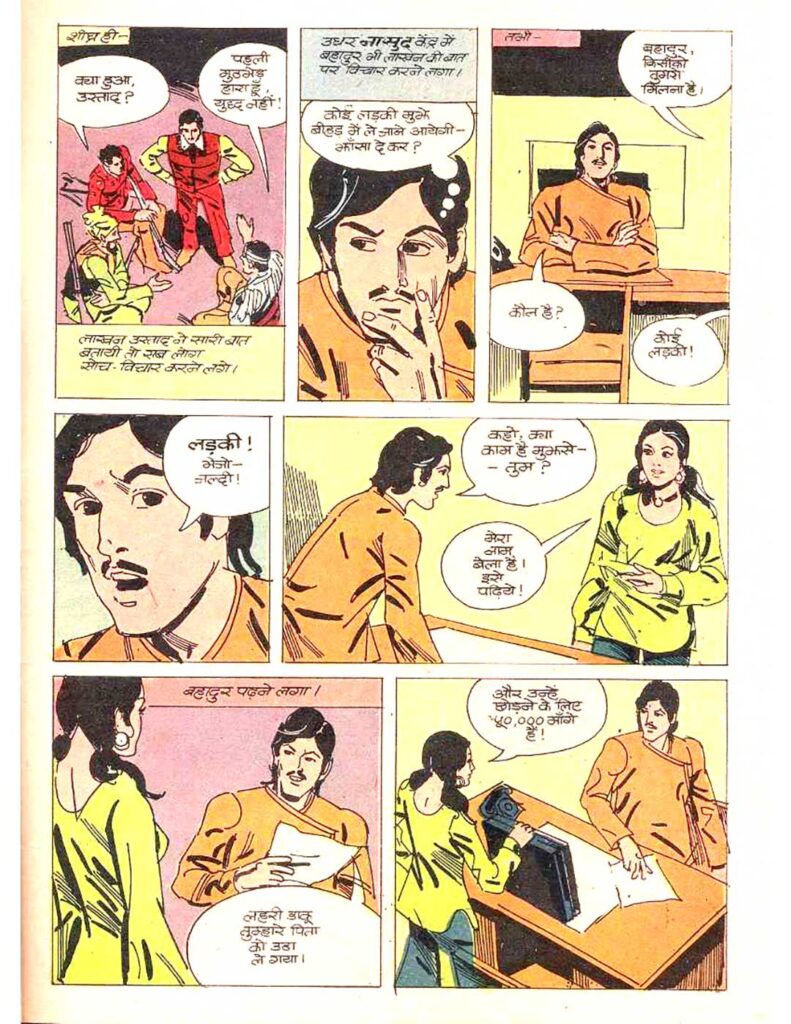
Bela is a forward-thinking, educated and confident girl who has returned from Bombay after completing her M.A. studies. When Bahadur doubts her and grabs her hand, Bela, without any hesitation, uses her judo and karate skills to throw someone as powerful as Bahadur into the air and send him crashing onto the table!
Not only this, she also shows the courage to go alone to the dacoits’ base with fake notes worth Rs 50,000 and points a revolver at Nakku herself. The arrival of such a strong, self-reliant and fearless heroine in Indian comics puts this story far ahead of its time.
Shortcomings of the Story: A Misleading Title and a Hasty Ending
Some of the obvious weaknesses of this special issue cannot be ignored in a serious review. The first and biggest drawback is its title—‘Cave of Ghosts’. Reading this title creates an expectation in the reader of secrets, skeletons or a mysterious, ghostly atmosphere associated with a haunting. But throughout the story, this place remains just a simple rocky cave where the dacoits have a base. No history or folklore explaining why the word ‘ghost’ was associated with the cave is provided anywhere in the story, making the title seem to have been chosen only to attract attention.
The second major weakness is the very hasty ending of the story. Within the story’s limited space, the final battle against the formidable alliance of four dreaded dacoit chieftains, which Abid Surti had initially built up at such length, is dealt with far too lightly and in a very short space.
Dreaded chieftains like Zalim Singh and Lahari Nakku, who have spent their entire lives amidst gunfire and ravines, become so helpless as soon as they fall into Bahadur’s hands that he picks them up without any serious struggle and throws them into the ravine. This major battle against four gangs ends in a very easy and brief encounter rather than a carefully developed confrontation.
Characters Given Less Space and the Story’s Unresolved Questions
The imbalance in the story is clearly visible in the portrayal of the characters and the allocation of their roles. Of the four dacoit chieftains, Kalia and Zalim Singh are given no detailed characterisation or background at all. Kalia is seen only riding around on a motorcycle and ends up being shot.
Similarly, the role of police chief Vishal is reduced to just a phone call; he warns Bahadur, but instead of leading the police force at the scene, he remains in the background.
By contrast, the change in Lakhan Ustad’s attitude and role is very interesting. He is overconfident at first, then becomes an informant seeking revenge after being humiliated by his own comrades. But what happens to Lakhan Ustad after the final fight? Does Bahadur secure a pardon for him from the police, or does he go to jail? The author does not fully answer this important question.
Final Conclusion of the Review
Despite all the shortcomings in its storytelling and the brief final battle, ‘Cave of Ghosts’ is a highly valuable and historically significant issue in the history of Indrajal Comics. This comic is living proof that, even in the era of foreign superheroes, a memorable homegrown story could be written by drawing on the Indian environment, the local problems of Chambal and forward-thinking ideas.
Abid Surti’s engaging and close-to-real-life writing, Govind Brahmania’s vibrant illustrations of sunlit Chambal and, above all, the first memorable appearance of a modern heroine like ‘Bela’ make this issue a must-have for every comics collector and every reader who understands Indian popular culture. These qualities make it well worth keeping in your collection.
Original details and creative team: Indrajal Comics
Publisher: Bennett, Coleman & Company (Times of India Group)
Story and original idea: Abid Surti
Illustrations: Govind Brahmania
Main characters: Bahadur, Bela, Lahari Nakku, Lakhan Ustad, Seth Shivram
