



When Animation Became a Mirror of Satire: A Revolutionary Experiment in the Comics World of the 90s
Do comedy comics only mean childish, vulgar, and absurd jokes, or can they also become a very sharp weapon for exposing the bitter truths of society and the hollowness of humans chasing their dreams? In the mid-nineties, when the Indian comics market was full of action, violence, and serious superhero stories, Raj Comics, through its ‘Fighter Toads’ universe, conducted a unique experiment that changed the traditional definition of humor. Issue No. 855, ‘Flop Show’, written by Tarunkumar Wahi, may seem like a light comedy at first sight, but if we peel back its layers, it is based on the dark corners of the world of glamour, the madness of artists, and the plight of small-budget filmmakers. It proves to be a very sharp and effective social satire.
A Sharp Taunt at the Plight of the Entertainment Industry: Don Buck’s Unique Character
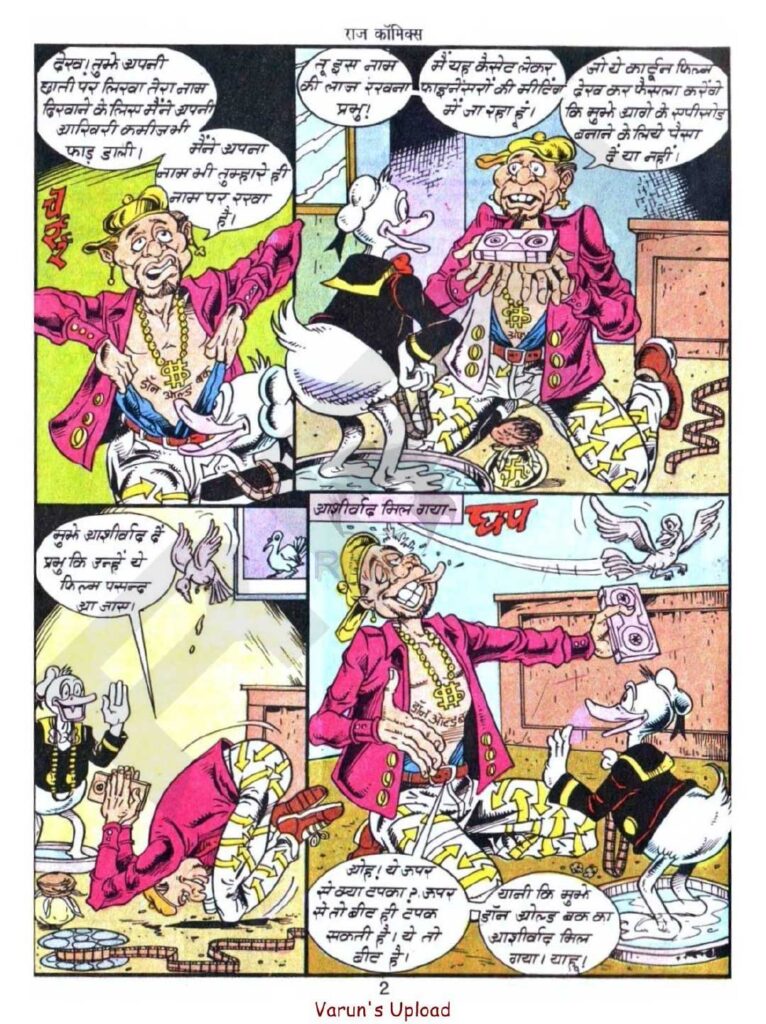
The main character on whom the foundation of the story rests is not an ordinary villain but a film director named ‘Don Buck’, who has gone to the extent of madness in his passion. Through Don Buck, the author has beautifully shown the pain and whims of millions of struggling artists who even lose their homes and clothes in order to prove their art. The scene in which Disney’s famous character ‘Donald Duck’ is turned into ‘Dawn Old Buck’ and worshipped as the ‘God of Cartoons’ not only makes us laugh but also makes fun of our blind craze for Western pop culture. Naming the financiers’ office ‘Loto, Khusso and Foot’ is a clear symbol of how corporations and moneylenders in the film industry take advantage of the helplessness of new creators and bring them onto the streets.
Parody and Satire on Itself: Raj Comics’ Unique Comedy Style
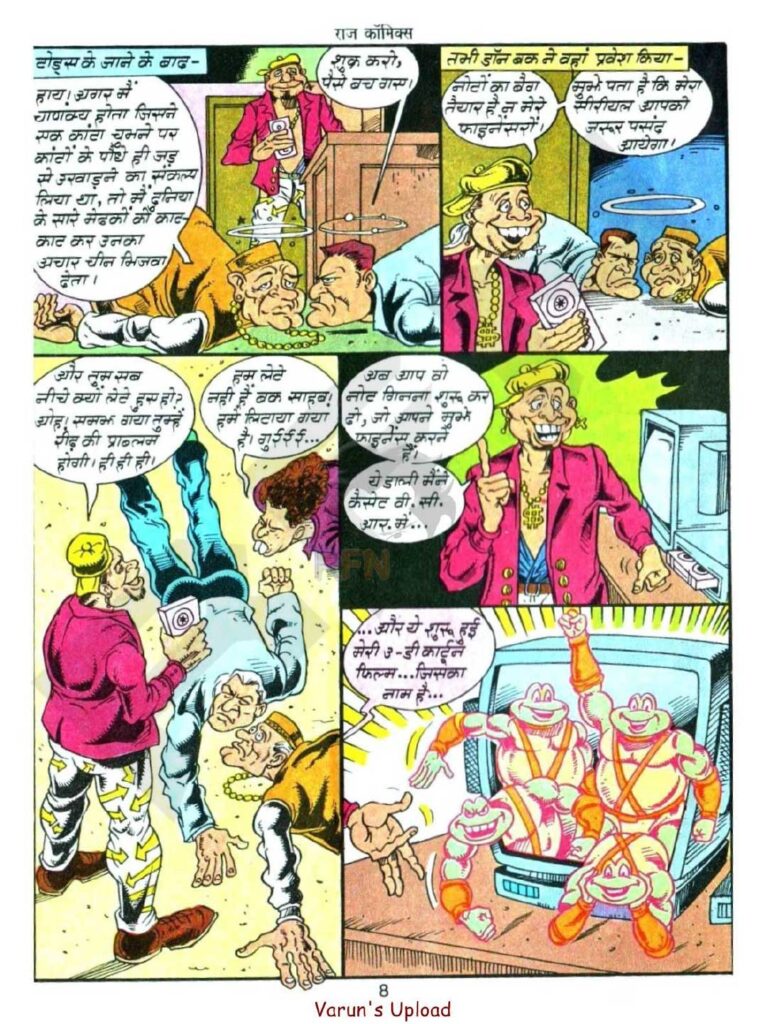
The greatest literary quality of this comic is its ‘meta-humor’ and its style of satirizing itself (Self-Parody). The Fighter Toads’ idea that they will make a documentary about Gutter’s problems and get his story written by Raj Comics’ comics advisor, ‘Sanjay Gupta’, himself breaks the traditional structure of comics and connects it directly with the readers. Despite being inspired by the imagery of Western comics’ ‘Teenage Mutant Ninja Turtles’ and ‘Battletoads’, Tarunkumar Wahi has completely moulded these four frogs (Computer, Master, Cutter, and Shooter) into the Indian middle-class mindset. Their dream of becoming TV stars, being troubled by the poverty of the gutter, and going out wearing overcoats to take out a loan creates a situational comedy that keeps the reader engaged with the story.
Fourth-Wall Breaks and the Idea of ‘Living Animation’: The Greatest Strength of the Story
The biggest turning point in the story comes when science and imagination are combined in what is called ‘living animation’ or ‘manifestation’ in the language of comics. The 3D cartoon characters coming out of the TV screen into the real world and robbing banks was a hugely innovative and unique idea at the time. The author has used magical realism (Magical Realism) very wisely here, where, when an artist’s despair and humiliation reach their absolute limits, the imaginary world created by him becomes a destructive weapon. This idea is reminiscent of famous Hollywood films like ‘Who Framed Roger Rabbit’ or ‘The Mask’, but the ease with which it has been adapted to the Indian environment compels one to praise the author’s innovative thinking.
The Challenge of Action and ‘Invisible Villains’: A Balance of Adventure and Comedy
Usually, there are powerful kicks and punches in the comics of Fighter Toads, but in this issue, the author wisely neutralized their entire range of fighting skills. The cartoon villains being made of air and light, with the arrows, swords, and kicks of the Toads passing through them, creates tremendous trouble and comic tension in the story. This method of storytelling challenges the protagonists to use their intelligence rather than their usual physical strength. This scene involving real blows from bodiless (Intangible) enemies not only creates humor but also arouses the reader’s curiosity to discover how these cartoons will be defeated without being touched.
Situational Comedy and the Web of Misunderstandings: The Fast Pace of the Story
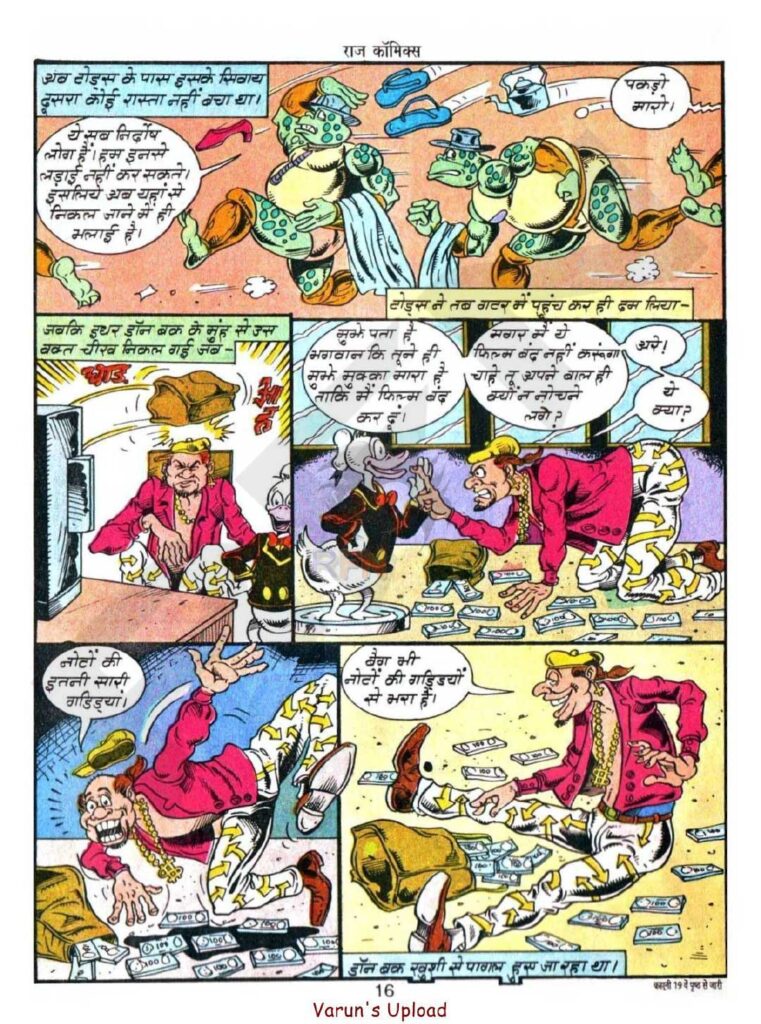
The script (Screenplay) is so tight that the story doesn’t slow down anywhere. The bag full of money falling from the bank into Don Buck’s house, then going straight through the window into the gutter and landing on a Toad’s skull, followed soon afterwards by Inspector Vichitra Singh’s arrival there, is a great example of the classic ‘Comedy of Errors’. The author has linked the events with each other so quickly that the reader’s attention does not wander for a moment. Inspector Vichitra Singh seeing the frog on the TV screen, considering it to be just a cartoon, and being unaware of the real robbery shows that the administrative system sometimes refuses to accept even the truth visible in front of it due to its lack of technical understanding.
The Transformation from a Comic Villain into a Dangerous Psychopath: The Major Turning Point of the Climax
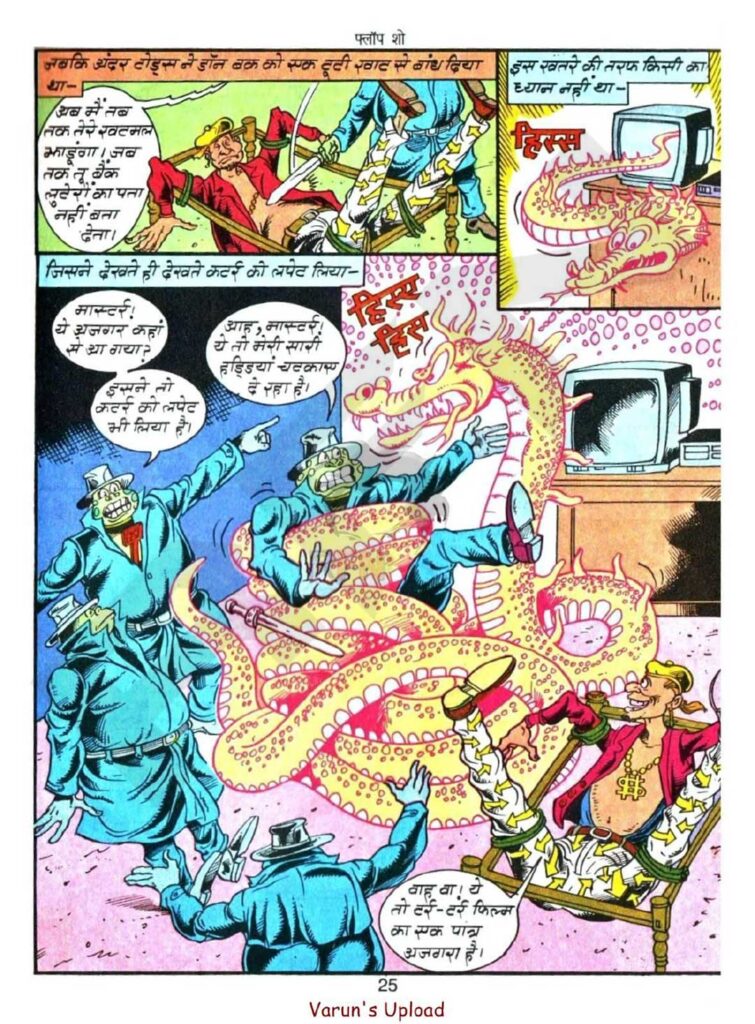
The climax of the comic suddenly changes the tone of its story from comedy to thriller, which is the most important part of this review. When Don Buck realizes his power, takes the ‘Ajagra’ snake and the ‘Sultu Dog Gang’ out of the screen, and unleashes them on the Toads, his character changes from a helpless director into a dangerous, revenge-seeking psychopath. He becomes a villain. Here, while making the reader laugh, the comic suddenly brings him to a point filled with fear and dread. Don Buck’s decision that he will now create the ‘Cartoon Killer Show’ and avenge his humiliation by taking the lives of all those financiers ends the story on a very serious and intriguing cliffhanger, which lays a strong foundation for the sequel, ‘Cartoon Killer’.
Dilip Choubey’s Brilliant Portrayal: Why Is ‘Flop Show’ a Classic?
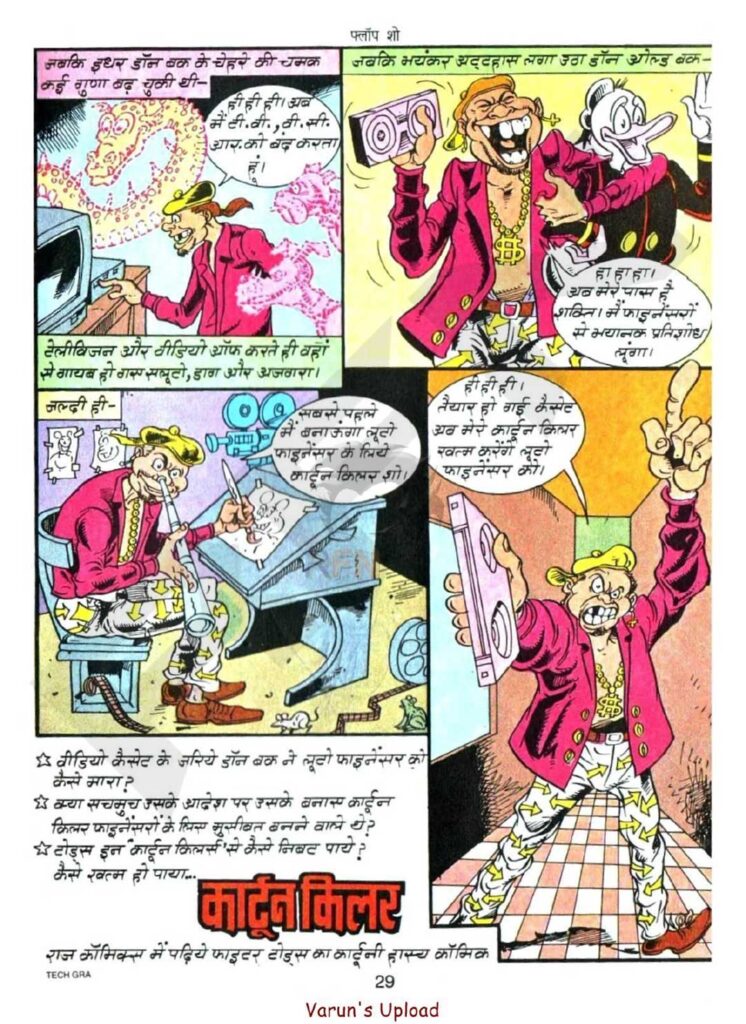
Artist Dilip Choubey’s work at the level of illustration is the lifeblood of this comic. When hand-drawn art was everything in the 90s, the sheer, semi-transparent (Semi-transparent) effects of the cartoon characters, the distorted expressions on their faces, and the detail with which the passionate and shocked faces of the Fighter Toads have been brought to the canvas are amazing. Although some pages of the comic have a large number of dialogues, making the panels seem a bit crowded, the fun one-liners hide that shortcoming. Overall, ‘Flop Show’ is not just a time-pass comic, but it is the shining star of that golden, experiment-filled era of Raj Comics, when writers and illustrators dared to create something out of the ordinary that, decades later, can still surprise readers with its freshness and deep thinking.
