



When the Jungle Chose Its Constitution: The Most Unique Political Experiment in Indian Comics
Can an ideal, just, and democratic republic be created in an animal world different from the human world, or is every power ultimately destined to turn into disorder and dictatorship like George Orwell’s ‘Animal Farm’? In the eighties and nineties, when Tulsi Comics was at its peak in the Indian comics industry, the great writer Parshuram Sharma gave the world of comics a completely unique hero in the form of ‘Angara’. Angara, made up of the best parts and powers of different animals, was not just a powerful superhero but also a living symbol of animal rights, the protection of nature, and freedom. Issue No. 28, ‘Priest of Angara’, is not just an exciting comic, but it is also a highly sensitive and thought-provoking political thriller written about governance, national security, internal espionage, and strategic ‘red-teaming’ (system testing).
Cabinet Formation and the Strategy of Red-Teaming: Angara’s Test as a Visionary Ruler
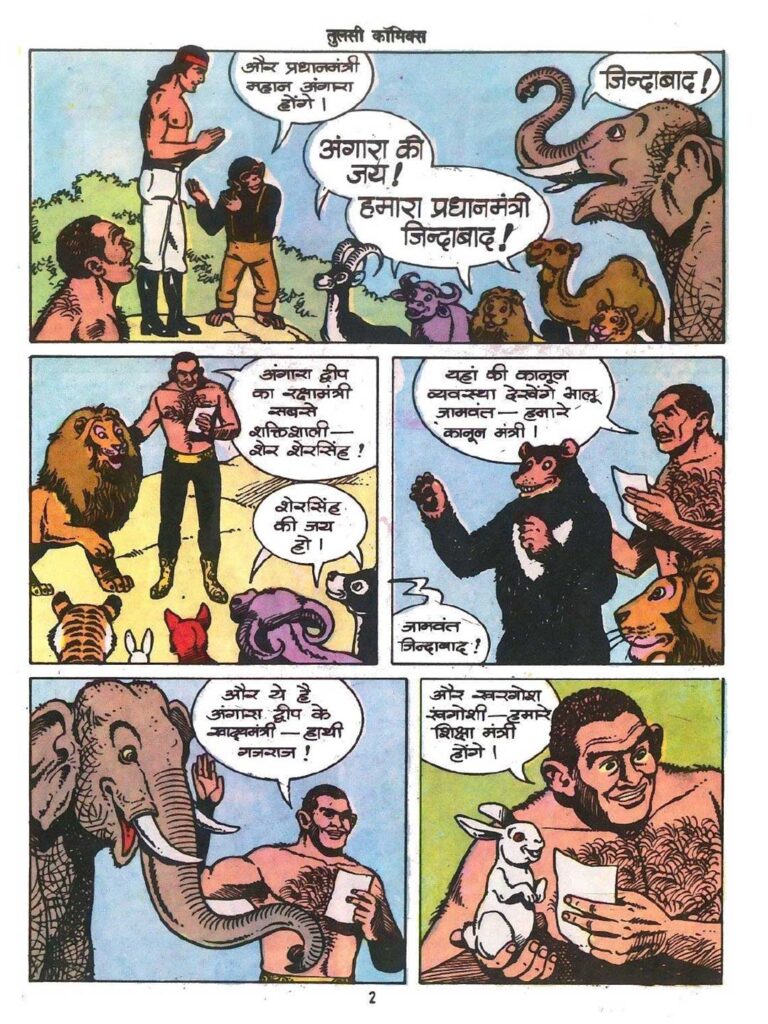
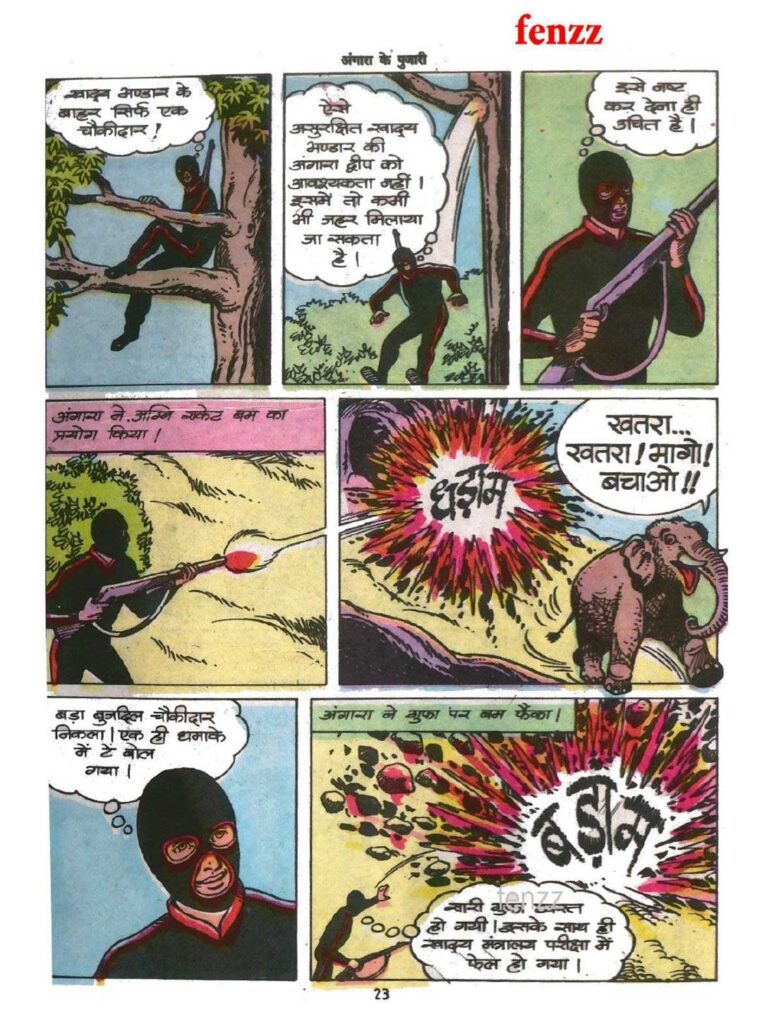
The story begins with a historic democratic assembly held on Angara Island, where Angara divides power among different members rather than keeping all the power in his own hands. Vanar Angad Kumar is given the responsibility of the President, Angara himself becomes the Prime Minister, and various animals like the lion, bear, elephant, rabbit, and deer are given responsibility for important ministries like defence, law, food, education, and finance. But the real wonder of the story comes when Angara adopts a very modern military strategy to test his own system, which is called ‘red-teaming’ in military science. He pretends to go on vacation so that he can take the form of an unknown enemy and put the weaknesses of the security system, food storage, and mutual coordination among citizens to a tough test. A ruler waging a mock war against his own administration shows the author’s brilliant level of storytelling.
Espionage, Submarines, and the Whale Queen: Modern Warfare Technology vs. the Natural Security Circle
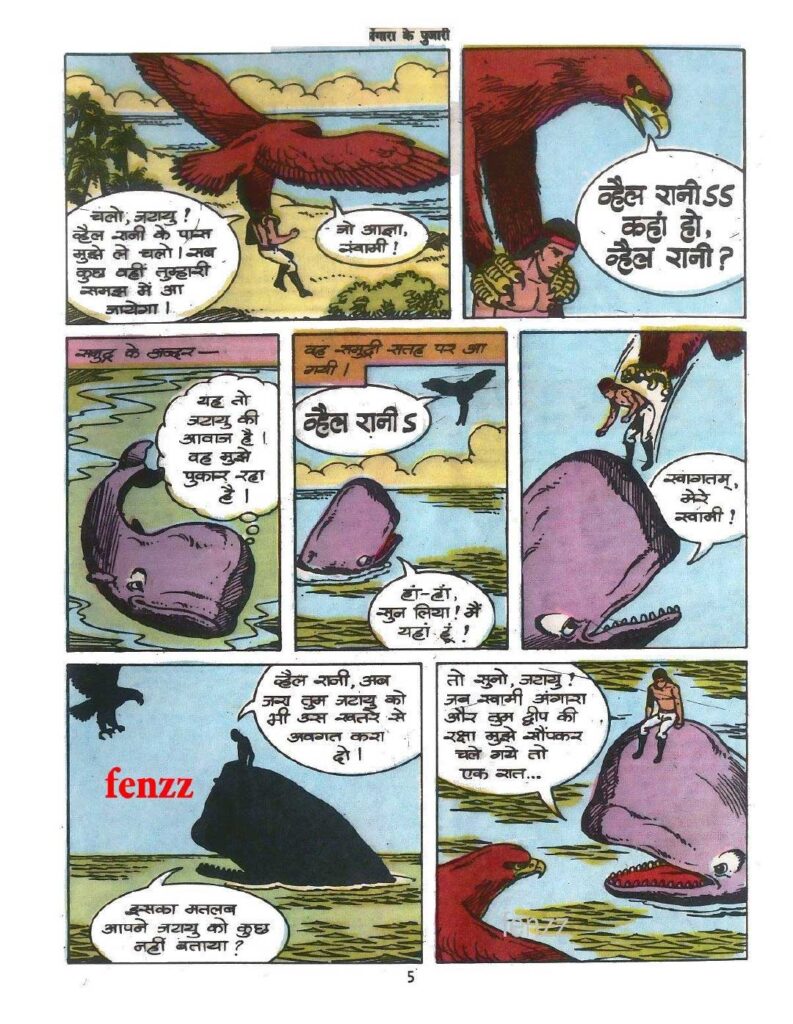
In the background of the story, the political tension caused by Angara Island’s old conflict with powerful countries, especially America, remains constant. The author has shown how enemy countries use modern technology to break through the island’s natural security cordon. The ‘Whale Queen’, the protector of the island’s maritime border, is rendered unconscious by a submarine in deep water, and a transmitter and radio bomb are placed on her head. This incident makes it clear how dangerous the conflict between nature and modern technology can be. Angara’s wisdom is worth seeing here when, instead of destroying the device, he uses it to lead his enemies in the wrong direction. The scene proves Angara to be a strategist who possesses not only the skin of a rhinoceros and the heart of a lion but also the cunning mind of a fox.
Masked Angara and the Test of the Security Forces: A Brilliant Display of War Skills
When Angara attacks the watchtower disguised as a black-masked commando, the action and battle management of the story gain full momentum. The immediate activation of the aerial reconnaissance army of vultures, the python’s sudden attack inside the cave, and the rapid siege by elephants, tigers, and bears show that the Angara Island army is no less disciplined than the army of any modern country. Here, Angara chooses the path of surrender rather than using his special powers without thinking, so that he can see how prisoners of war are treated by his soldiers. The discipline and adherence to the rules displayed by Senapati Sanjuki prove that Angara has created a civilized military culture on his island, not just a group of warriors.
Victory of Ideas Over ‘Divide and Rule’: Rabbit’s Education Policy and Animal Nationalism
The most emotional and thought-provoking theme of this comic appears when Angara tries to create divisions among different castes and species. He becomes the ‘Sky God’ and instigates the elephants by saying that they are the most powerful creatures; hence, the king of the forest should be an elephant rather than an ape. But the elephant’s answer is an eye-opener for the citizens of any modern democracy. The elephant clearly says that Education Minister ‘Rabbit’ has taught him that patriotism and equality are the greatest religion and that whoever tries to create divisions on the island is his enemy. This scene shows that, in the eyes of Parshuram Sharma, the real security of any nation is not determined by the cannons installed on its borders but by the unity of thought and the level of education of its citizens.
Military Psychology and the Search for a Traitor: The Difficult Question of Human Presence
The last part of the comic is based on the search for the traitor hidden among the human soldiers on the island—the soldiers who were previously American captives or later became allies. Angara kidnaps the soldiers one by one to test the extent of their loyalty under mental pressure. While some soldiers are ready to sacrifice their lives, the weakness of one soldier is finally revealed when he takes out a transmitter and contacts the enemy’s chief commander. Here, the story completely turns into military suspense. The author has shown very closely the difference between human greed and deceit and the true loyalty of animals, which makes the reader wonder who is truly wild: animals living according to the laws of nature or selfish humans equipped with technology?
Pradeep Sathe’s Artwork and Visual Composition: The Hallmark of Tulsi Comics’ Classic Art
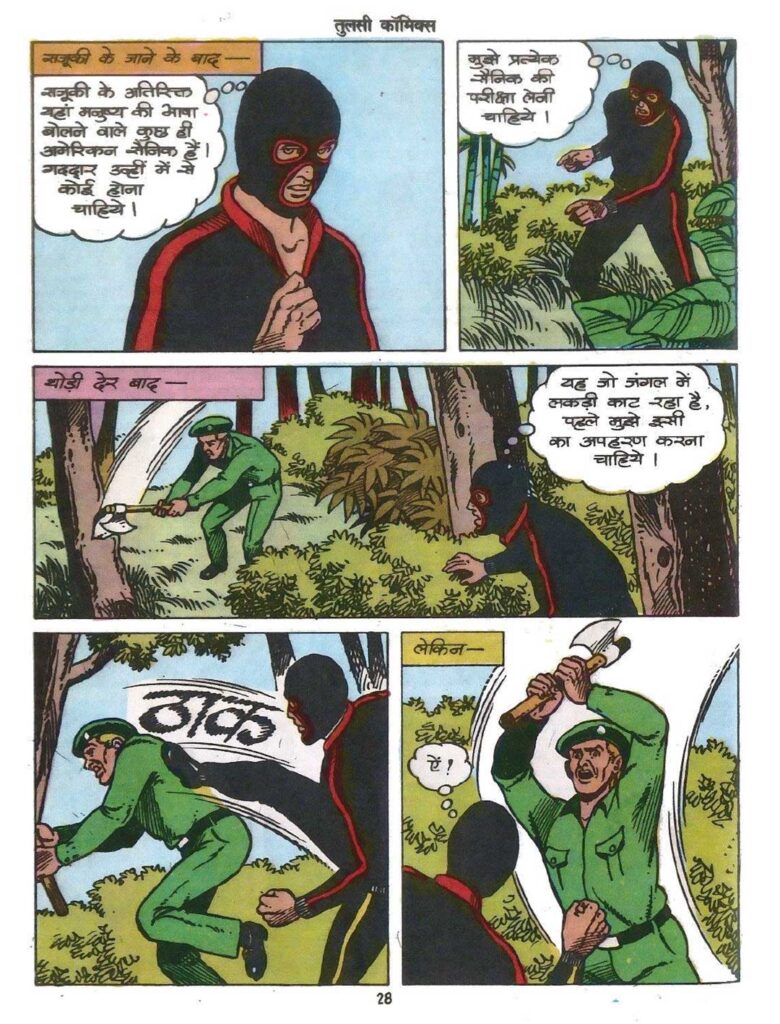
Artist Pradeep Sathe’s artwork makes this comic very spectacular to look at. Sathe Ji is known for depicting the anatomy of wildlife in the most vibrant way in the Indian comics world. The playfulness of a herd of elephants in the water, the spread wings of vultures, whales swimming in the depths of the sea, and the fast-moving body of the masked Angara—all display a distinct strength and naturalness in every panel. Despite being very simple, the combination of colours brings out the tension of the scenes in a very effective manner. Especially, the depiction of the python’s grip inside the cave and the expressions seen on Angara’s face prove that the hand-drawn artwork of that period was more relatable and lively than the artwork of today’s digital era.
Final Conclusion and Unforgettable Message: Why Should Every Comics Lover Have This Issue in Their Collection?
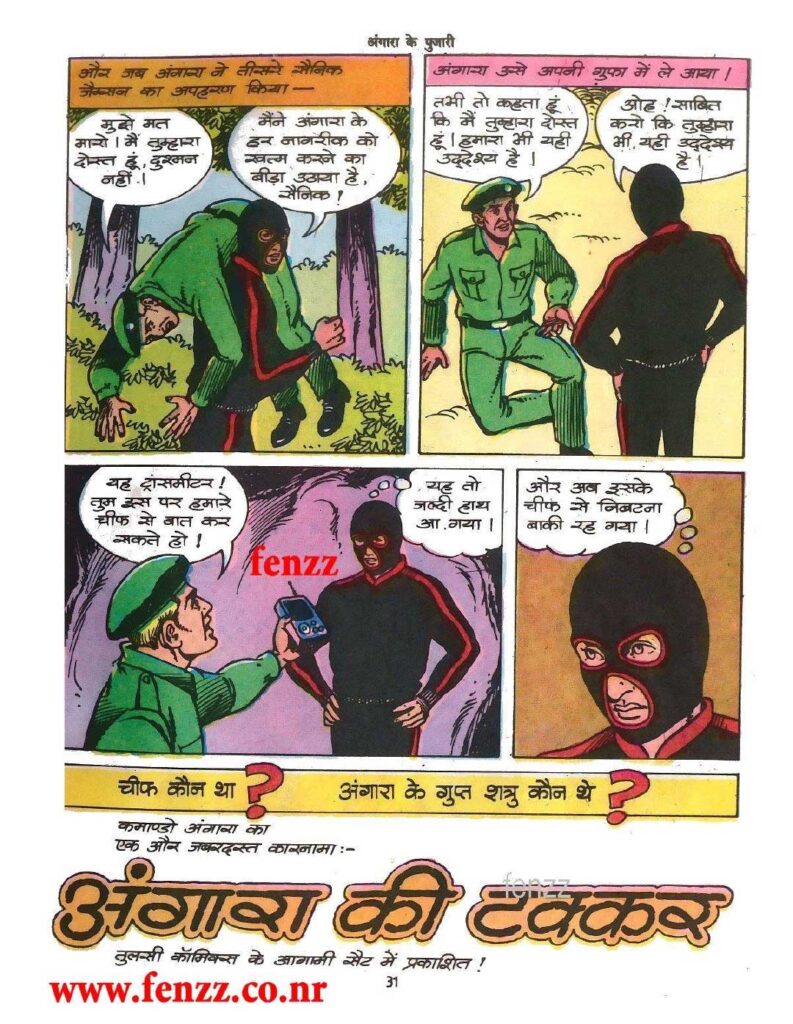
‘Priest of Angara’ is not just a comic that evokes nostalgia, but it is also a complete, thought-provoking, and brilliant piece of forward-thinking literature. This comic deals with serious questions related to love for the environment, democratic values, nation-building, and internal security, which are equally important even today. The point at which the story ends, where the real face of the ‘Chief’ is yet to be revealed after the transmitter is recovered, creates a very exciting foundation for the next comic, ‘Angara Ki Takkar’. This issue is a must-have and an unforgettable document for every comics lover who wants to understand the glorious history of Tulsi Comics and Parshuram Sharma and experience a unique imaginary democracy.
