


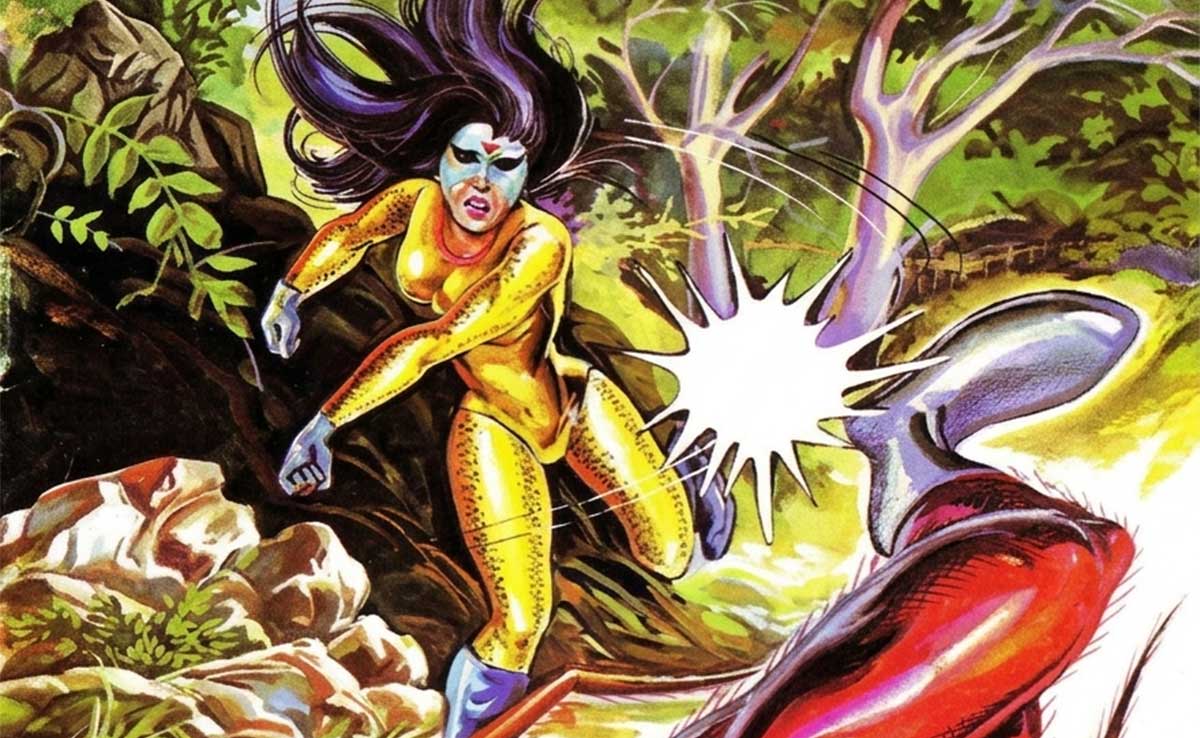
Whenever superheroes are discussed in Indian comics, male heroes are often seen more prominently. In this context, King Comics’ ‘Lizard: Liza’ seems to be a courageous and unusual comic for its time. In this seven-rupee issue, the story centers on the main character, Liza. It moves away from common revenge stories and brings together the thrills of biological mutation, science fiction and fighting criminals.
Storyteller Tarun Kumar Wahi, editor Vivek Mohan and the drawing team at ‘Aakriti Features’ jointly prepared this issue. This is not just an action comic. Through a strong female heroine, it also explores justice, human values and the harmful consequences of scientific accidents. At first glance, the action-packed scene created by artist Verma on the cover draws the reader into the mysterious world of the story.
How Did Liza and Cockroach Get Their Powers?
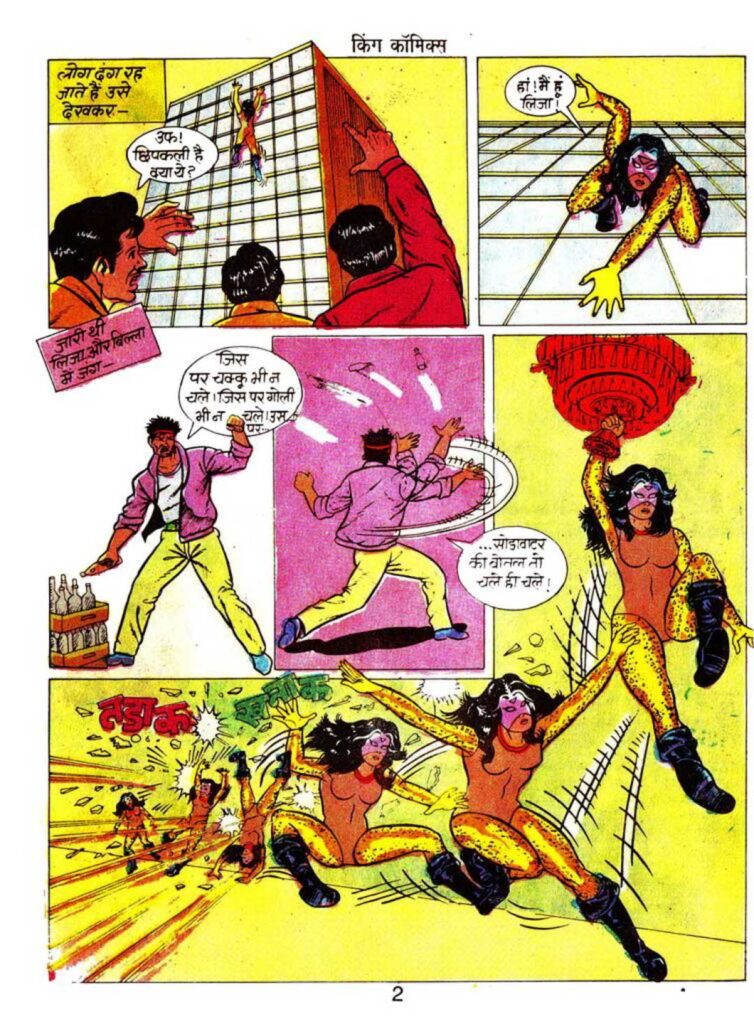
The basic idea of this comic seems to be inspired by old adventure stories and tales of superheroes who gain powers through physical changes. The story begins with an explosion in a nuclear laboratory and the spread of radioactive substances. This is how both the heroine and the villain gain extraordinary physical abilities resembling those of insects and crawling creatures.
The writer focuses on the conflict between Liza and her enemy rather than unnecessarily involving the story in other events. On one hand, Liza is trying to eliminate organized crime in the city, while on the other, ‘Cockroach Man’ Bana Ranga is misusing his powers to rob banks and jewelry shops. The story combines clue-finding, police investigation and superhero action in a way that keeps the reader interested until the end.
The Characters of Liza, Cockroach and Inspector Kale
A major strength of this comic is its characters. The main character, Shriya Bhaskar, alias Liza, is not just a heroine who displays her powers. She is also a courageous woman who follows her principles. Because of her judo-karate training, her fighting skills seem natural. Clinging to walls like a lizard and using her long, flexible tongue distinguish her from other superheroes. She possesses extraordinary strength, yet she remains committed to nonviolence. She wants to hand the villain over to the law instead of killing him. This gives her character greater depth.
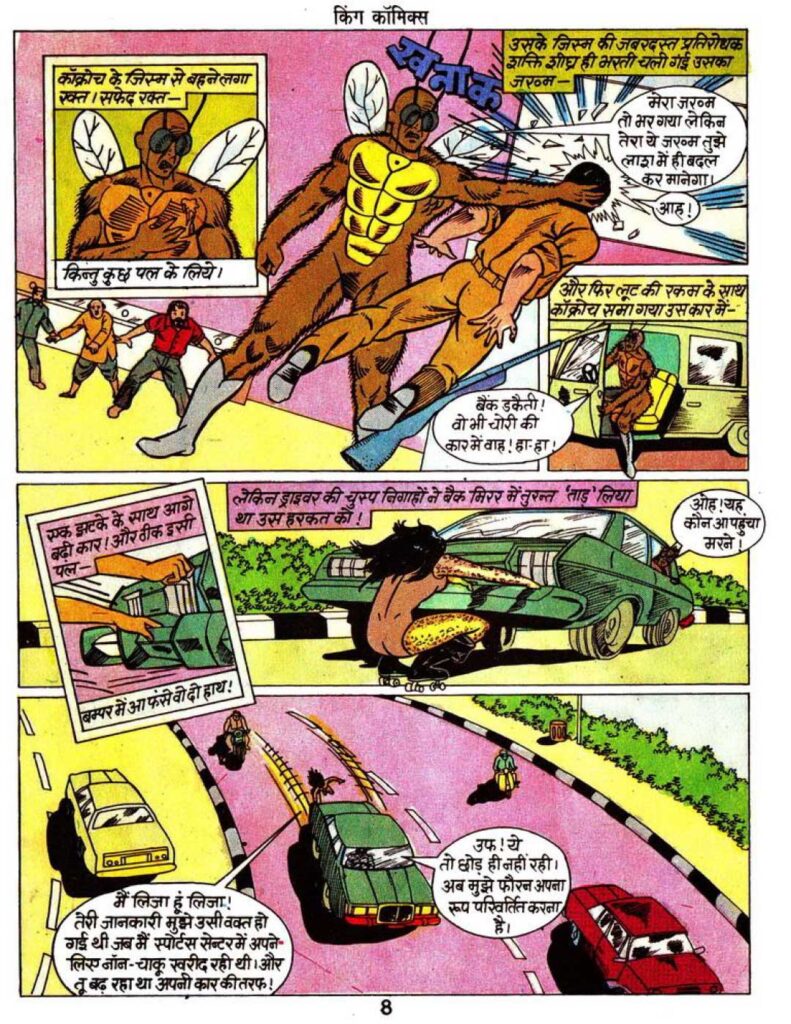
In contrast, Ranga, aka ‘Cockroach’, is a disgusting, dreaded and frightening villain. The author has turned the cockroach’s traits into his powers. His body heals quickly, he can squeeze through small cracks, fly short distances with the help of wings, and produce extra arms when in trouble. Ranga has no grand purpose. He is a greedy and troublemaking criminal, which makes him seem like a villain from old adventure comics.
Inspector Kale is also important among the supporting characters. He does more than observe the events: he reveals the villain’s real identity with the help of forensic reports and laboratory clues. Truck driver Banta Singh adds a little humor to the tense moments of the story.
From the Bank Robbery to the Final Fight on a Truck
Tarun Kumar Wahi has handled the pace of the story well. No scene seems unnecessarily drawn out. The story begins with the Belya gang being beaten and moves quickly through a bank robbery, a confrontation at a sports center and a jewelry shop break-in before reaching the final battle on a truck loaded with glass.
The science-fiction events feel natural within the Indian city setting. Scenes such as insects emerging from a gutter and turning into giant humans in a jewelry shop, and white radioactive blood flowing from wounds, give the story a frightening feel. In the final fight, Liza identifies what she believes is Cockroach’s natural weakness and throws him onto his back. This shows that she wins the battle through her understanding and intelligence as well as her strength.
How Are the Comic’s Drawings and Action Scenes?
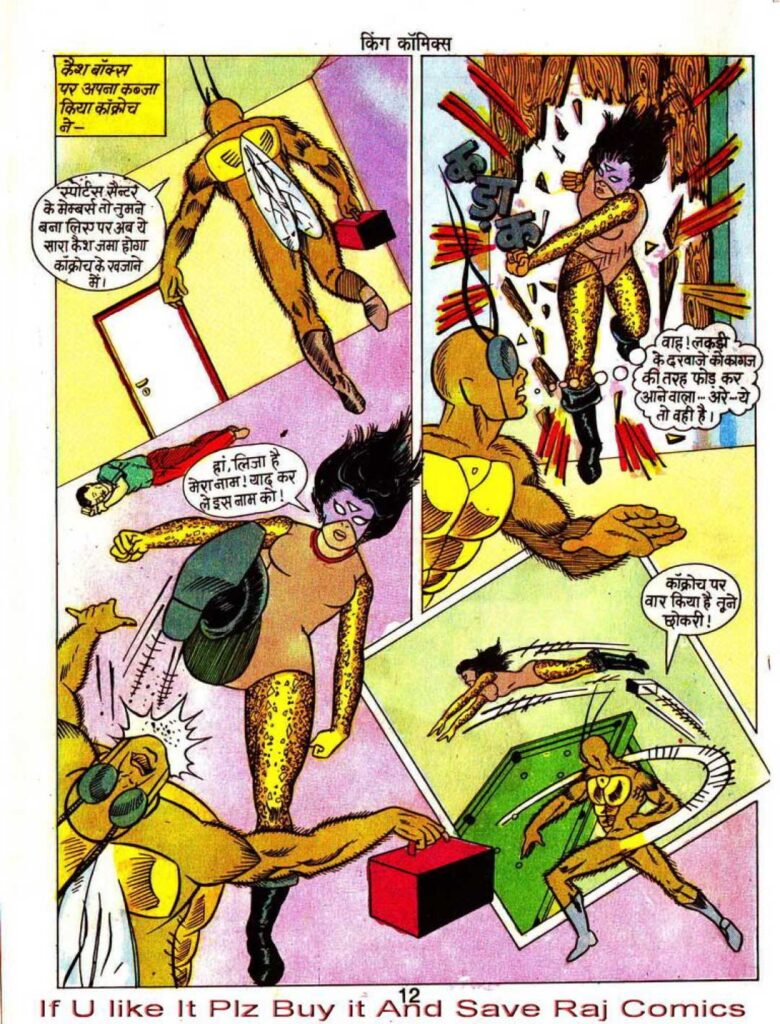
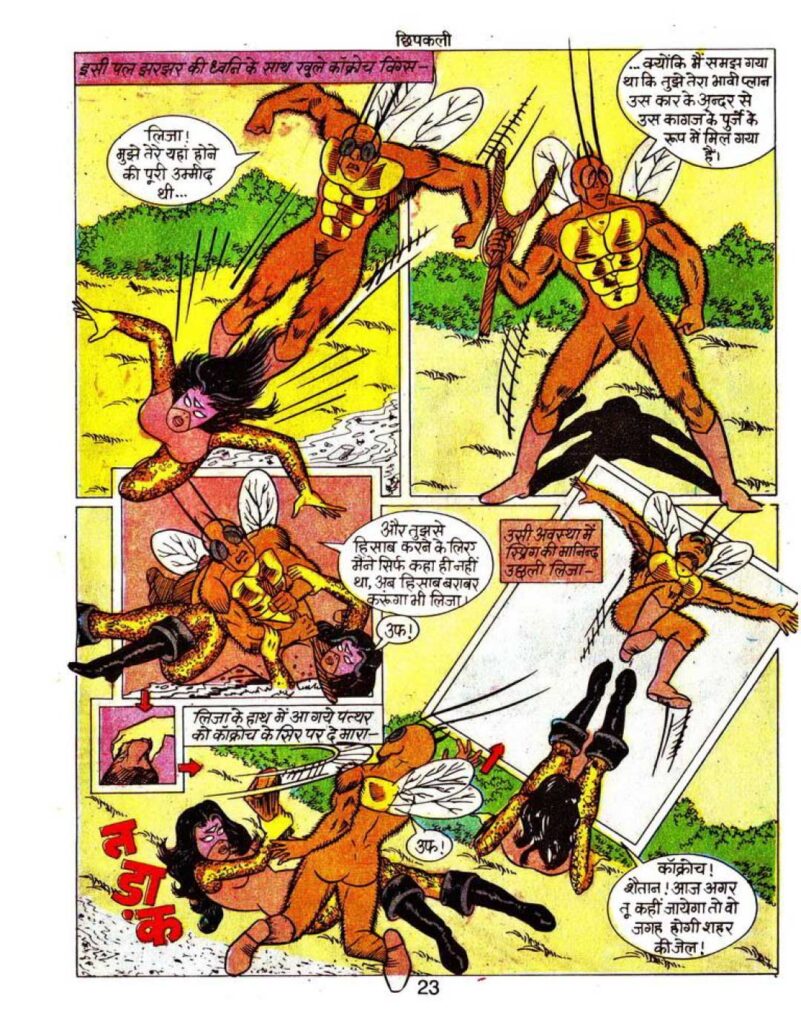
The illustrations by ‘Aakriti Features’ are a major attraction of this comic. The artwork in this issue looks more agile and modern than that of older Indian comics. The artists have made good use of motion lines and different angles to show speed in the action scenes.
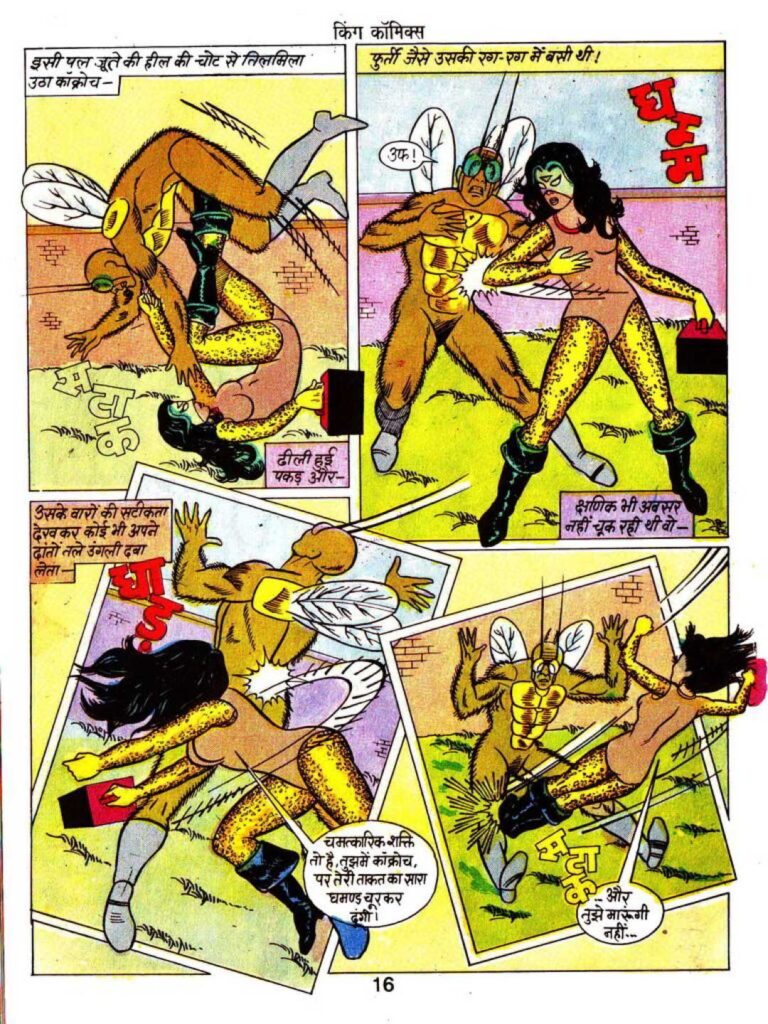
The fight in the billiards room and the clash between Liza and Cockroach on a truck full of glass pieces are especially effective. Broken windows, a lizard-like heroine leaping through the air, and Cockroach’s altered wings make the scenes exciting. Hindi sound effects like ‘dhadak’, ‘saay’, ‘khat-khat’ and ‘chin’ increase the impact of the action in the pictures. Fear, anger and cleverness are also clearly visible on the characters’ faces.
What Makes ‘Lizard: Liza’ Special?
The greatest strength of this comic is that Liza takes the lead throughout the story. She does not serve as a helper to a male protagonist; instead, she fights to save the entire city from danger. Her lizard-like appearance and outfit were new and surprising to Indian comic readers of that era.
The city’s identity is also clearly visible in the story. Bank of Baroda, sports clubs, crowded markets and people anxiously running around to buy pesticide spray (Begon, Finite) all give the story a familiar atmosphere. The comic’s ending is also clear and satisfying. Along with the truth about the crime coming to light, the reason behind the scientific mystery is explained.
Where Does the Story Fall Short?
Despite its action and fast pace, the story could have been better in some places. First, the police investigation seems to be completed very quickly. Inspector Kale’s discovery of Ranga’s entire conspiracy and his faked death, based on a sample found on a car seat, feels a bit premature. If the investigation had been given more time, the mystery could have grown.
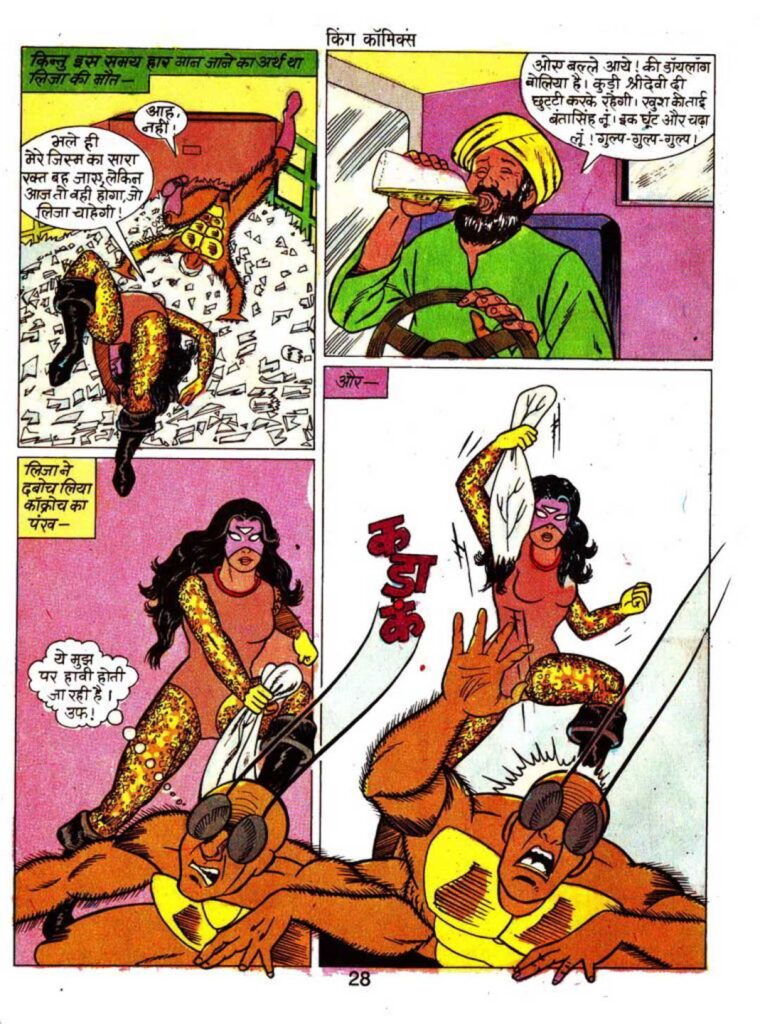
Secondly, during the serious and bloody final fight, truck driver Banta Singh’s drinking and references to Ajay Devgan and Govinda create laughter, but for a few moments they reduce the tension surrounding the threat to Liza’s life. The science behind the changes in Ranga’s body could also have been explained more clearly through a little more dialogue. That would have made the science-fiction element feel stronger.
Is ‘Lizard: Liza’ Still Worth Reading Today?
Overall, King Comics’ ‘Lizard: Liza’ is an interesting, daring and entertaining story from Indian superhero comics. With a female superhero at its center, it brings together science fiction and a crime-investigation adventure.
Tarun Kumar Wahi’s fast-paced story and the vibrant illustrations by Aakriti Features make this comic readable and memorable. This issue offers a special experience for comic lovers, especially those who collect old Indian stories. It also shows that, while drawing inspiration from foreign comics, creators could develop their own unique and effective stories in Indian comics.
