


Ram-Rahim and ‘Messenger of Death’: What Truth Is Hidden Outside the School?
“Ram and Rahim study at a convent school. Espionage is their hobby, and through this hobby they become agents of the Children’s Secret Service, whose chief is Colonel Mukherjee, a retired military officer.” This short introduction on page three immediately introduces readers to the world of Manoj Chitra Katha’s issue number 18, Messenger of Death (priced at three rupees). The story begins at the annual function of a renowned school, where the city’s richest and most charitable man, Seth Karorimal, is giving a speech on stage and making a generous donation of fifty thousand rupees for the children’s education and future.
But as soon as the story moves beyond this glitter and applause, it shows a bitter truth. While children are being called the future of the country within the four walls of the school, destitute children lie in the dust, crawling and begging on the streets. This stark difference forms the basis of the entire comic and makes the reader wonder from the beginning whether a frightening darkness in society is hidden beneath the glow of wealth.
What Crime Is Hidden Behind the Child Beggars?
In this review, Messenger of Death stands out as one of the few stories in Indian comics that focuses on a cruel and real social crime instead of a fictional monster or magical threat. The author fearlessly exposes the ugly face of an organized gang involved in child trafficking, the forced kidnapping of children, and their exploitation in the illegal businesses of begging and drugs.
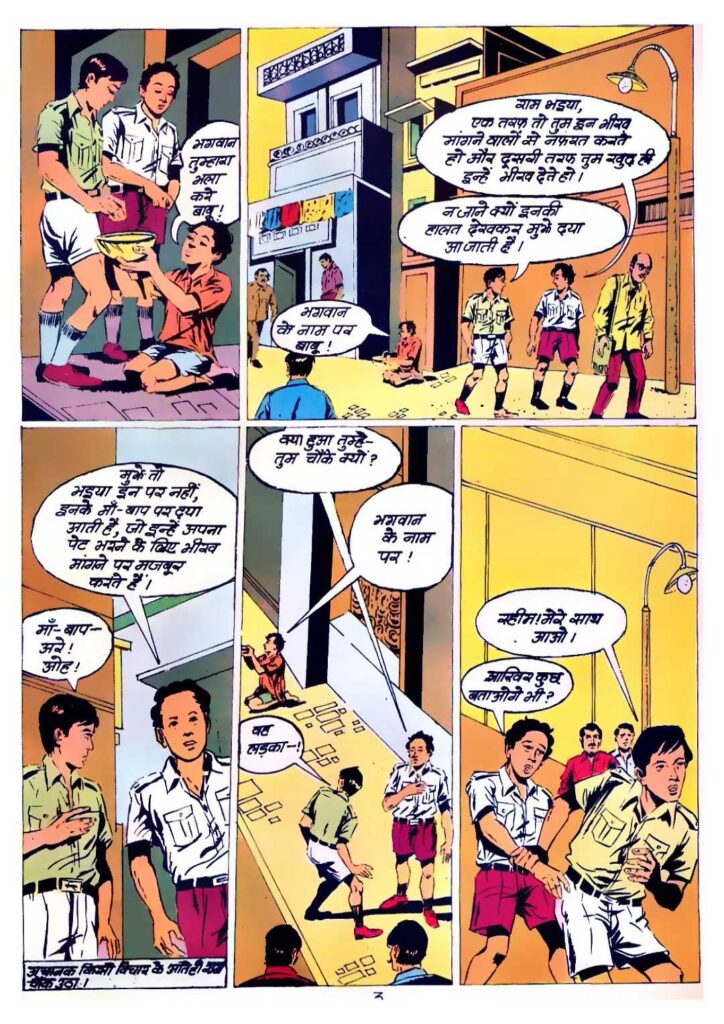
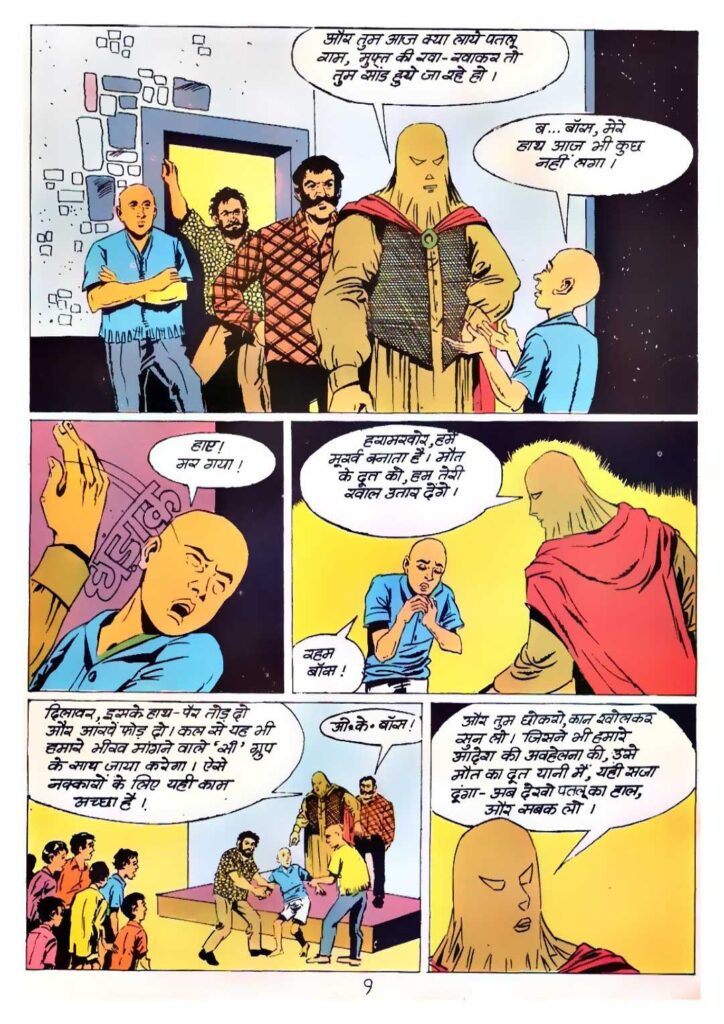
The most disturbing and adventurous part of the comic is the scene in which the masked kingpin named the ‘Angel of Death’ brutally tortures children who refuse to beg or commit crimes at the secret base in the ‘Red Ruins’. Breaking the arms and legs of innocent children to collect more alms, gouging out their eyes, and deliberately disabling them—all this is meant not just to create excitement, but also to reflect a terrible truth about our society that is often ignored. Along with this, using children to deliver illegal liquor and smuggle drugs such as opium and cocaine brings this vast web of crime to the fore.
Why Does the Crowd Remain Silent Even After Seeing Injured Children?
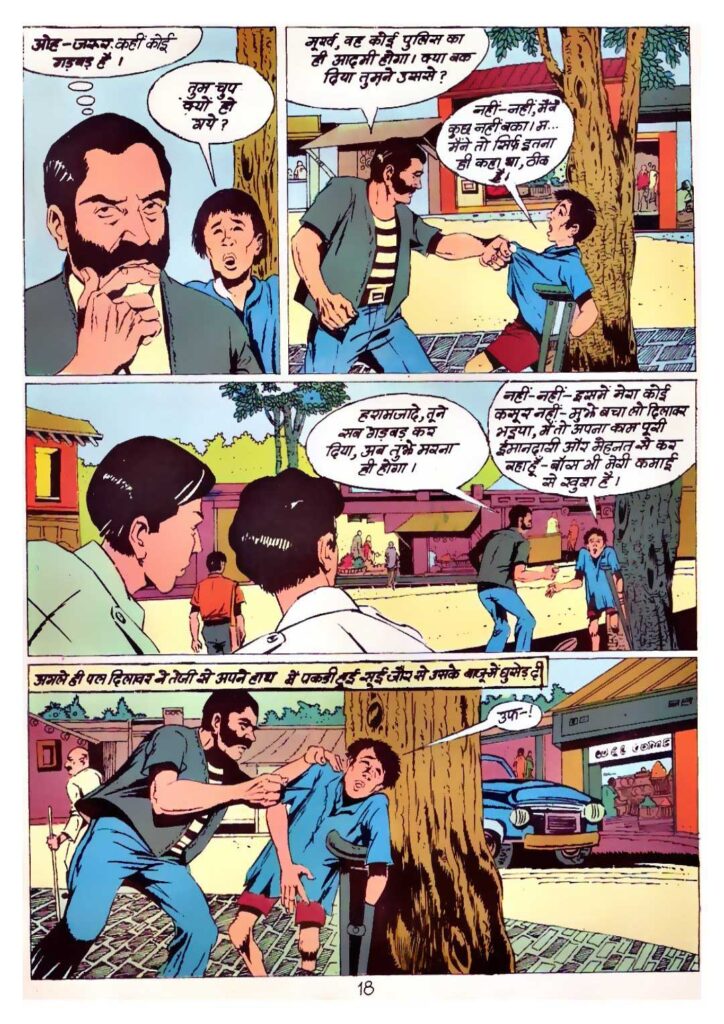
A strong feature of this issue is that it questions not only the criminals but also society’s lack of compassion. There are two incidents in the story that give the reader goosebumps. The first occurs when an out-of-control truck deliberately runs over Ramu, the gardener’s missing son, after he is recognized. The crowd standing there refuses to help, and the police inspector also shirks his responsibility by calling it a ‘minor road accident’.
The second incident is even scarier: another child beggar is killed in broad daylight with a poisoned needle. The people present keep watching even after seeing the innocent child die. Instead of calling the police, they say, “Call the cleaning department so that it can take away this unclaimed body.” The harsh way in which the author shows the indifference, selfishness, and helplessness of the city’s people through these incidents makes this child-detective comic a serious portrait of society.
Ram-Rahim’s Detective Work Combines Strength and Wisdom
The main protagonists, Ram and Rahim (Double Secret Agent 00½), are portrayed in a balanced and natural manner. They are not superheroes with magical powers, but teenagers from a convent school who pay attention to their surroundings, are athletic, and understand the pain of others.
The author skillfully shows the connection between their home life and their espionage mission. While having breakfast with their mother in the morning, they seem like ordinary boys at home, but as soon as they leave, they ride a motorcycle and pursue a dangerous criminal gang. Ram disguises himself with a fake moustache, pretends to talk to a beggar boy, and observes suspicious people, while Rahim stays at a distance, ready to help when needed. All this shows how thoughtfully they carry out their detective work. They move forward not just by relying on strength, but by understanding people’s behaviour and following clues.
Colonel Mukherjee and Ram’s ‘Sting Plan’
The second strong part of the story is the office of retired Colonel Mukherjee, head of the Children’s Secret Service. Here, the story moves beyond street fights and takes the form of a plan developed together. Colonel Mukherjee explains what the police cannot do because of the law and why the criminals inspire so much fear that no witnesses come forward.
The ‘sting plan’ Ram suggests here shows the author’s ingenuity. They will bail out the two underage boys from the gang who are in police custody, convince them that their bosses have rescued them, and then follow them to the main base. This trick adds an element of police investigation and espionage thrills to the story.
How Is the Artwork, from the Cover to the Action Scenes?
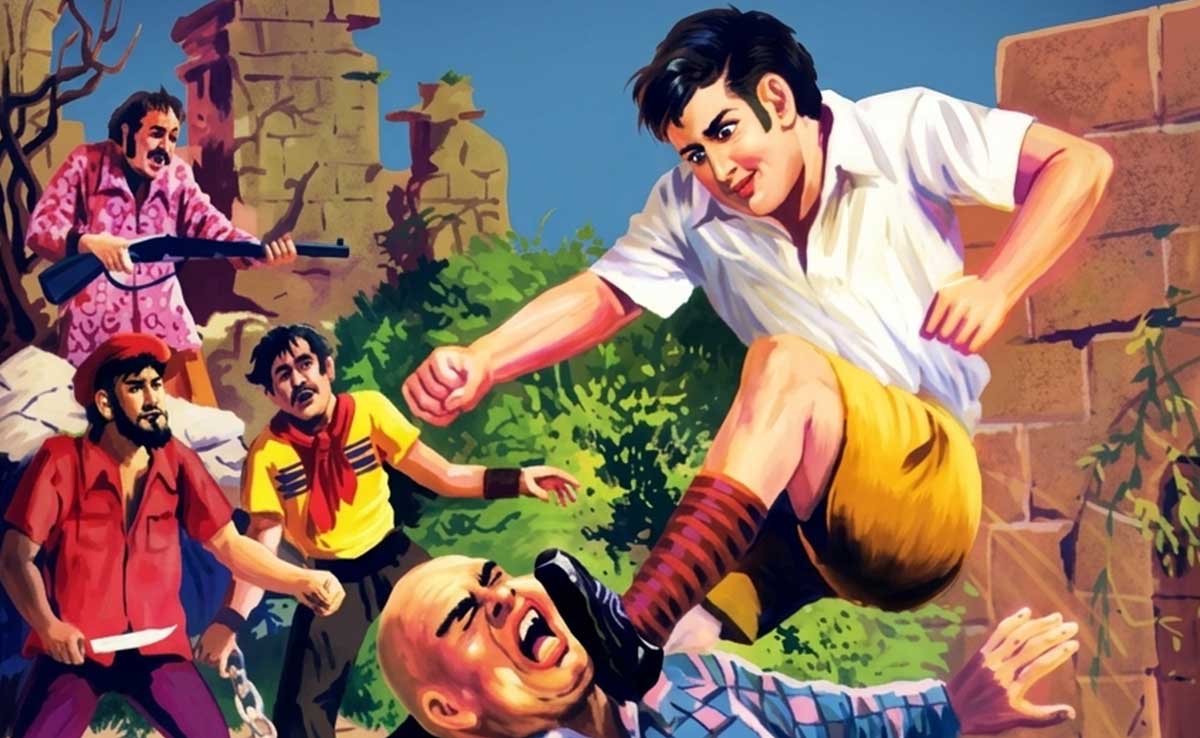
The cover of this comic draws special attention for its artwork. The cover by renowned artist C. M. Vitankar is vibrant, full of colour, and packed with fast-paced action. Ram leaps into the air to kick someone on the stairs of the ruins; a falling bald goon has pain on his face; and criminals armed with guns and axes stand behind them. Together, these details immediately catch the reader’s eye.
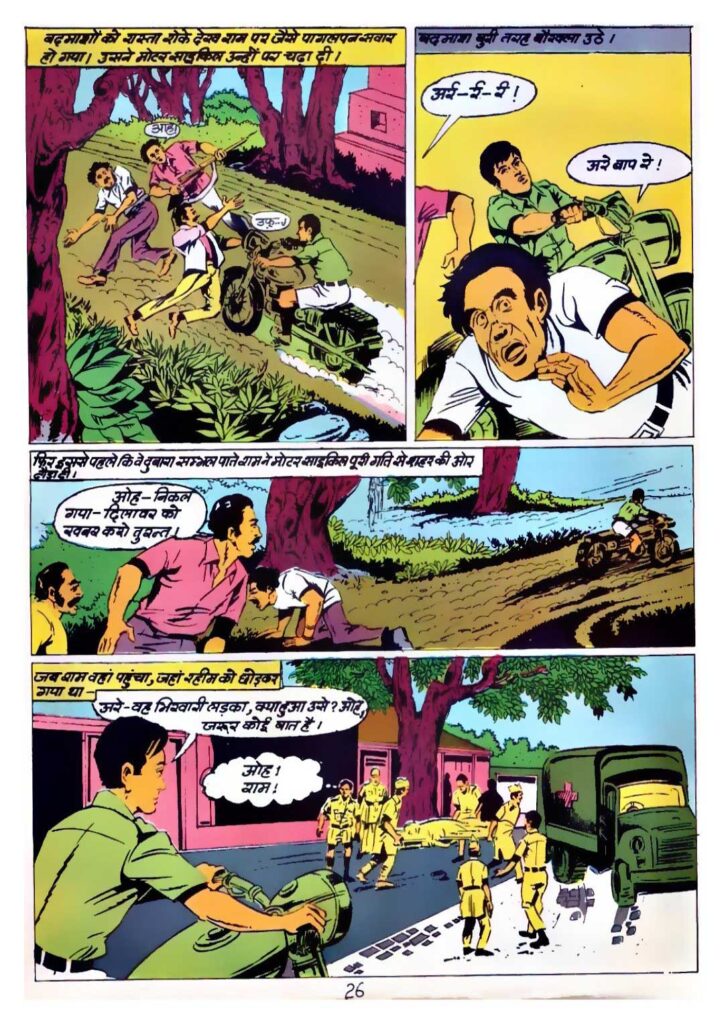
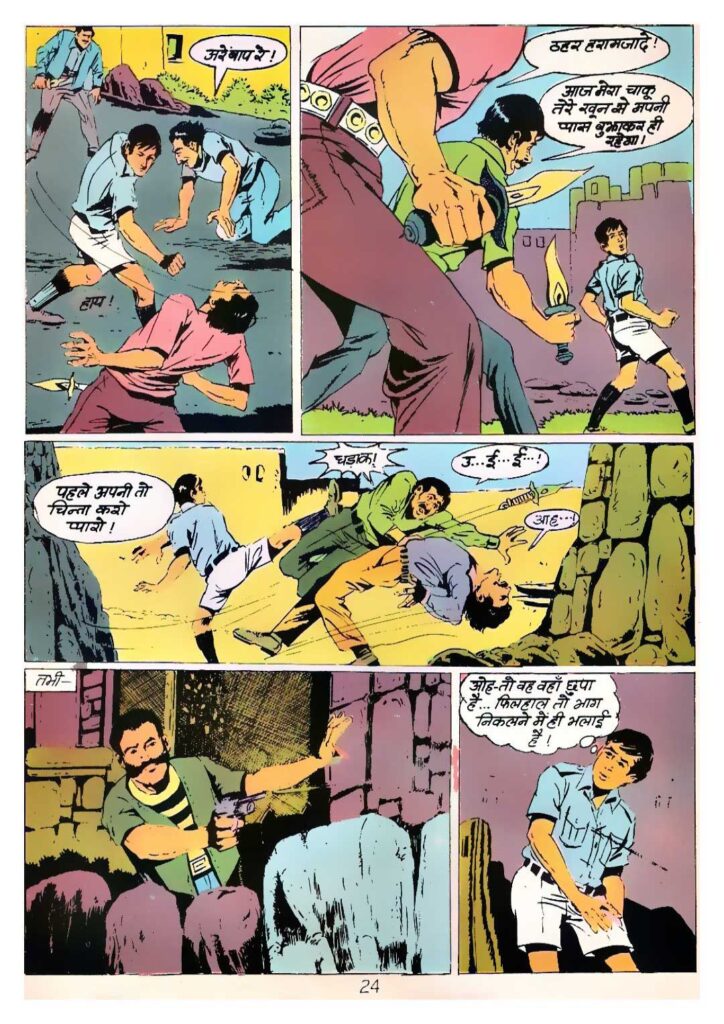
The artwork on the inside pages is a fine example of the lifelike pulp art of that period. The characters’ facial expressions—especially the fear in the eyes of the tortured children, the frightening atmosphere of the Red Ruins, and the cruel confidence on the criminals’ faces—have been drawn with great care. The action flows steadily and quickly through the motorcycle chase and the scuffles within the ruins.
Who Is the ‘Angel of Death’, and Where Does the Story Weaken?
This is the first part of a two-part story, so it ends at a point that makes readers curious about what happens next. On the last page, the question of who exactly is the ‘Angel of Death’ behind the red cloak and golden mask remains unanswered. Readers are asked to wait for the next part, Your Country’s Enemy.
As for its shortcomings, there are a few moments in the story that feel cinematic. For example, Ram riding his motorcycle straight towards armed goons inside the Red Ruins and escaping so easily seems a little too dramatic. Moreover, it seems somewhat unbelievable that a criminal could murder a child with a poisoned needle in a crowded market in broad daylight without anyone being able to catch him. But the story’s social issue and fast pace make these shortcomings seem minor.
Why Is ‘Angel of Death’ Still Worth Reading Today?
Manoj Chitra Katha’s Messenger of Death is a bold, thought-provoking, and memorable part of Indian comics. This issue shows that stories written for children need not be limited to fairy tales or jokes. They can also make young readers aware of, and sensitive to, the darkest corners of society and its most heinous crimes.
The story’s social concern, C. M. Vitankar’s striking cover, and Ram-Rahim’s dedicated, selfless detective work for their country make this comic worth reading and keeping for readers who want to see real social issues, mystery, and good values come together in Indian comics.
