


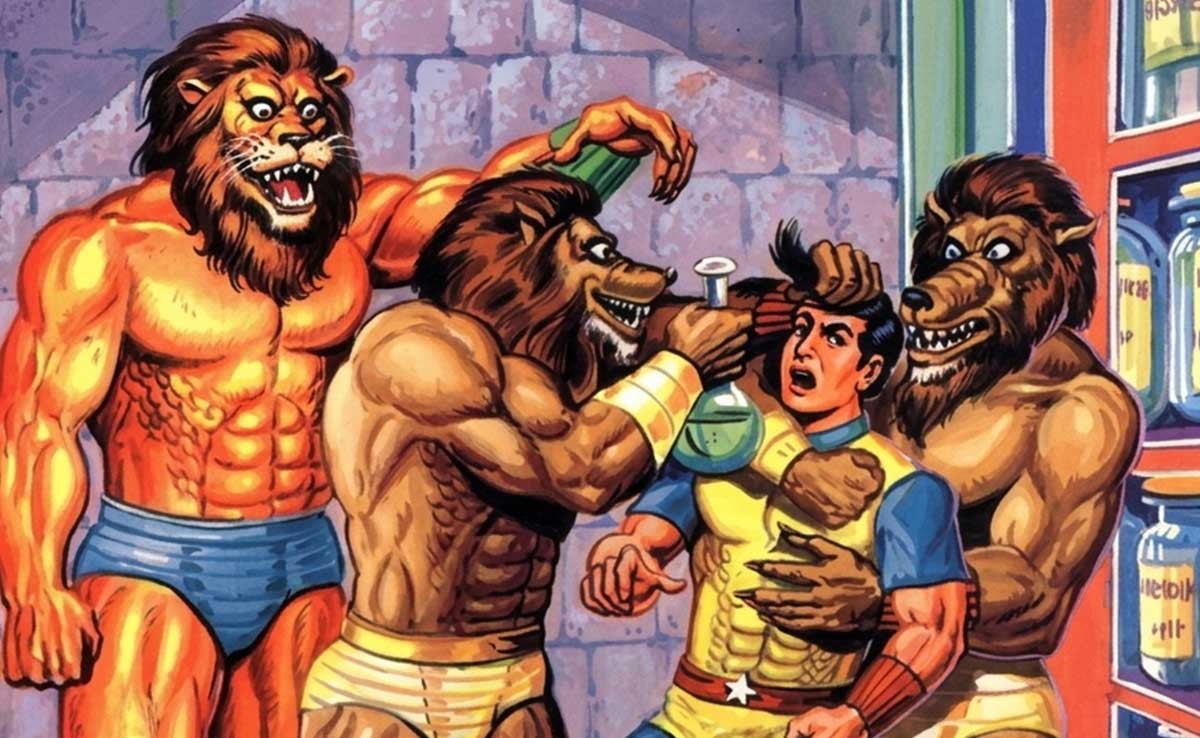
How was the mysterious island of man-eaters created by Nazi experiments?
The early stories of Super Commando Dhruv in the world of Indian comics gave readers a completely new experience of science fiction grounded in the real world and detective investigations. The special issue ‘Man-eaters Ka Swarg’, published in the early nineties, is one of the most distinctive and thought-provoking works of writer and illustrator Anupam Sinha. The story is not based on a fictional magical world or a magical boon, but on the horrific repercussions of secret genetic experiments conducted by Nazi Germany during the Second World War. This story of a separate army, created by combining the DNA of humans and dangerous animals in the deserted forests of Lakshadweep, located far away in the Arabian Sea, brings together scientific understanding, anatomy and Dhruv’s sharp mind in the best possible way.
Wolf-man attack in Rajnagar: Where did this man-eater come from?
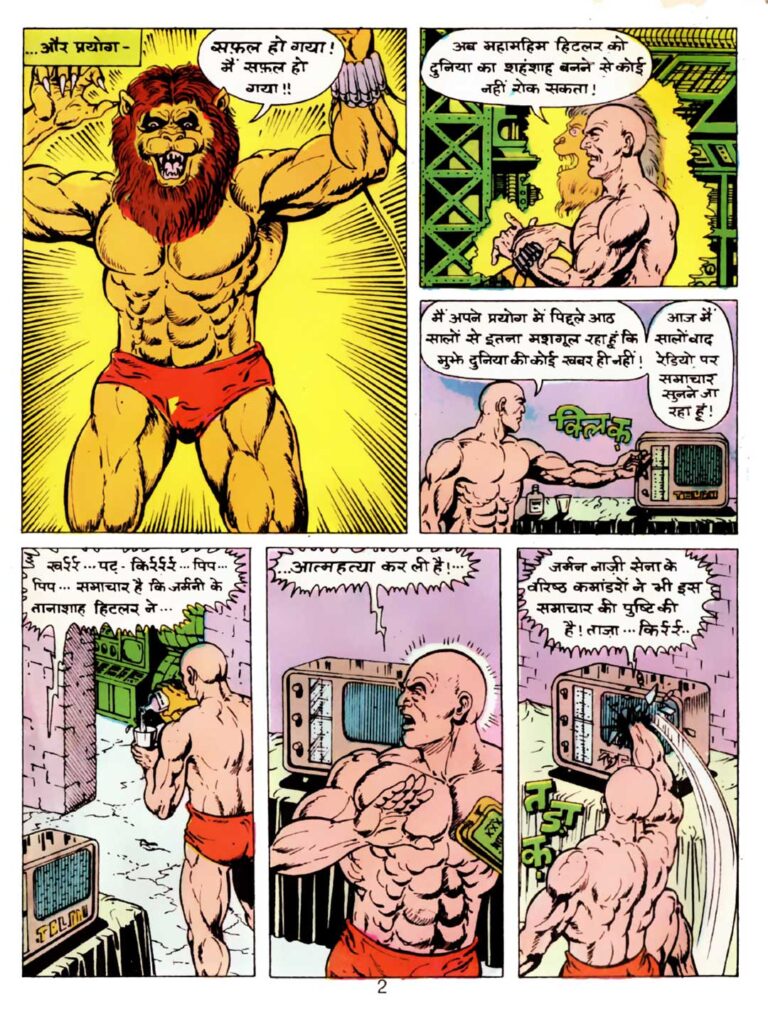
The story begins in 1944, during the final phase of the Second World War, when a German Nazi scientist in a modern laboratory built on a deserted island in the Arabian Sea completes an experiment combining the characteristics of a human and a lion to create the powerful ‘lion-man’ after eight years of research. He wants to make Adolf Hitler the emperor of the whole world using this technique, but upon hearing the news of Hitler’s suicide on the radio, he falls into despair and stabs himself in the chest. The island later becomes part of Lakshadweep in independent India, and the laboratory remains hidden amidst dense forests.
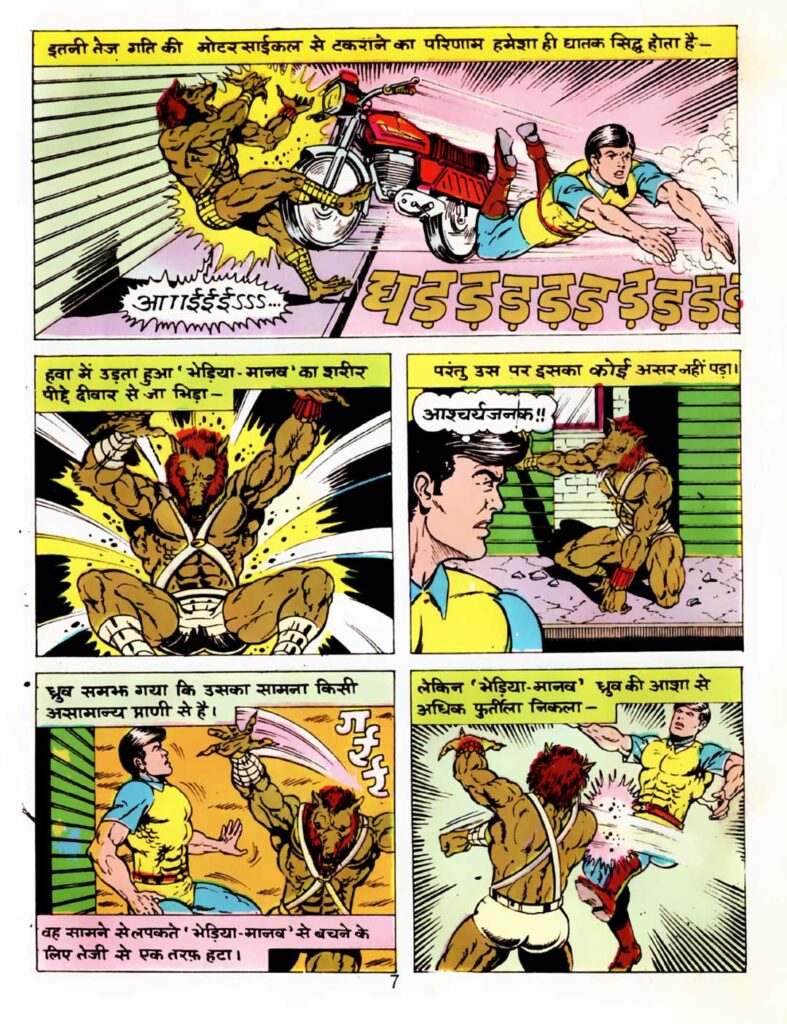
Decades later, on a foggy night in Rajnagar, a young man returning from a cinema is suddenly attacked by a dreaded ‘wolf-man’ (Janu Khan), who has escaped from his hideout to quench his thirst for human blood. Dhruv confronts him using his motorcycle and judo techniques, forcing him into contact with exposed high-voltage electrical wires. As the injured Janu Khan attempts to escape, his own companion Narsingh punishes him for revealing their secret and kills him by twisting his neck. Narsingh unfastens a metal strap from Janu Khan’s wrist, and the giant wolf-man transforms into an ordinary dead human before Dhruv’s eyes.
Dhruv faces the serpent-man and the rhinoceros-man on Nagu Island
Based on his examination of the same body found on the seashore and information received from fishermen, Dhruv concludes that the killers came from the deserted ‘Nagu Island’ of Lakshadweep in the southwest. Dhruv ventures alone into the dense, swampy forests of that island when the local police do not pay attention. There, he first encounters a giant serpent-man, who begins to suffocate him by tightening his coils around Dhruv’s body. Dhruv strikes the snake’s tail hard, loosening its grip, and destroys its brain by piercing the upper part of its mouth with a sharp twig. From this, Dhruv understands that the outer skin of these creatures, created through a combination of humans and animals, may be tough, but their internal tissues are as soft as those of humans.
Soon afterwards, an enormous rhinoceros-man attacks Dhruv by uprooting a huge tree, and even bullets have no effect on him. Using his cleverness, Dhruv lures the heavy monster towards a swamp, where it sinks under its own immense weight.
How did humans become man-eaters with a wrist strap?
When Dhruv enters a modern concrete building constructed in the middle of the forest, he unfastens the wrist strap of a lion-man standing guard, causing him to immediately turn back into an ordinary human being. When Dhruv tries that strap on his own wrist, it has no effect on him, leading him to understand that the strap is only a means of triggering the transformation. Dhruv then reaches the main underground ‘cold room’, where cheetah, rhinoceros, snake and lion genes are stored in glass containers.
Then their supreme leader, ‘Narsingh’, surrounds Dhruv with his companions. Revealing the secret, Narsingh explains that after a person drinks the bottled solution containing genes and microscopic bacteria, activating the electronic wrist strap causes it to emit special rays. These rays activate the genes present in the blood and transform the human being into a very powerful animal-human hybrid. Narsingh has hatched a conspiracy to conquer the whole world using the strength of this army. At the end of the story, on Narsingh’s orders, an attempt is made to force Dhruv to drink the solution containing lion genes, and this part ends with hair-raising suspense, setting the stage for ‘Heaven’s Devastation’.
How dangerous were Narsingh and his animal-human army?
The main villain of this comic is ‘Narsingh’, the first and most powerful lion-man created using the original Nazi formula of 1944. Narsingh has muscles as hard as stone, claws that tear through flesh and immense physical strength. But his real danger lies in his ruthless, arrogant and strict control over his comrades. He is so cruel in protecting his power and secrets that when his own friend Janu Khan breaks the rules, he kills him by twisting his neck.
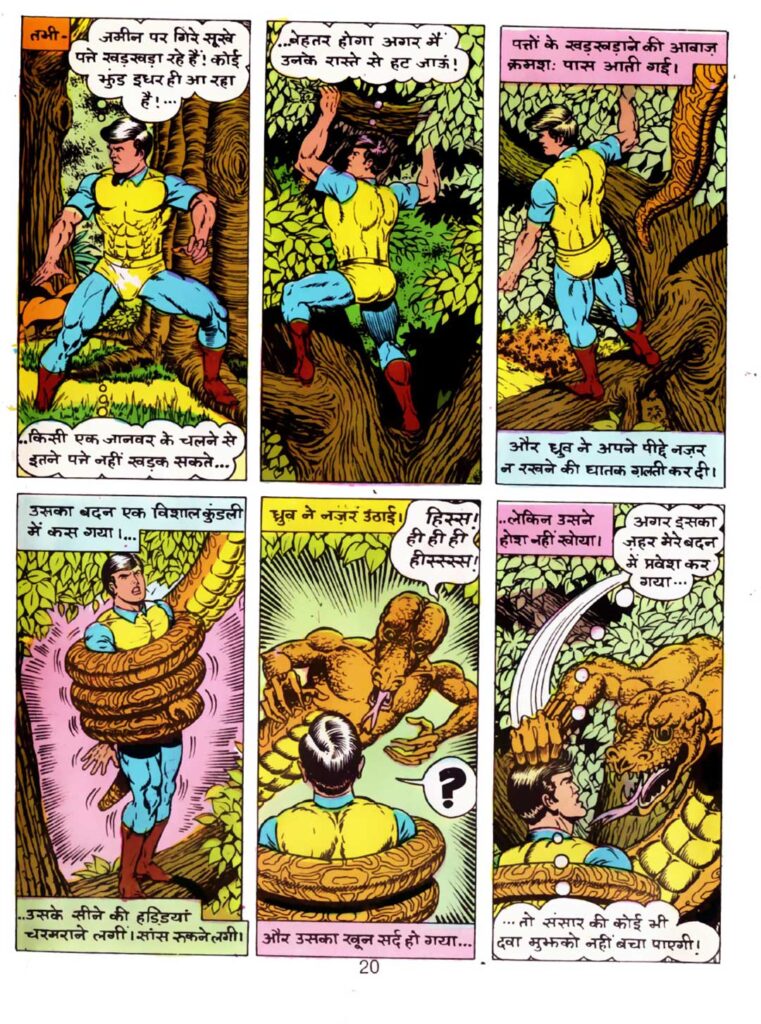
The animal-human army working under Narsingh includes many special warriors created through a combination of humans and animals. Among these, the main ones are the snake-man, with suffocating coils like a python and deadly venomous fangs; the rhino-man, with a horn and rock-like thick skin, who uproots trees; and the wolf-man, a bloodthirsty hunter in the darkness of night. All these characters are actually ordinary humans transformed into man-eaters through genes and electronic wrist straps.
The unnamed Nazi scientist at the beginning of the story is also the true source of this evil. His blind loyalty to Hitler and misguided scientific ambitions gave rise to this destructive genetic technology by defying the laws of nature.
Scientific understanding, illustration and the skills of Anupam Sinha
The greatest quality of Anupam Sinha’s writing is that every victory of Dhruv rests on the laws of biology and physics rather than any magical miracle. Recognizing the vulnerability of the snake-man’s brain and nervous system, trapping the rhinoceros-man’s extremely heavy body in a swamp, and imagining rays that activate genes to trigger transformation make the story distinctive and give depth to its scientific ideas and reasoning.
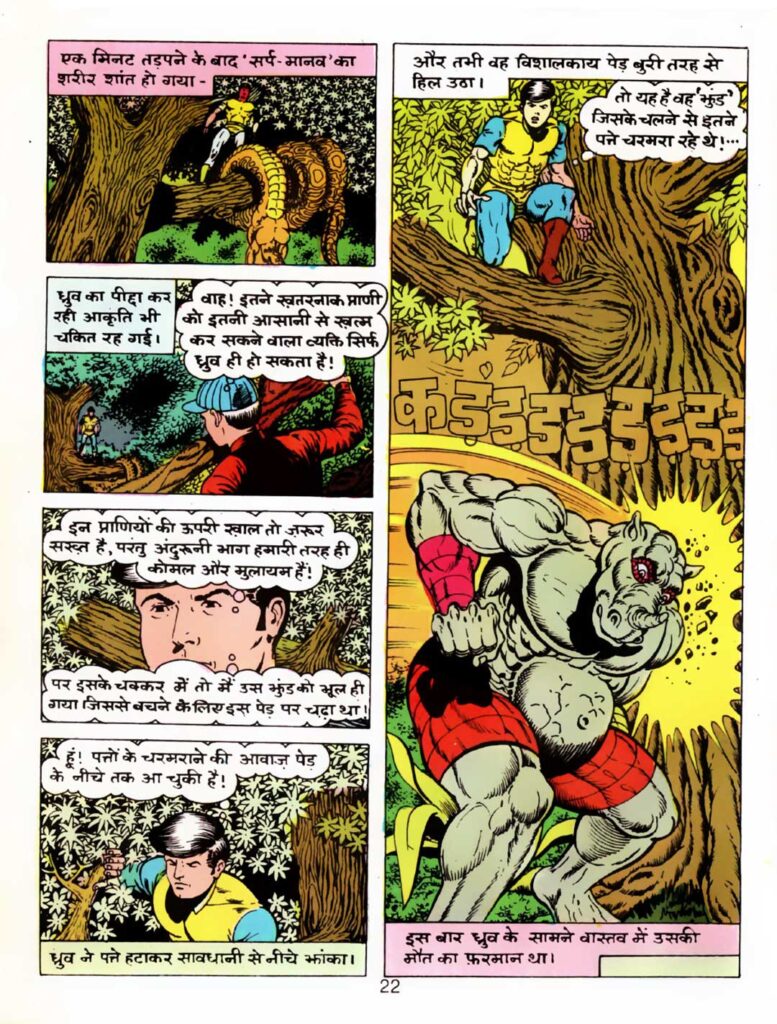
In his illustrations, Anupam Sinha has created a vivid atmosphere reminiscent of classic horror science-fiction films like ‘The Island of Dr. Moreau’. The terror of the swampy forests, the animal-like rage reflected on the faces of the man-eaters and the fast-paced action scenes keep the reader thrilled at every moment.
Man-eaters’ Paradise: The impact and distinctive qualities of the story
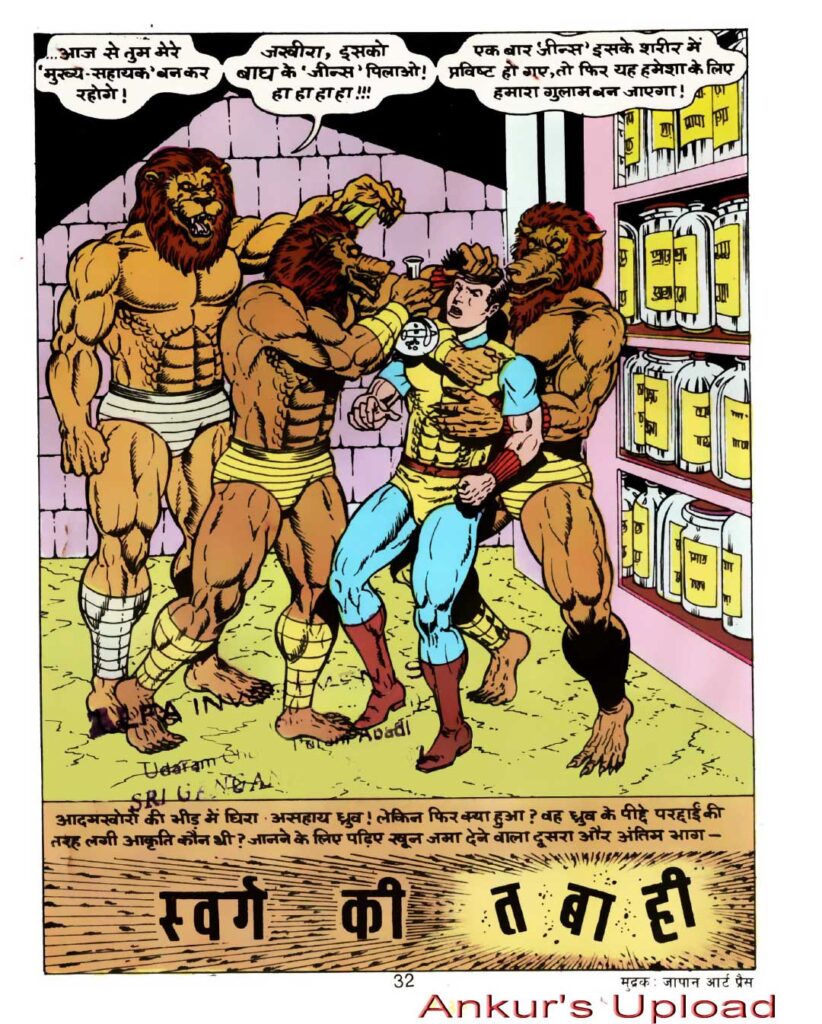
‘Man-eaters’ Paradise’ ranks among the most intricately woven and memorable comics in Super Commando Dhruv’s entire series, with its suspenseful storytelling and gradual revelations. This special issue combines the historical events of the Second World War, the dangers of modern technology associated with biology, and Dhruv’s ability to think logically into an unforgettable story. The harrowing turn in which Dhruv is held captive and an attempt is made to force him to drink the gene solution awakens tremendous curiosity in the reader’s mind to read its second part, ‘Heaven’s Devastation’. This work will always retain a distinctive identity and an important place in the world of Indian comics.
Original details: Raj Comics special issue
Story & Illustration: Anupam Sinha
Editor: Manish Chandra Gupta
Presentation: Sanjay Gupta
Main characters: Super Commando Dhruv, Narsingh (Lion-Man), Janu Khan, Commander Peter, Nazi scientist
