


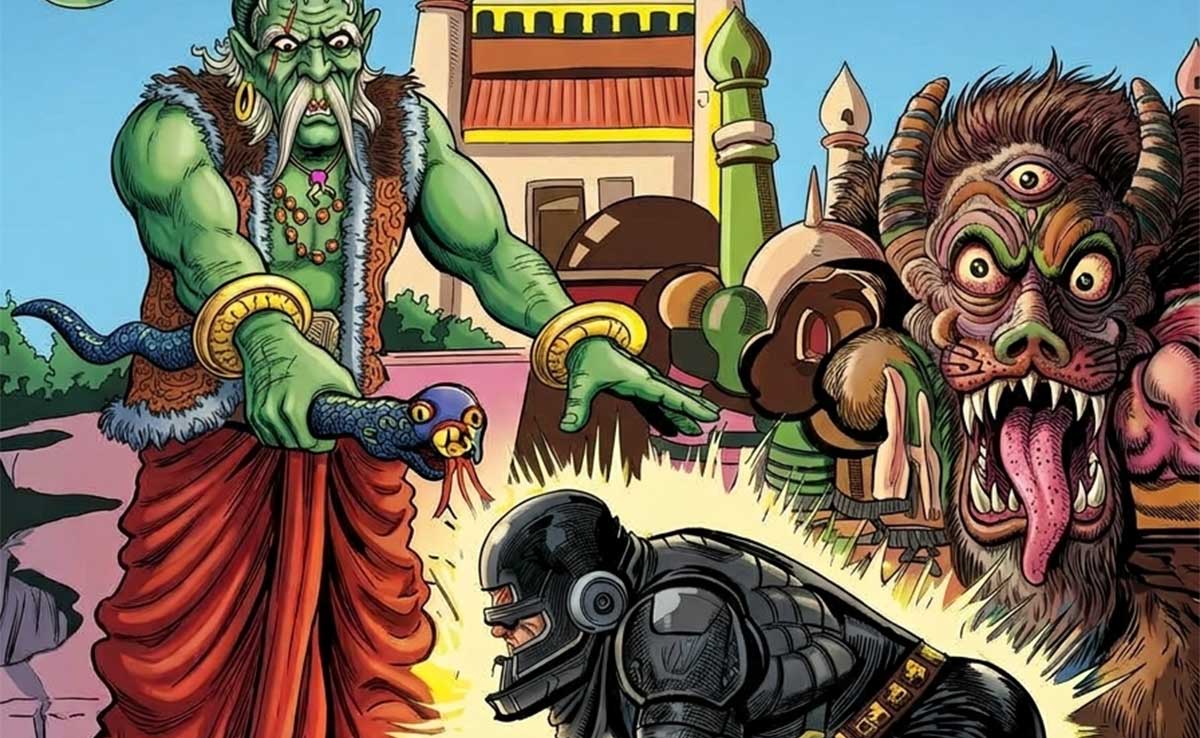
Radha Comics’ unique cyborg and the mystery of the underworld
In the era of inexpensive, exciting stories of the eighties and nineties in the Indian comics world, ‘Radha Comics’ had created a distinct and special identity for itself among readers. While the stories of Raj Comics and Diamond Comics were set in modern cities or a completely magical world, Radha Comics had created a strange but extremely interesting juxtaposition of Indian mythological occultism, horror folk tales and Western science fiction (Sci-Fi). The main superhero of this publication was ‘Shaktiputra’—an ‘iron-and-machine human’ (cyborg) whose body was equipped with metal armour and modern scientific weapons, but within whom lived the heart and mind of a sensitive human being. He was created by Dr. Padmanabhan (Padmasana).
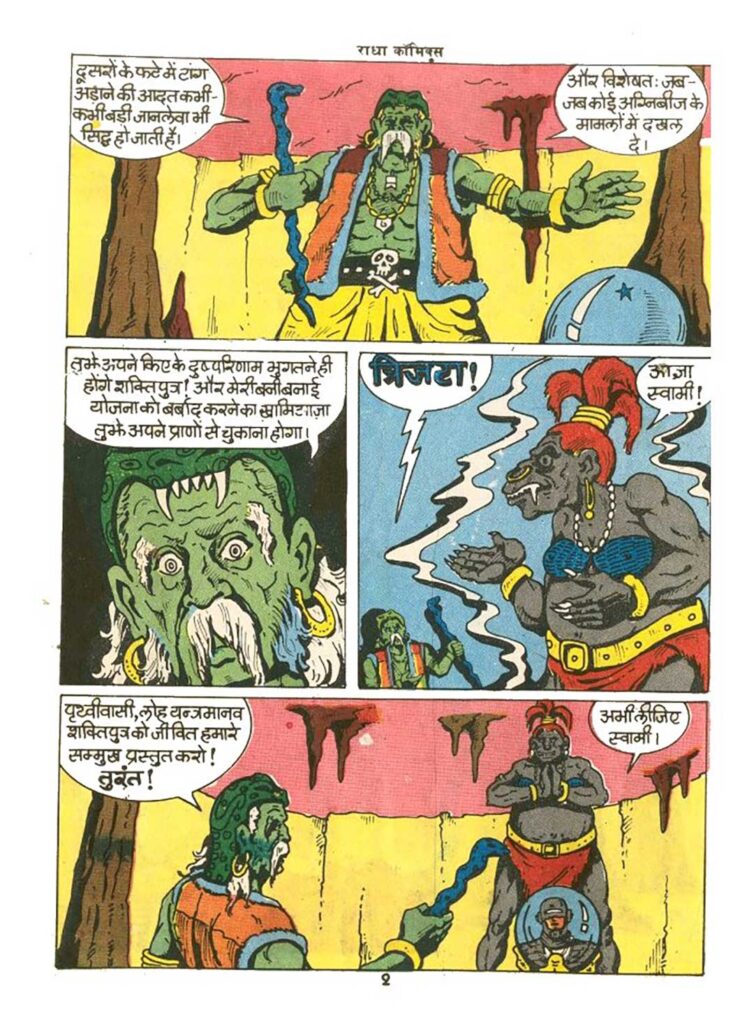
The special issue ‘Shaktiputra and the Demon of the Underworld’ is one of those special stories of Shaktiputra that brings together the bloody battles of the Roman gladiatorial arena and the clash of ancient tantric magic. This review examines the structure of the story, the quality of the pictures, the merits of the storytelling, major shortcomings and aspects related to its creation thoroughly and without any bias.
Brief journey through the story: Four days’ respite and the bloody game of the arena
For this review, it is important to understand the story briefly. The 487-year-old Mahatantrik Agnibeej aspires to be the sole emperor of the underworld and live forever. Shaktiputra had foiled his previous conspiracies, so Agnibeej kidnaps Shaktiputra through his vampire maid Trijata and imprisons him in the fort of Patal. Agnibeej wants to sacrifice Shaktiputra to Mahakal Bhairav on the night of Amavasya, but before that, he challenges Shaktiputra to fight his most dreaded warriors in the arena of Patal for four days.
On the first day, Shaktiputra fights the axe-wielding African fighter Guin on poles tied together over a pit filled with crocodiles. Shaktiputra disarms Guin and spares his life, but Guin himself commits suicide by jumping into the crocodile pit, saddened and angered by the humiliation of his defeat.
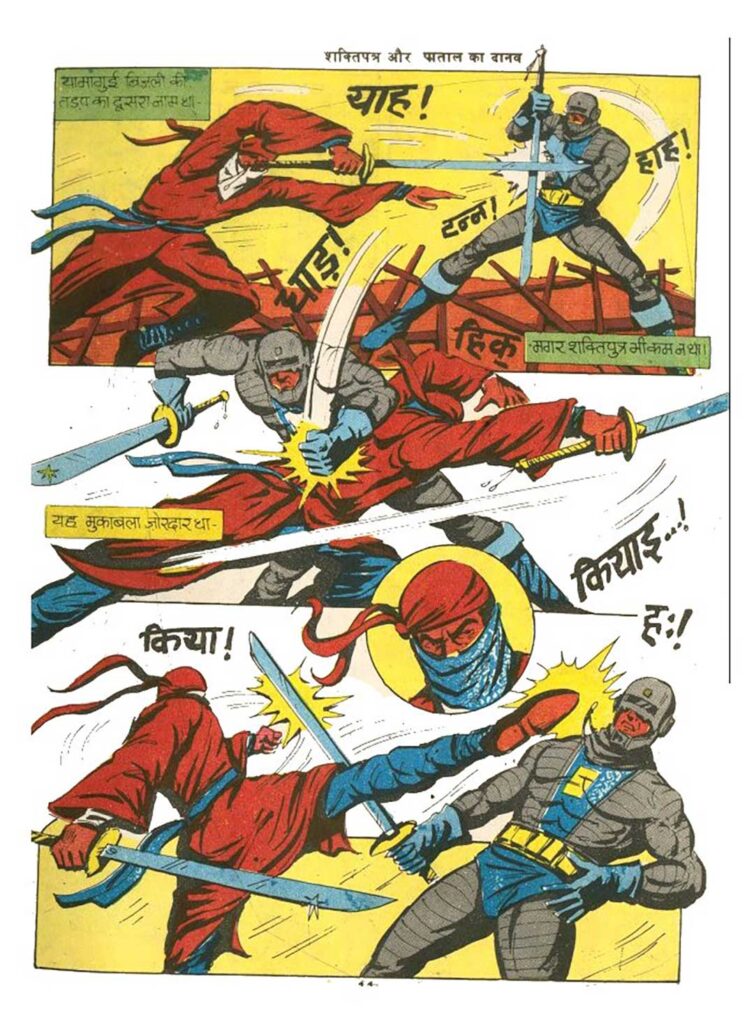
On the second day, Shaktiputra encounters Japanese kung fu champion Yamagui in a sword fight over a pit filled with blazing fire, and Shaktiputra defeats him by knocking him into the fire.
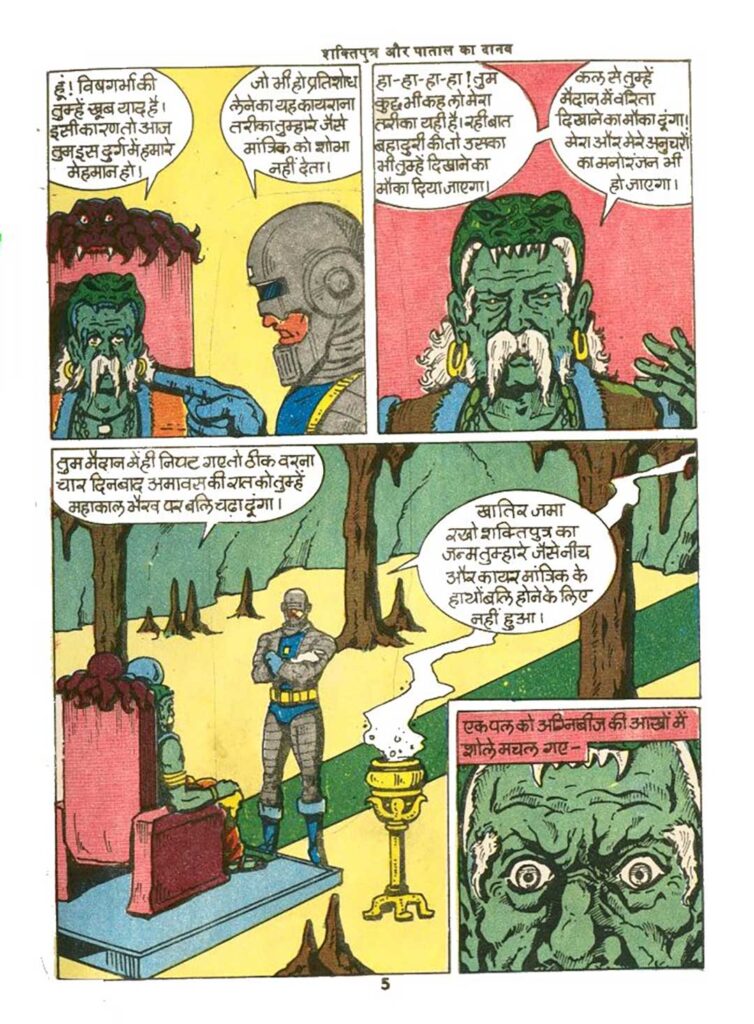
On the third day, the huge demon Kalkoot enters the arena with a heavy mace; Shaktiputra, using his agility, jumps into the air with the help of a bamboo pole, cuts Kalkoot’s throat with the knife in his glove and directly attacks Agnibeej.
But Agnibeej, using the power of Tantra-Mantra, reduces Shaktiputra to a helpless, frog-like state, in which he starts crawling on his hands and legs.
At this point, Agnibeej’s beautiful granddaughter Ratipriya—who is fascinated by Shaktiputra’s masculinity and wants to make him her 115th husband—tells Shaktiputra that Agnibeej’s life and magical strength reside in a ‘Syamantaka Mani’ kept in a secret room.
While still in this crawling state, Shaktiputra burns Vajramushthi, the demon guarding that room, to ashes with the solar cannon (Solar Cannon) embedded in his chest, breaks the wall with a huge mace, kills the two-headed venomous snake with an arrow and acquires the Syamantaka gem.
As soon as he touches the gem, the spell cast on Shaktiputra breaks, and he returns to his original form.
When Agnibeej discovers his granddaughter’s betrayal, he burns Ratipriya alive, reducing her to ashes.
Finally, after defeating Agnibeej, Shaktiputra wants to spare his life because of the promise he has made. However, the arrogant Agnibeej bangs his forehead against the Syamantaka Mani, refusing to live at someone else’s mercy. This causes the gem to explode, and Agnibeej is burnt to ashes in a massive explosion.
Writing and Screenplay: Vatsala Kaushik’s combination of Tantra-Mantra and Science
Vatsala Kaushik, a regular writer for Radha Comics, has placed no limits on imagination in this comic. The greatest strength of his writing is that it brings two completely different worlds together without any hesitation—on the one hand, the technology used to create modern robots and laser cannons, and on the other hand, mythological elements related to tantric sacrifices in the underworld, the Chamunda Mantra and the Syamantaka Mani.
The dialogues are quite dramatic, heavy-handed and influenced by the style of old Parsi theatre. Dialogues like “The habit of clinging to the coattails of others sometimes proves fatal” and “I will not shorten the life of a man who already has only four days left to live” are reminiscent of inexpensive, exciting novels of the eighties.
But the events of the story show a serious lack of coherence and logic (Logical Continuity). The author cannot give any concrete reason as to how a tantric mantra affects a cyborg made of iron and machines so severely that he starts crawling like a frog. The story progresses entirely through ‘convenient writing’. The weapon or trick the protagonist needs suddenly emerges from his suit without any earlier hint.
Drawing and Illustration: Drona’s exciting style and its limitations
The pictures created by artist ‘Drona’ are a distinctive feature of Radha Comics. The greatest quality of Drona’s art is the design of the demons, monsters and scary faces he has created. Agnibeej’s green face, white beard, garland of human skulls around his neck and burning embers in his eyes give him the appearance of an old-time tantric villain. In the arena scenes, Drona has depicted the dreaded jaws of crocodiles and the muscles of huge demons like Kalkoot with all the brutality characteristic of this style.
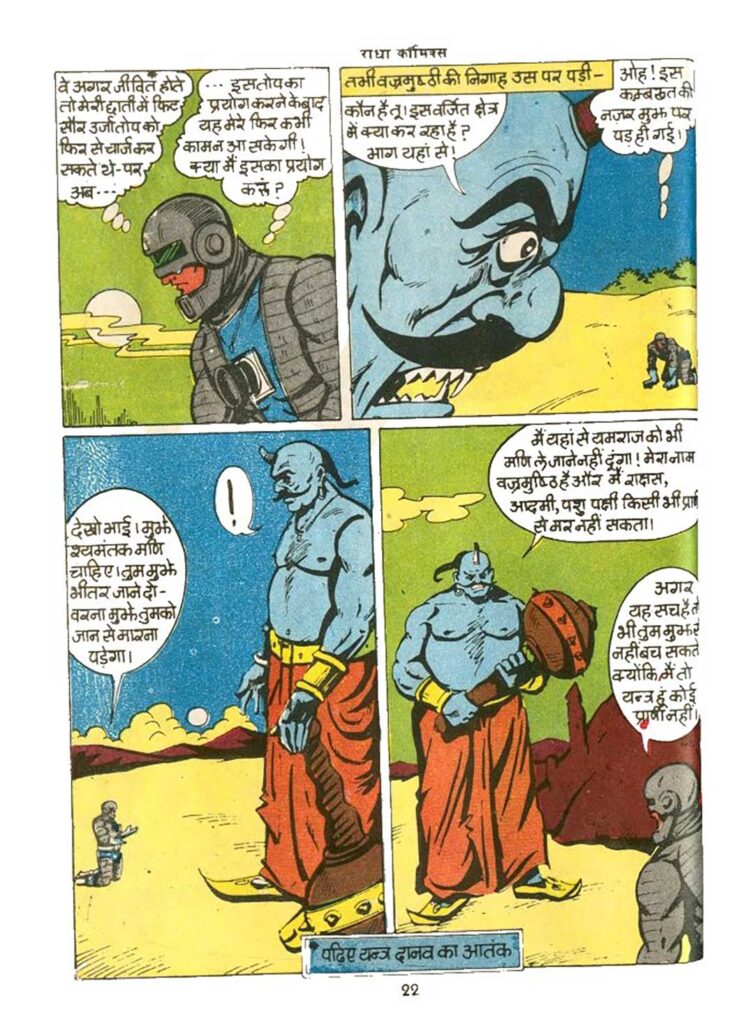
But in terms of the correct size and proportions of body parts (Anatomy) and clean drawing, Drona’s pictures appear very rough and unbalanced in many places. In many illustrations, Shaktiputra’s iron suit appears to bend like rubber or fold like cloth instead of looking as though it is made of metal. The shape of his helmet and his facial proportions vary across different illustrations.
Drona’s art is particularly weak in depicting female characters; Ratipriya’s face appears distorted and without any emotion in many places. Apart from this, in the action pictures, almost no effort has been devoted to the backgrounds. The audience seating area in the arena scenes is reduced to only a few colourful lines and figures whose shapes are not clearly visible.
The use of colours, printing and old-fashioned comics art
The printing of this comic, handled by ‘Fine Enterprises’, reflects the technology used for inexpensive, mass-market adventure comics of that era. In the use of colours, instead of gradually lightening or deepening any shade or colour, solid, bright primary colours (Primary Colours)—like bold red, yellow, green and blue—have been used.
While this may seem very ordinary to readers in today’s digital age, these bright colours evoke beautiful memories of the old days for those who collect comics from the eighties.
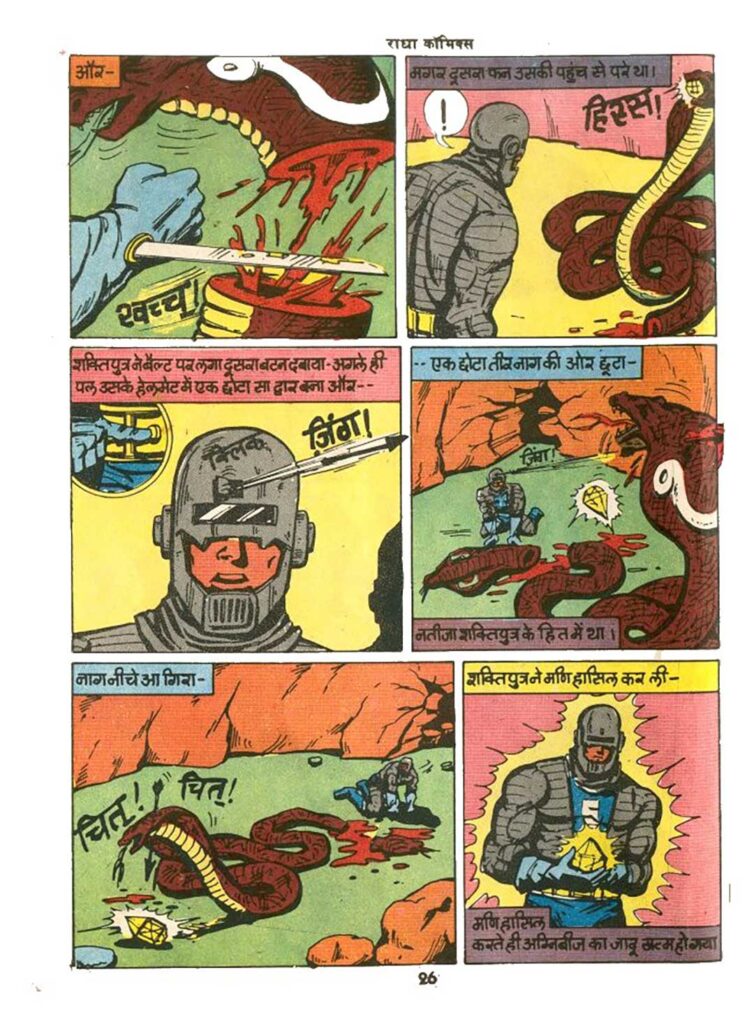
The lettering (Lettering) is entirely handwritten, which is largely neat and easily readable. Action scenes feature sound effects like ‘Drum!’, ‘Chaak!’, ‘Khan!’ and ‘Jing!’—spread across the picture in very large and bold letters, making the action feel fast and loud.
However, ink bleeding (Ink Bleeding) and colours spilling beyond their printed outlines are common problems in the printing quality.
Imbalances and unexplored aspects in the portrayal of the characters
The characters in the story are very unevenly and superficially developed. The strangest character is Ratipriya. The story introduces her as a woman who has married 114 times so far and proposes to make the imprisoned Shaktiputra her 115th husband in front of her grandfather!
Despite this laughable and illogical background, she reveals the secret of her own grandfather’s carefully hidden gem to save Shaktiputra’s life.
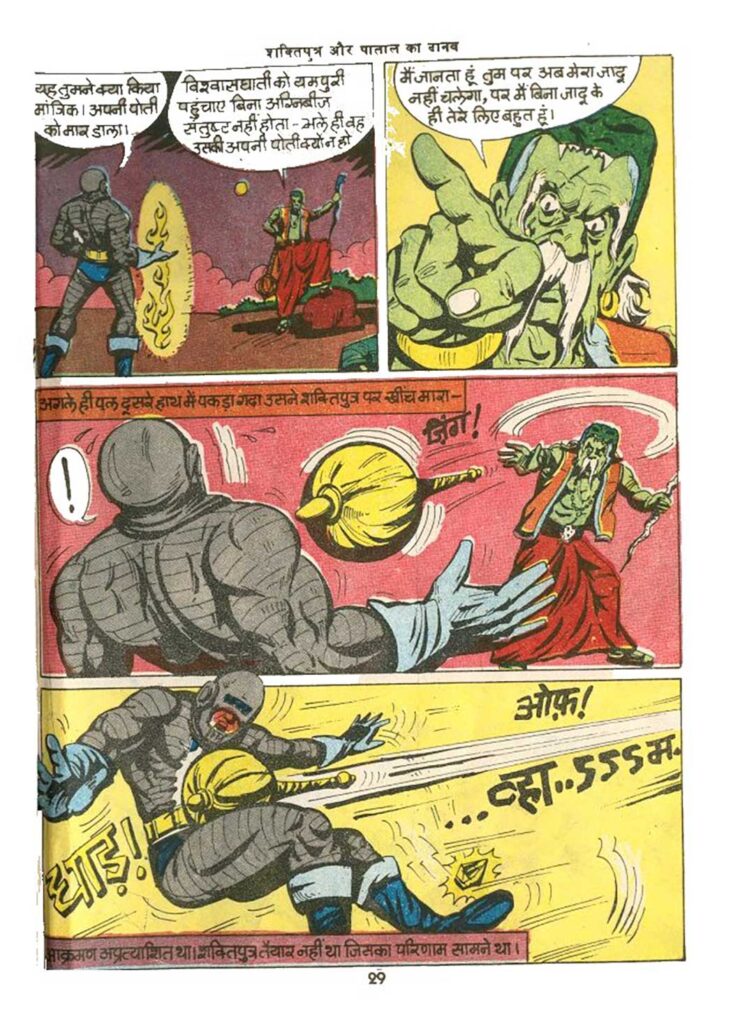
But the author does not do justice to this character; as Shaktiputra acquires the gem, Agnibeej kills Ratipriya by burning her alive in a single stroke. Shaktiputra—who calls himself the protector of humanity—does not show the slightest sorrow or regret over her painful death.
The same is the case with the foreign fighters Guin and Yamagui, who are killed without anything being revealed about their pasts or circumstances, serving only as preliminary challenges before a ‘boss fight’.
Shortcomings of the story: Twists without logic and a hastily assembled ending
The biggest drawback of this comic, when reviewed without bias, is its extremely absurd and rushed final part (Rushed Climax). While the bulk of the initial story is spent stretching out just three arena battles, the main mission, i.e. the discovery of the Mani and the defeat of Agnibeej, is squeezed into a very small amount of space.
Vajramushthi, whom it is claimed no human, demon or animal can kill, is reduced to ashes in the blink of an eye by a single blast from the suddenly appearing solar cannon.
The most laughable scene is the ending of the story: Agnibeej, a cunning, 487-year-old tantrik who dreams of ruling the whole world, suddenly commits suicide by hitting his head against a gem, invoking ‘Kshatriya Aan-Baan’ when Shaktiputra offers to spare his life! This ending is so childish and sudden that the reader wonders whether such a powerful Mahatantrik should have met his end in this childish manner.
Final conclusion of the review
Despite all the technical shortcomings, rough drawings and an illogical script, ‘Shaktiputra and the Demon of the Underworld’ offers a very entertaining and rare glimpse into that unique era of Indian comics when writers used to create stories with completely desi imagery, without any censorship or pressure to limit their imagination. This comic is an example of how even small publishers had the courage to take readers to a different world with their limited means.
This issue of Shaktiputra is a priceless treasure for comics lovers who want to understand the inexpensive, exciting literature of the eighties, the scary tantric world and the evolution of superhero stories of the old days.
Original description and production team: Radha Comics special issue
Story: Vatsala Kaushik
Illustrations: Drona
Printing: Fine Enterprises, New Anaj Mandi, Delhi
Main characters: Shaktiputra (an iron-and-machine man), Mahatantrik Agnibeej, Ratipriya, Trijata, Guin, Yamagui, Kalkoot
