



Are you ready for that blood-filled ending where ‘Doga’ is born as a ‘sun’ sets? Can an innocent child, who once grew up in a garbage bin with dogs, bring down the most powerful ‘monster’ in a big city like Mumbai? The fifth and final part of Raj Comics’ ‘Raktakatha’ series, “Ja Vadh Kar” , is not just a comic but the birth of a new ideology. This is the turning point where ‘justice’ steps out of the law books and enters the barrels of Doga’s guns.
The Complete Story of Raktakatha: At a Glance
To understand this entire story properly, it is important to know about the previous four parts.
Part 1: “Kachra Peti” shows the story of Doga’s birth and his rejection by society.
Part 2: “Meri Sonu” is the story of Suraj and Sonu’s innocence in the hell of Chambal.
Part 3: In “Balidan Tumhara,” his faithful dogs shed their blood to save Suraj.
Part 4: “Halkan Ho” reveals the brutal story of the villain Halkan Singh becoming a monster.
Part 5: “Ja Vadh Kar” is the final and biggest part of this series, where the accounts of the past and present are fully settled.
Story: From the Ravines of Chambal to the Sea of Mumbai
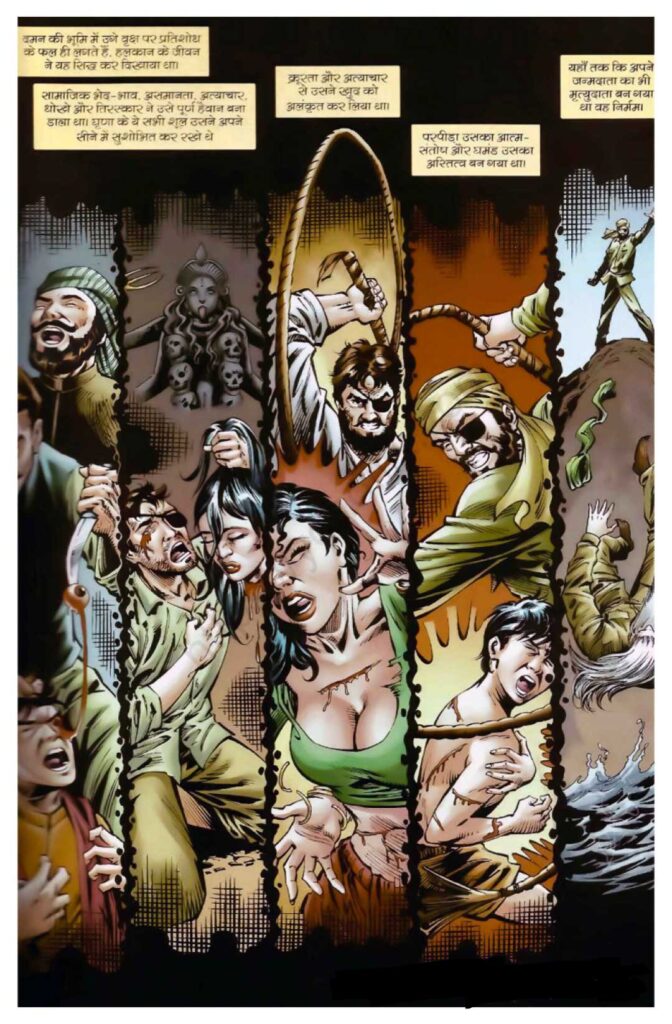
The story of “Ja Vadh Kar” unfolds across two different timelines. On the one hand, there is the present, where Doga is telling the story of his past to a young child named Bhanu. On the other hand, there is the past, where Suraj has now grown up and has only one goal in his eyes—the end of Halkan Singh.
The story takes an interesting turn when we find out that Chambal’s bandit, Halkan Singh, is now dead… But only on paper! In reality, he has reached Mumbai and transformed himself into ‘Leader Halkat Singh.’ He has also formed his own political party, the ‘Lok Loyal Party.’ This is a powerful piece of ‘social satire’ by writer Vivek Mohan, showing how the bandits of the ravines now sit in positions of power while wearing white clothes.
Suraj, i.e., Doga, recognizes him. For him, it is not just a matter of taking revenge but also of cleansing the society that gave birth to monsters like Halkan.
‘Go and Kill’: The Difference Between Murder and Vadh
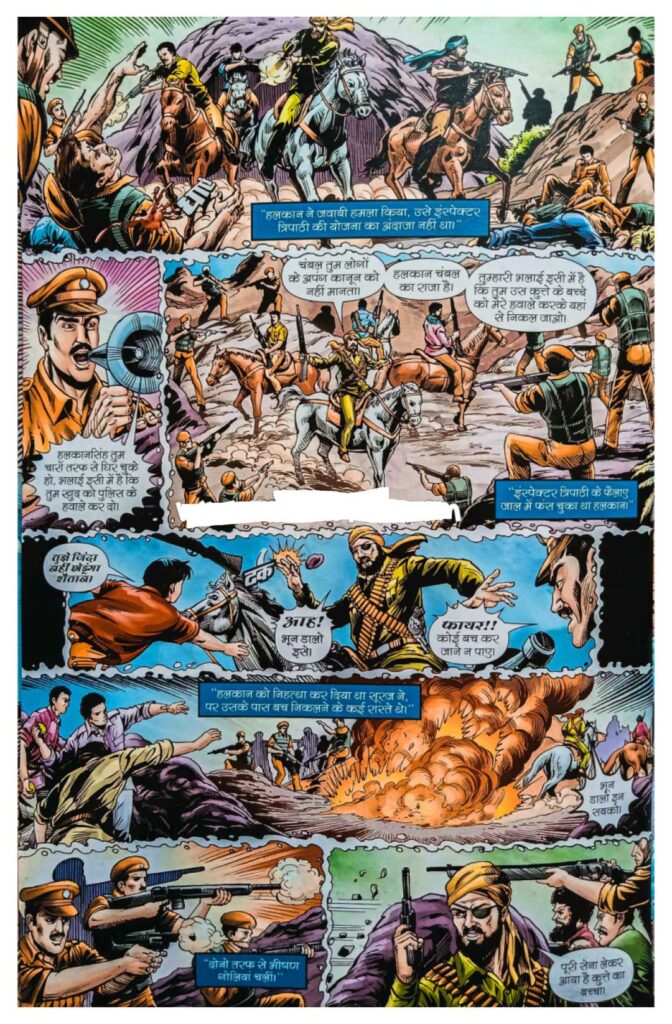
The title of this comic, “Ja Vadh Kar,” has a very deep meaning. Throughout the story, Doga explains to Bhanu and the readers that what the law calls ‘murder’ is sometimes considered ‘vadh’ by society. Doga says, “A man is not a tree that can bear fruit after being struck with stones; when struck with stones, a man will only throw stones back.”
In the final part of the story, when Doga and Halkan Singh, i.e., Halkat Singh, come face-to-face, it is not just a fight between two people but a clash between two different mindsets. Halkan thinks that money and power will save him, but Doga reminds him that he came from the same garbage dump that Halkan himself created.
The Characters’ Mindsets and Their Darker Sides (Character Deep-Dive)
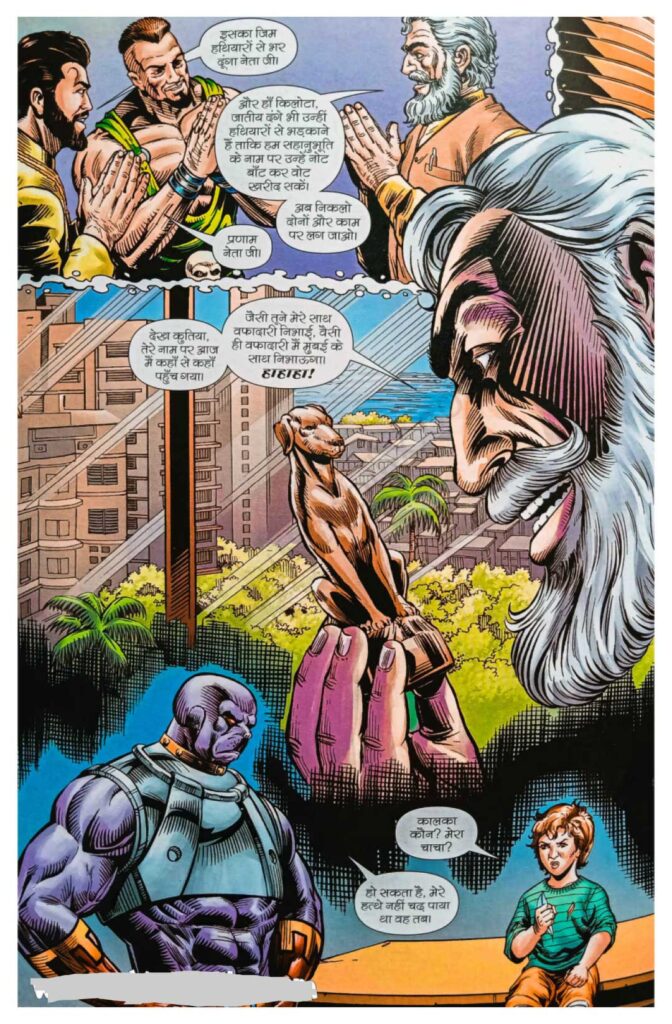
Doga : In this part, Doga’s character appears in its complete form. He is no longer confused. He has accepted that he is not a ‘killer’ but a protector who carries out ‘vadh.’ His conversation with Bhanu reveals Doga’s entire ideology.
Halkan Singh : Halkan is even more dangerous here as a villain because he now has the armour of the ‘law,’ i.e., politics. He hides his cruelty behind ‘nationalism’ and ‘loyalty.’
Bhanu: This child represents the readers. He is both afraid of Doga’s violence and influenced by it. Doga gives him a knife and says, “Go and kill,” which shows that this series will never truly end.
Artwork: Excellent Work by Dildeep Singh
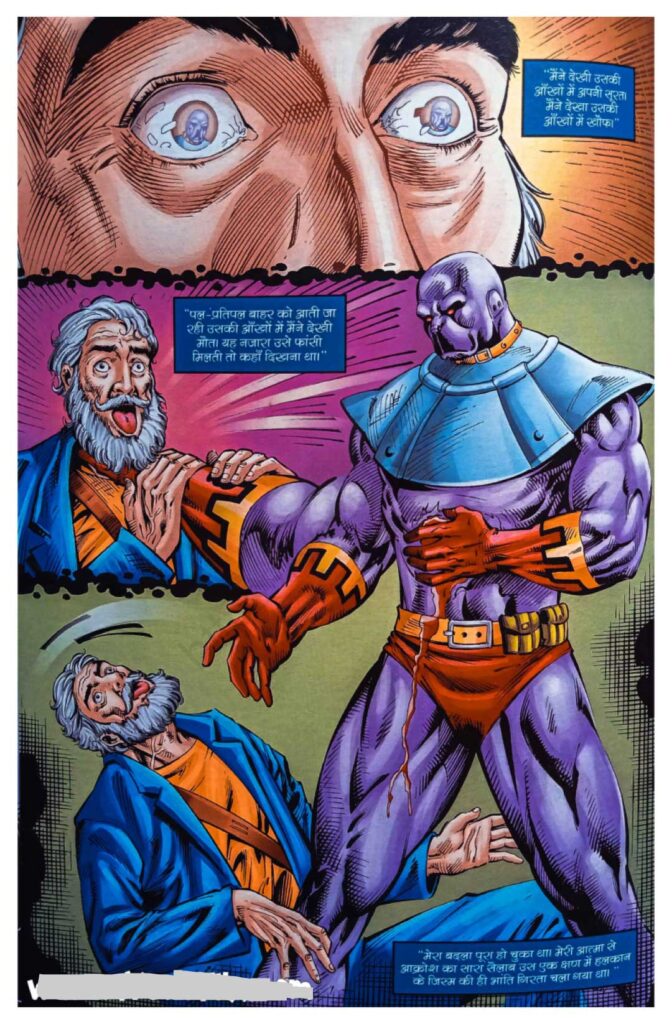
Dildeep Singh has raised the standard of Indian comic art to a very high level with this series.
Movie-like Scenes: The illustrations of Mumbai’s streets, sewer pipes, and Halkan’s luxurious office look so realistic that it feels as though we are watching a movie.
Violence and Bloodshed (Gore): The series is known for its horror and violent scenes. Even in “Ja Vadh Kar,” bloodshed is depicted in a very raw style. Whether it is the dogs tearing apart Halkan’s henchmen or Doga’s furious appearance, everything looks highly effective.
Colouring: The colouring by Sunil Dasturia and Shadab Siddiqui perfectly maintains this ‘dark and gritty’ atmosphere.
The Message of ‘Raktakatha’: Society’s Garbage Bin
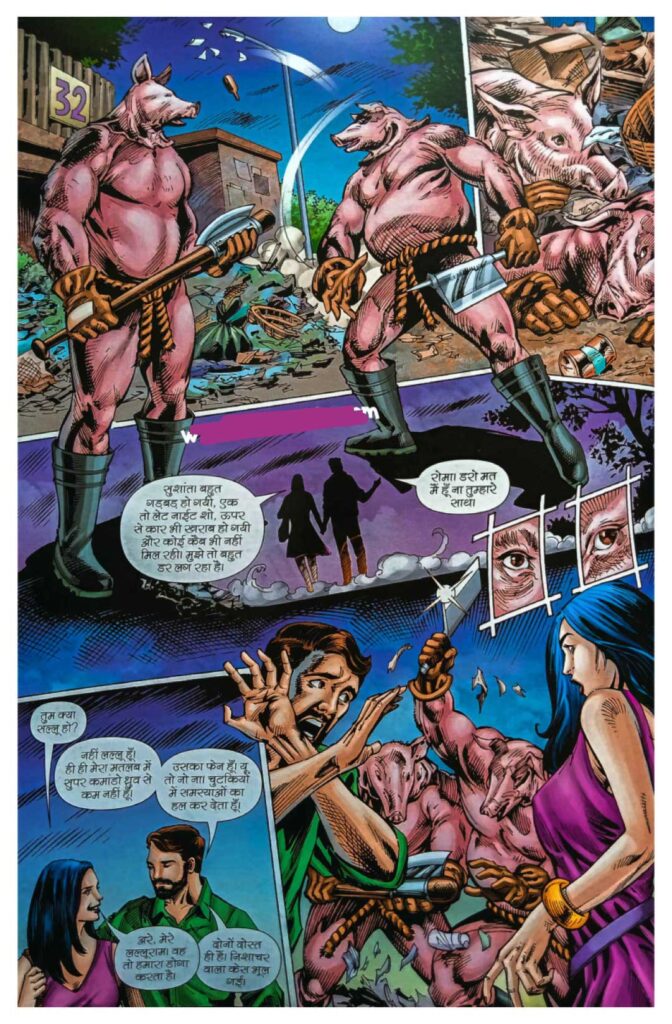
The central meaning of the entire series is that the same filth society throws into the ‘garbage bin’ returns one day to strangle it. Doga is born from that same waste. Halkan Singh turned him into an animal, society rejected him, and loyal dogs taught him how to survive. This series asks who the real culprit is—Halkan Singh or the society that allows him to grow and become powerful?
Will There Be Any More Comics After This?
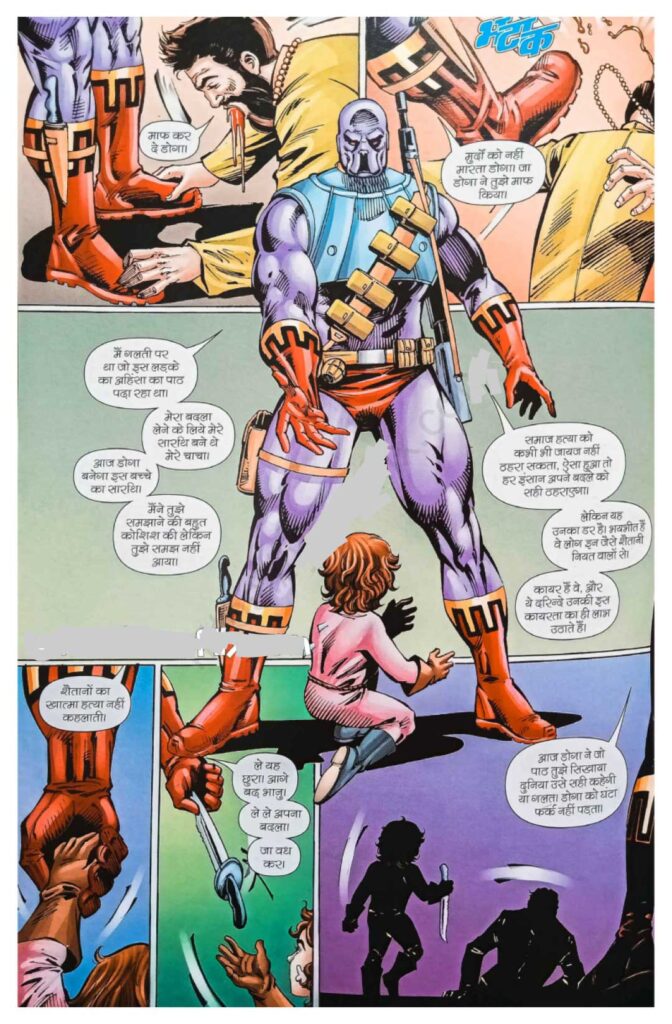
The ‘Raktakatha’ series ends with this part, i.e., Part 5. This is the complete story of Doga’s ‘definitive origin,’ i.e., his birth and transformation.
Previous Comics: Parts 1 to 4 include “Kachra Peti,” “Meri Sonu,” “Balidan Tumhara,” and “Halkan Ho.”
Next Comics: Since this series has ended, Sanjay Gupta has announced Doga’s next major series, “Kuttapanti” and “Kuttaghati” i.e., the Swami Bhakt Rakhwale series, in the advertisement.
